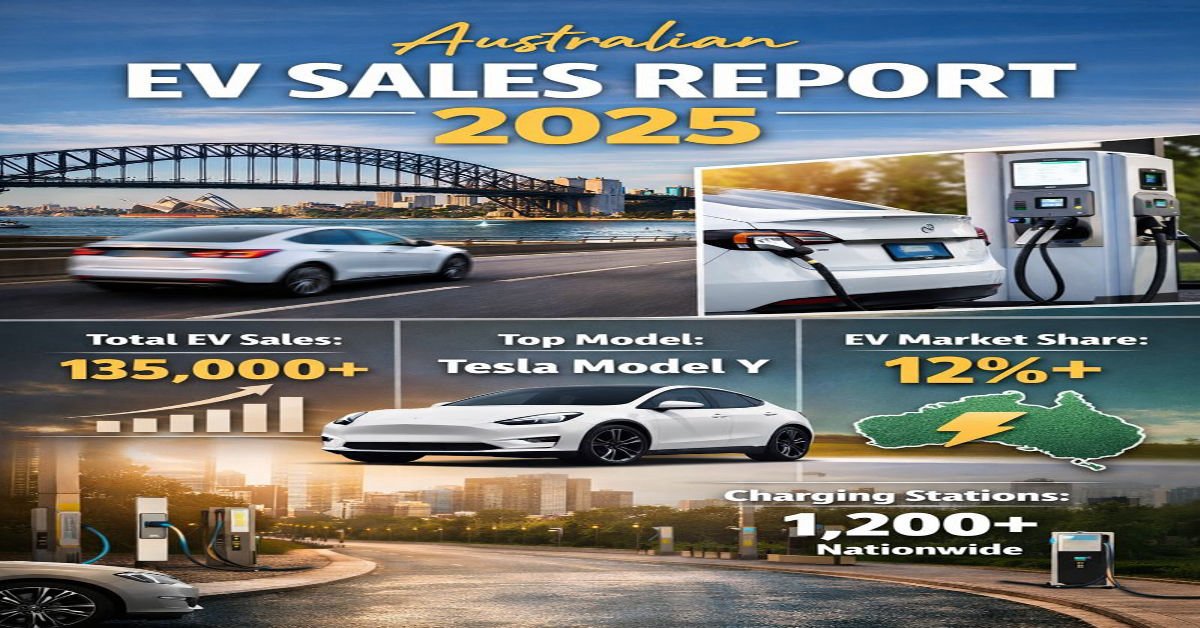
Australian EV Sales Report 2025 market reached a major turning point in 2025. What was once a slow-moving segment has now evolved into a fast-growing part of the automotive industry. With stronger government policies, improved charging infrastructure, and growing consumer awareness, electric vehicles are becoming a realistic option for everyday Australians.
This Australian EV Sales Report 2025 provides an in-depth, experience-based analysis of how the market performed during the year, which brands and models dominated sales, how adoption differs across regions, and what the future looks like for electric mobility in Australia.
Overview of the Australian EV Market in 2025
In 2025, Australia witnessed one of its strongest years for electric vehicle sales. EVs are no longer limited to early adopters or environmentally focused buyers. Families, professionals, and fleet operators are now actively choosing electric vehicles due to lower running costs and improved model availability.
Several factors contributed to this growth:
-
A wider range of affordable EV models
-
Expansion of public fast-charging stations
-
Rising fuel prices pushing consumers toward electric alternatives
-
Increased awareness of climate and emission concerns
By mid-2025, electric vehicles accounted for over 12% of new car sales, a notable improvement compared to previous years. This shift highlights a gradual but steady transformation in Australian consumer preferences.
Electric Vehicle Sales Performance in 2025
Electric vehicle sales continued to rise throughout 2025, with particularly strong performance in the second and third quarters of the year. Improved supply chains and faster vehicle deliveries helped reduce waiting periods, encouraging more buyers to finalize their purchases.
Total EV Sales Snapshot (2025)
| Vehicle Type | Estimated Units Sold | Market Share |
|---|---|---|
| Battery Electric Vehicles (BEVs) | 90,000+ | Dominant |
| Plug-in Hybrid Vehicles (PHEVs) | 45,000+ | Rapid growth |
| Hydrogen Fuel Cell Vehicles | Limited | Niche |
| Total EVs | 135,000+ | Growing |
Battery Electric Vehicles (BEVs) remained the most popular choice due to their fully electric operation, lower maintenance needs, and improved driving range. Meanwhile, Plug-in Hybrid EVs gained popularity among buyers transitioning from petrol vehicles.
Quarterly Trends and Sales Momentum
Early 2025: Steady but Cautious Growth
The first quarter saw moderate sales growth as buyers waited for new model launches and government policy updates. Some consumers delayed purchases due to interest rate concerns and budget planning.
Mid-Year Surge
From April to June 2025, EV sales surged significantly. New SUV-style electric models and competitively priced sedans attracted a broader customer base.
Late-Year Stability
The final months of the year showed stable growth, with EVs maintaining a strong share of total vehicle sales despite seasonal market fluctuations.
This consistent momentum demonstrates that EV demand in Australia is becoming more resilient and less dependent on short-term incentives.
Best-Selling Electric Cars in Australia (2025)
Several electric vehicles stood out in 2025 due to their pricing, range, technology, and brand trust.
Top-Selling EV Models
| Rank | Electric Vehicle Model | Key Strength |
|---|---|---|
| 1 | Tesla Model Y | Range & charging network |
| 2 | Tesla Model 3 | Performance & affordability |
| 3 | BYD Atto 3 | Value for money |
| 4 | MG4 Electric | Budget-friendly hatchback |
| 5 | Kia EV5 | Family-friendly SUV |
Tesla continued to lead the market, but competition from Chinese and Korean manufacturers increased noticeably. Brands such as BYD, MG, and Kia successfully captured buyers looking for affordable and practical EV options.
Regional EV Adoption Across Australia
Electric vehicle adoption in Australia varies significantly by state and territory. Urban areas with better charging infrastructure and incentives tend to show higher EV penetration.
EV Adoption by Region
| Region | Adoption Level | Key Drivers |
|---|---|---|
| Australian Capital Territory | Very High | Incentives & urban charging |
| New South Wales | High | Large population & fleet sales |
| Victoria | High | Government support |
| Queensland | Moderate | Growing infrastructure |
| Regional Areas | Lower | Charging availability |
The Australian Capital Territory continues to lead the nation, with EVs accounting for a substantial portion of new car registrations. Meanwhile, regional and rural adoption remains slower, primarily due to infrastructure limitations.
Charging Infrastructure Growth in 2025
Charging infrastructure plays a crucial role in EV adoption. In 2025, Australia made notable progress in expanding its public charging network.
Key Developments
-
Increase in fast-charging stations along highways
-
Improved coverage in metropolitan areas
-
Growing investment from private charging providers
-
Expansion of home and workplace charging solutions
While infrastructure growth has improved confidence among urban drivers, continued investment is needed to support long-distance travel and regional communities.
Government Policies and Incentives
Government initiatives significantly influenced EV sales in 2025. National and state-level policies aimed to reduce emissions and encourage cleaner transport options.
Major Policy Drivers
-
Vehicle efficiency standards for new cars
-
Fringe benefits tax exemptions for eligible EVs
-
Support for public charging infrastructure
-
Incentives for fleet electrification
These policies helped lower the total cost of ownership for EVs, making them more attractive compared to traditional petrol and diesel vehicles.
Challenges Facing the Australian EV Market
Despite strong progress, the EV market still faces several challenges:
High Upfront Costs
Although long-term ownership costs are lower, many EVs remain more expensive upfront than petrol alternatives.
Charging Gaps in Regional Australia
Limited access to fast chargers continues to restrict adoption outside major cities.
Consumer Awareness
Some buyers still lack clear information about EV maintenance, charging, and battery lifespan.
Addressing these challenges will be critical to sustaining long-term EV growth.
Growth of the Used EV Market
The second-hand EV market expanded significantly in 2025. As early adopters upgrade to newer models, used EVs are becoming more accessible to budget-conscious buyers.
Benefits of the used EV market include:
-
Lower entry cost
-
Proven reliability of modern batteries
-
Increased confidence through warranties
This segment is expected to play a key role in making electric mobility accessible to a wider audience.
Future Outlook for EVs in Australia
Looking ahead, the outlook for electric vehicles in Australia remains positive.
Expected Trends
-
EV market share likely to exceed 20% by 2030
-
More affordable models entering the market
-
Expansion of regional charging infrastructure
-
Increased adoption of electric SUVs and utes
As technology improves and costs decline, EVs are expected to become the default choice for many Australian drivers.
Conclusion
The Australian EV Sales Report 2025 highlights a market that is rapidly evolving. Electric vehicles are no longer a niche product but a growing part of mainstream automotive sales. With increasing model choices, better infrastructure, and supportive policies, Australia is steadily moving toward an electric mobility future.
While challenges remain, the overall direction is clear: EV adoption is accelerating, and 2025 stands as a milestone year in Australia’s transition to cleaner transportation.
For consumers, businesses, and policymakers alike, the data from 2025 offers valuable insights into where the market stands — and where it is headed next.
1 thought on “Australian EV Sales Report 2025”