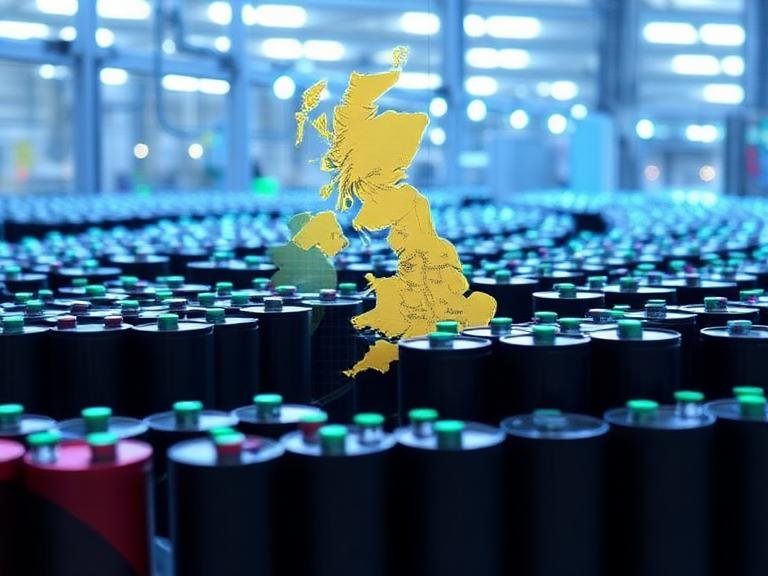
EV Battery Production Companies in the UK are no longer a futuristic idea — they are rapidly transforming global transport. At the heart of this revolution is one critical technology: EV batteries. These advanced energy storage systems are the backbone of electric mobility, directly influencing driving range, safety, and total cost of ownership.
As the UK shifts toward a zero-emission future, local EV battery production has become strategically important. This article provides an in-depth look at the major EV battery production companies in the UK, explores key technologies, and explains how the UK is positioning itself in the global EV battery landscape.
Why EV Battery Production Matters
Battery production is central to the EV ecosystem. Around 30–40% of an EV’s cost comes from its battery pack. Controlling battery production domestically helps countries:
-
Reduce dependency on imports
-
Create skilled jobs
-
Improve supply chain resilience
-
Accelerate innovation in energy storage
For the UK — especially after Brexit and shifting trade dynamics — building a strong and diverse battery manufacturing base is crucial. Investing in battery production encourages major automotive manufacturers to bring EV assembly and innovation to the UK, fostering economic growth and technical expertise.
Overview: EV Battery Production in the UK
The UK’s EV battery industry includes global companies, joint ventures, innovative start-ups, and supporting centers of excellence. Below is a snapshot of the major players currently shaping the market.
Table 1: UK EV Battery Producers and Key Focus Areas
| Company | Location | Focus | Type of Production | Annual Capacity (Approx.) |
|---|---|---|---|---|
| AESC UK | Sunderland | EV battery cells | Gigafactory | ~15–20 GWh |
| Agratas (Tata Group) | Somerset | EV battery cells | Gigafactory (under development) | ~40 GWh planned |
| Johnson Matthey Battery Systems | Dundee/UK | Battery packs & systems | Advanced assembly | N/A (processing millions of cells) |
| Nyobolt | Cambridge | High-power cells | R&D and pilot manufacturing | Early stage |
| Volklec | Coventry (UKBIC) | Lithium-ion cell production | Early production | ~10 GWh planned |
| Altilium | Coventry (UKBIC) | Recycled-material cells | Pilot production | Small scale |
AESC UK (Automotive Energy Supply Corporation)
Founded in 2007, AESC UK operates one of the earliest EV battery production facilities in Europe. Based in Sunderland, this gigafactory has been supplying lithium-ion cells for electric vehicles — most notably for Nissan’s EV models — and has expanded its footprint significantly in recent years.
Key Strengths
-
Established production track record in Europe.
-
Strong partnerships with major automakers.
-
Ongoing facility expansions supported by investment incentives.
Production Capacity and Growth
Originally smaller in scale, the Sunderland facility is undergoing phased expansions. The current capacity is estimated between 15–20 GWh annually, enough to support tens of thousands of EVs each year. The company is also integrating automated production lines and advanced quality control systems to improve efficiency.
Role in UK Supply Chains
AESC’s gigafactory supports local automotive manufacturing, reducing transportation costs and lead times. This is especially important for UK EV assembly plants that need reliable battery supplies.
Agratas (Tata Group Joint Venture)
Agratas is a joint venture backed by the Tata Group, the parent company of Jaguar Land Rover (JLR). The company is constructing a flagship gigafactory in Somerset, part of a major investment drive to localize battery production for UK EV makers.
Planned Capacity and Impact
-
A planned 40 GWh annual capacity — among the largest in the UK
-
Expected to supply batteries directly to EV assembly plants
-
Designed to accommodate cutting-edge cell chemistries and scalable manufacturing
This facility positions the UK to better compete with European neighbours like Germany and France, which already host multiple gigafactories.
Strategic Importance
Local battery manufacturing reduces exposure to international supply chain shocks and foreign exchange risks. For OEMs like Jaguar Land Rover, it also enables better cost predictability and faster model rollout timelines.
Johnson Matthey Battery Systems
Company Overview
Johnson Matthey Battery Systems is a British technology company specializing in battery pack assembly and systems integration rather than cell production itself. Its expertise lies in turning raw cells into engineered battery modules that meet automotive and industrial standards.
Expertise and Services
-
Advanced engineering for high-performance battery packs
-
Systems integration for EVs and hybrid vehicles
-
Value-added services like software and diagnostics
Why This Matters
Battery packs are not simply bundled cells — they require complex thermal management, safety systems, and power electronics. Johnson Matthey’s position as an integration expert helps UK EV producers get high-quality packs that meet stringent safety and performance standards.
Nyobolt: High-Power Cell Innovator
Nyobolt is a UK-based battery technology company focused on high-power, fast-charging cells. Unlike traditional battery manufacturers, Nyobolt develops innovative chemistries and materials designed for rapid charging and high durability.
Technology Focus
-
Fast-charging capability — reaching high state of charge in minutes
-
Potential applications in performance EVs, commercial fleets, and energy storage
-
Ongoing R&D and pilot production
Future Potential
As EV adoption grows, fast-charging batteries will be a competitive advantage, especially for commercial fleets and long-distance travel. Although still in early production stages, Nyobolt’s innovations position it as a future contributor to UK battery supply chains.
Volklec: Scalable UK Cell Production
Company Summary
Volklec is a UK startup partnering with international groups to establish mid-tier EV cell production locally. Operating initially from the UK Battery Industrialisation Centre (UKBIC) in Coventry, Volklec is scaling up its manufacturing infrastructure.
Production Focus
-
Advanced lithium-ion cell manufacturing
-
Plans to reach ~10 GWh annual capacity
-
Serving automotive, aerospace, and other high-performance applications
Supporting UK Capacity Growth
Volklec helps fill a gap between early-stage innovation and full-scale gigafactory production. By building capacity at UKBIC, it accelerates domestic EV battery availability without waiting for very large facilities.
Altilium: Sustainable Battery Manufacturing
A New Frontier in Recycling Technology
Altilium is pioneering EV battery cells made from recycled cathode materials. With sustainability a growing priority in energy storage, Altilium’s approach reduces demand for virgin raw materials like lithium, nickel, and cobalt.
Environmental and Economic Benefits
-
Reduces mining demand
-
Cuts material costs
-
Supports circular economy goals
Connection to UK Innovation
Altilium’s work at UKBIC supports government and industry efforts to make battery production more environmentally friendly. These initiatives align with global sustainability commitments and reflect a maturing UK battery ecosystem.
UK Battery Industrialisation Centre (UKBIC)
The UK Battery Industrialisation Centre (UKBIC) in Coventry is a national facility designed to:
-
Accelerate battery tech development
-
Support pilot production and prototyping
-
Train skilled technicians and engineers
How It Helps Companies
UKBIC provides mid-stage production lines and expertise that help startups and established companies bridge the gap between research labs and mass production. This accelerates commercialization of new battery technologies and builds local manufacturing know-how.
Comparative Analysis: UK vs Europe
Table 2: EV Battery Production Capacity (Europe vs UK)
| Region | Approx. Installed Capacity (GWh) | Key Players |
|---|---|---|
| Germany | <300 GWh | Volkswagen, Tesla, CATL, LG |
| Sweden | ~150 GWh | Northvolt |
| France | ~100 GWh | ACC, Verkor |
| UK | ~30–50 GWh | AESC, Agratas, Volklec |
While the UK still lags behind European neighbors in total gigafactory capacity, its growth trajectory is promising, especially with new investments and policy support.
Key Trends Shaping UK EV Battery Production
1. Sustainability and Circular Economy
Battery recycling and material reuse — as seen with companies like Altilium — reduce environmental impact and mitigate raw material shortages. Governments and OEMs are increasingly incentivizing recycling through regulatory frameworks.
2. Innovation in Fast Charging and High-Power Cells
Companies like Nyobolt are pushing boundaries in fast-charging technology, which can reduce charging times and improve user convenience — critical factors for broader EV adoption.
3. Localization of Supply Chains
Bringing battery production closer to vehicle assembly plants helps reduce logistics costs and supply chain risk. It also fosters closer collaboration between OEMs and battery producers.
4. Policy and Investment Alignment
Government policies, grants, and strategic investments underpin many of the major battery projects in the UK. Continued support will be crucial to reaching national EV goals.
Challenges Facing the UK Battery Sector
Despite progress, the UK battery industry faces hurdles:
🔹 Scaling Capacity
Meeting projected demand may require multiple gigafactories and private investment flows.
🔹 Global Competition
Countries like China, South Korea, and Germany currently dominate battery production and technology.
🔹 Skills and Workforce Development
Specialized training programs are needed to build a skilled workforce at every stage of battery manufacturing.
🔹 Raw Material Supply
Securing stable and ethical sources of lithium, nickel, and cobalt remains a global challenge.
What This Means for Consumers and Industry
For EV Buyers
-
Anticipate lower prices and improved availability
-
Faster charging and better battery performance over time
-
Reduction in supply chain-related delays
For UK Automakers
-
Improved supply resilience
-
Local battery sourcing helps avoid tariffs and logistical risks
-
Stronger alignment with national manufacturing goals
Future Outlook: UK EV Battery Industry by 2030
Experts predict the UK will need capacity comparable to 6–10 gigafactories by 2030 to meet domestic EV demand and compete internationally. Continued investment from the public and private sectors could help bridge the current gap and establish the UK as a global battery hub.
Summary Table: Battery Companies and Strategic Roles
| Company | Role in UK Battery Ecosystem | Strengths | Key Challenge |
|---|---|---|---|
| AESC UK | Established gigafactory | Proven production | Competition from larger EU producers |
| Agratas | New, large-scale gigafactory | High capacity | Timeline for ramping production |
| Johnson Matthey | Systems integration | Engineering expertise | Dependency on global cell supply |
| Nyobolt | High-power tech innovator | Fast charging | Scaling from pilot to mass |
| Volklec | Mid-tier cell production | Flexible scaling | Market positioning |
| Altilium | Sustainable cell production | Circular economy | Early-stage output |
Conclusion
The UK’s EV battery production landscape is rapidly evolving and becoming more resilient, innovative, and strategically diversified. From the established AESC gigafactory to ambitious new players like Agratas and up-and-coming innovators like Nyobolt and Volklec, the UK is building a comprehensive battery ecosystem that supports domestic EV adoption and global competitiveness.
For consumers, this means better EV availability, improved technology, and lower costs. For industry, it means stronger supply chains, closer integration with vehicle manufacturers, and a pathway toward sustainable transportation.
2 thoughts on “EV Battery Production Companies in the UK”