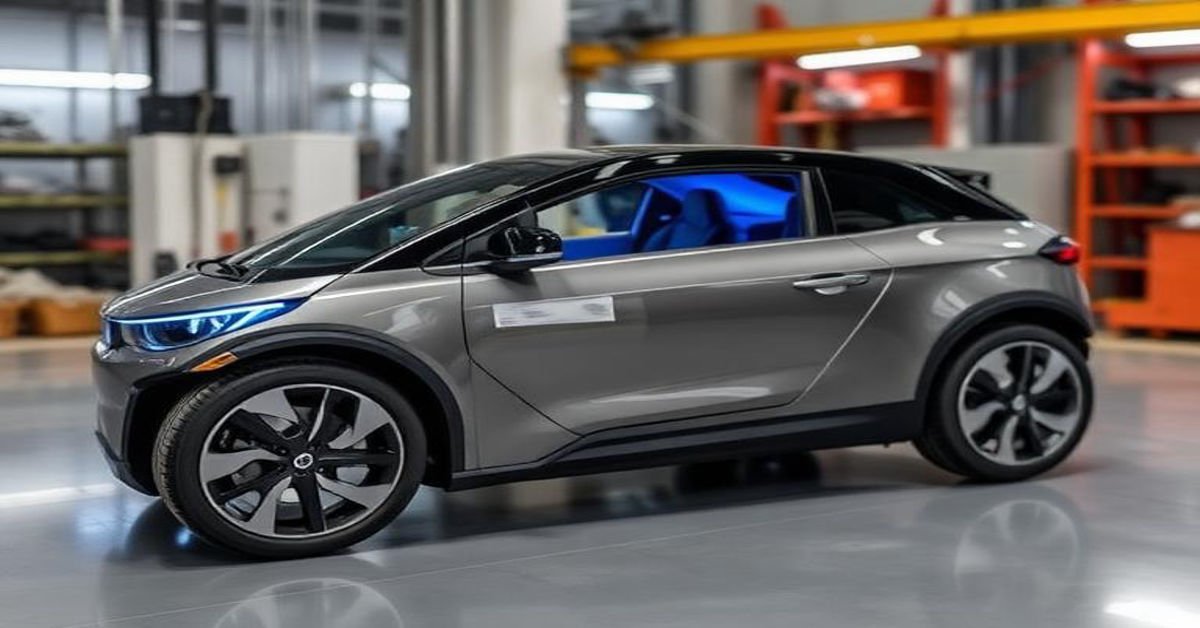
India’s electric vehicle (EV) ecosystem is evolving rapidly, driven by rising fuel costs, climate commitments, and strong government support for clean mobility. While lithium-ion batteries currently dominate the EV market, researchers and policymakers increasingly see solid-state batteries as the next major breakthrough. Solid-state EV battery research in India is gaining momentum, with academic institutions, government agencies, and private companies working together to overcome technical and cost barriers.
This article explores the current status of solid-state EV battery research in India, the science behind the technology, ongoing initiatives, challenges, and what the future may hold for Indian EV manufacturers and consumers.
Understanding Solid-State EV Batteries
Solid-state batteries differ from conventional lithium-ion batteries mainly in the type of electrolyte used. Instead of a liquid or gel electrolyte, solid-state batteries use a solid electrolyte, which fundamentally changes battery performance and safety.
Key Components of a Solid-State Battery
| Component | Description | Role in Battery Performance |
|---|---|---|
| Solid Electrolyte | Ceramic, polymer, or composite solid material | Enables ion movement while improving safety |
| Anode | Often lithium metal or advanced alloys | Increases energy density |
| Cathode | Lithium-based compounds | Determines voltage and capacity |
| Separator | Not always required | Reduces internal resistance |
The use of a solid electrolyte eliminates many safety risks associated with liquid electrolytes, such as leakage, thermal runaway, and fire hazards.
Why Solid-State Batteries Matter for India
India’s EV adoption faces unique challenges, including high temperatures, cost sensitivity, and the need for long battery life under varied driving conditions. Solid-state batteries directly address many of these concerns.
From an Indian perspective, this technology can reduce dependence on imported battery packs, improve vehicle safety in extreme climates, and support domestic manufacturing under initiatives like Make in India and Atmanirbhar Bharat.
Current State of Solid-State EV Battery Research in India
Solid-state EV battery research in India is still at an early to intermediate stage, but progress is accelerating. Research efforts are spread across government laboratories, IITs, IISc, and private sector R&D centers.
Key Research Institutions in India
| Institution | Focus Area | Contribution |
|---|---|---|
| IIT Madras | Solid electrolytes and lithium metal anodes | Material innovation and lab-scale prototypes |
| IISc Bengaluru | Ceramic and sulfide electrolytes | High-temperature stability research |
| IIT Bombay | Battery modeling and interface chemistry | Performance optimization |
| CSIR Labs | Indigenous battery materials | Cost reduction strategies |
These institutions are publishing peer-reviewed research and collaborating with industry players to translate lab results into scalable solutions.
Read more:
Government Support for Advanced Battery Research
The Indian government plays a crucial role in encouraging next-generation battery technologies, including solid-state batteries.
Major Government Initiatives
| Program | Objective | Relevance to Solid-State Batteries |
|---|---|---|
| National Mission on Transformative Mobility | Promote advanced EV technologies | Encourages battery R&D |
| PLI Scheme for Advanced Chemistry Cells | Boost domestic battery manufacturing | Future-ready for solid-state adoption |
| DST and MeitY Grants | Fund academic research | Supports material science innovation |
Although most incentives currently focus on lithium-ion batteries, policy frameworks are being designed to accommodate emerging technologies like solid-state batteries in the future.
Role of Indian Startups and Private Companies
Private companies and startups are increasingly entering the solid-state battery research space, often in collaboration with academic institutions. While commercial production is still years away, early-stage R&D is promising.
Indian startups are exploring hybrid solid-state designs that combine existing lithium-ion infrastructure with solid electrolytes to reduce cost and development time.
Industry-Academia Collaboration
| Partner Type | Contribution | Benefit |
|---|---|---|
| Universities | Fundamental research | Scientific validation |
| Startups | Prototype development | Faster innovation |
| OEMs | Testing and integration | Market readiness |
Such collaboration is essential to bridge the gap between laboratory success and real-world EV deployment.
Technical Challenges in Solid-State EV Battery Development
Despite its advantages, solid-state battery technology faces several technical hurdles that Indian researchers are actively working to overcome.
Key Challenges Explained
One major challenge is interface resistance between the solid electrolyte and electrodes. Poor contact can reduce battery efficiency and lifespan. Researchers are experimenting with coatings and composite materials to improve ion flow.
Another concern is manufacturing scalability. Producing solid electrolytes at scale requires precise control and high-quality raw materials, which can be expensive.
Challenges and Research Focus Areas
| Challenge | Impact | Research Direction |
|---|---|---|
| Interface Stability | Reduced battery life | Surface engineering |
| Material Cost | Higher EV prices | Indigenous material sourcing |
| Mechanical Fragility | Cracking under stress | Flexible solid electrolytes |
| Low-Temperature Performance | Reduced efficiency | Polymer-based solutions |
Indian researchers aim to design solutions that work well in local climatic conditions while remaining cost-effective.
Comparison with Conventional Lithium-Ion Batteries
To understand why solid-state battery research is important, it helps to compare the technology with existing lithium-ion batteries used in Indian EVs today.
Solid-State vs Lithium-Ion Batteries
| Feature | Lithium-Ion Battery | Solid-State Battery |
|---|---|---|
| Electrolyte | Liquid or gel | Solid |
| Safety | Moderate | Very high |
| Energy Density | Medium | High |
| Charging Speed | Moderate | Faster potential |
| Lifespan | Limited | Longer |
This comparison highlights why solid-state batteries are seen as a long-term solution rather than an immediate replacement.
Climate and Safety Advantages for Indian Conditions
India’s hot climate poses thermal management challenges for EV batteries. Solid-state batteries are more resistant to high temperatures and less prone to overheating, making them particularly suitable for Indian roads and cities.
From a safety perspective, reduced fire risk can increase consumer confidence, especially in densely populated urban areas where EV fires raise serious concerns.
Impact on EV Range and Charging Infrastructure
Solid-state batteries have the potential to significantly improve EV range. Higher energy density means vehicles can travel longer distances on a single charge, reducing range anxiety for Indian consumers.
Faster charging capability also aligns with India’s expanding but still developing EV charging infrastructure. Shorter charging times can reduce load on public charging stations and improve overall user experience.
Economic and Supply Chain Implications
If solid-state battery research in India succeeds at scale, it could transform the country’s battery supply chain. Domestic production of solid electrolytes and advanced materials can reduce reliance on imports and improve energy security.
Economic Benefits Overview
| Area | Expected Impact |
|---|---|
| Manufacturing | High-skill job creation |
| Imports | Reduced dependency |
| Exports | New technology markets |
| EV Costs | Long-term reduction |
These benefits align with India’s broader industrial and environmental goals.
Timeline for Commercialization in India
While global companies are targeting limited commercial deployment of solid-state batteries around the end of this decade, India is likely to follow a phased approach.
Initially, solid-state batteries may appear in niche applications such as premium EVs or stationary energy storage before becoming mainstream.
Ethical, Environmental, and Sustainability Considerations
Solid-state batteries can reduce the use of hazardous liquid electrolytes, making recycling safer and more environmentally friendly. Indian researchers are also exploring recyclable solid electrolyte materials to support circular economy goals.
From an ethical standpoint, reducing dependency on conflict-prone mineral supply chains remains a priority in battery research.
Future Outlook for Solid-State EV Battery Research in India
The future of solid-state EV battery research in India looks promising but requires sustained investment, policy support, and industry collaboration. With strong academic foundations and a rapidly growing EV market, India is well positioned to become a key contributor to global solid-state battery innovation.
As research matures, Indian EV manufacturers could gain access to safer, longer-lasting, and more efficient batteries tailored to local needs.
Final Thoughts
Solid-state EV battery research in India represents a critical step toward the next generation of electric mobility. While challenges remain, ongoing efforts by researchers, startups, and policymakers show clear commitment to advancing this technology.
For India, solid-state batteries are not just a scientific ambition but a strategic opportunity to build a safer, cleaner, and more self-reliant EV ecosystem. As research progresses, these batteries could redefine how electric vehicles are powered and perceived across the country.

9 thoughts on “Solid-State EV Battery Research in India”