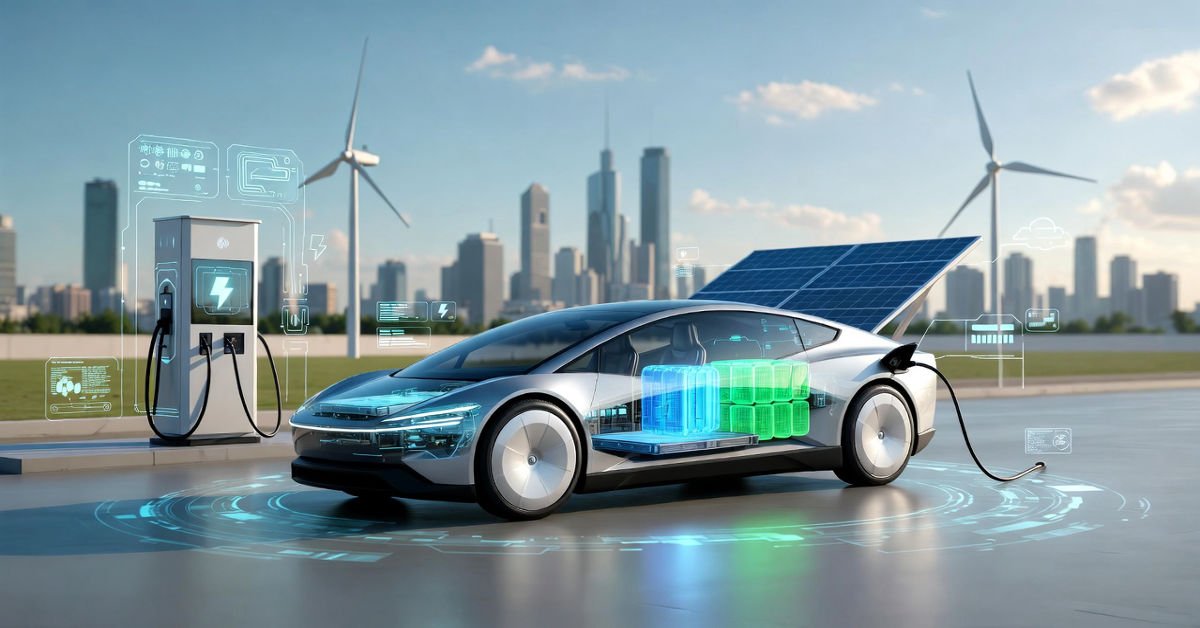
The global shift toward electric vehicles (EVs) is reshaping not only transportation but also how energy is stored, managed, and reused. At the heart of this transformation lies energy storage technology, which determines vehicle range, charging speed, safety, cost, and environmental impact.
As governments push for net-zero emissions and automakers race to innovate, energy storage systems are evolving rapidly. From lithium-ion improvements to solid-state batteries and vehicle-to-grid integration, electric vehicle energy storage trends are defining the next generation of mobility and clean energy infrastructure.
This article explores the latest developments, challenges, and future outlook of EV energy storage, offering insights for consumers, businesses, and policymakers alike.
Understanding Electric Vehicle Energy Storage
Energy storage in electric vehicles refers to the system that stores electrical energy for propulsion and auxiliary functions. Today, this is primarily achieved through rechargeable battery packs, but alternative technologies are gaining attention.
The energy storage system must meet several key requirements:
-
High energy density for longer driving range
-
Fast charging capability
-
Safety and thermal stability
-
Long lifespan and recyclability
-
Cost efficiency
Advancements in chemistry, software, and manufacturing are driving innovation across all these dimensions.
Key Electric Vehicle Energy Storage Technologies
| Technology | Description | Current Use | Future Potential |
|---|---|---|---|
| Lithium-ion batteries | Dominant EV battery technology using liquid electrolyte | Widely used in all EV models | Continued optimization |
| Solid-state batteries | Uses solid electrolyte instead of liquid | In testing and pilot projects | High safety and energy density |
| Lithium iron phosphate (LFP) | Safer and cheaper lithium chemistry | Popular in budget EVs | Growing adoption |
| Sodium-ion batteries | Uses sodium instead of lithium | Early-stage development | Cost-effective alternative |
| Supercapacitors | Stores energy electrostatically | Limited hybrid use | Fast charging support |
Trend 1: Shift Toward Solid-State Batteries
One of the most important electric vehicle energy storage trends is the development of solid-state batteries. Unlike traditional lithium-ion batteries that use liquid electrolytes, solid-state batteries use solid materials, improving safety and performance.
Key advantages include:
-
Higher energy density (longer range)
-
Lower risk of fire or leakage
-
Faster charging
-
Longer lifespan
Major automakers and battery companies are investing billions in this technology. While commercial deployment is still limited, experts expect solid-state batteries to enter mainstream EV production within the next decade.
Trend 2: Rise of Lithium Iron Phosphate (LFP) Batteries
Lithium iron phosphate batteries are becoming increasingly popular, especially in entry-level and mid-range EVs. They offer:
-
Lower manufacturing cost
-
High thermal stability
-
Longer cycle life
-
Reduced reliance on cobalt and nickel
Although LFP batteries have slightly lower energy density than other lithium chemistries, their safety and affordability make them attractive for urban mobility and fleet vehicles.
Trend 3: Battery Recycling and Second Life Applications
As EV adoption increases, so does the number of retired batteries. A major trend in energy storage is battery reuse and recycling.
Second-life applications include:
-
Home energy storage systems
-
Grid stabilization projects
-
Backup power for telecom and data centers
-
Solar and wind energy storage
This approach reduces environmental impact and maximizes the value of battery materials.
| Battery Lifecycle Stage | Purpose |
|---|---|
| Primary use | Powering electric vehicles |
| Secondary use | Stationary energy storage |
| Final stage | Material recycling |
Recycling technologies are also improving, allowing recovery of lithium, cobalt, and nickel for reuse in new batteries.
Trend 4: Vehicle-to-Grid (V2G) Integration
Vehicle-to-Grid technology allows EVs to return stored energy back to the power grid. This transforms EVs from simple transportation devices into mobile energy storage units.
Benefits of V2G include:
-
Grid stability during peak demand
-
Emergency power supply
-
Financial incentives for EV owners
-
Better use of renewable energy
As smart grids expand, EV energy storage will become a key part of national power systems.
Trend 5: Artificial Intelligence in Battery Management Systems
Battery performance is no longer controlled only by hardware. Software and artificial intelligence now play a vital role in monitoring and optimizing energy storage.
Modern Battery Management Systems (BMS) use AI to:
-
Predict battery degradation
-
Optimize charging cycles
-
Improve range accuracy
-
Detect faults early
-
Extend battery life
This combination of hardware and intelligent software is shaping a smarter EV ecosystem.
Trend 6: Faster Charging and Higher Energy Density
Consumer demand for shorter charging times and longer driving ranges continues to influence battery research.
Recent advancements focus on:
-
Ultra-fast charging technology
-
High-density cathode materials
-
Improved cooling systems
-
Better electrode design
These developments help reduce “range anxiety” and make EVs more practical for long-distance travel.
Trend 7: Alternative Battery Materials
To reduce dependency on limited resources, researchers are exploring alternatives to lithium and cobalt.
Promising alternatives include:
-
Sodium-ion batteries
-
Zinc-air batteries
-
Magnesium-based systems
-
Graphene-enhanced storage
These technologies aim to lower costs and improve sustainability, especially in emerging markets.
Environmental and Sustainability Impact
Energy storage trends are closely linked with environmental goals. The EV industry is moving toward:
-
Ethical mining practices
-
Lower carbon manufacturing
-
Closed-loop recycling systems
-
Reduced toxic waste
Sustainable battery production is now a priority for both governments and corporations.
Challenges Facing EV Energy Storage
Despite rapid progress, several challenges remain:
| Challenge | Impact |
|---|---|
| High battery costs | Limits EV affordability |
| Raw material shortages | Supply chain instability |
| Charging infrastructure gaps | Slower adoption |
| Recycling complexity | Environmental concerns |
| Safety standards | Regulatory compliance |
Solving these challenges requires global cooperation, technological innovation, and strong policy frameworks.
Role of Government and Industry
Government policies are accelerating energy storage innovation through:
-
Research funding
-
Tax incentives
-
Emission regulations
-
Infrastructure investments
Meanwhile, private companies are collaborating across sectors—automotive, energy, and technology—to build integrated storage solutions.
Future Outlook of Electric Vehicle Energy Storage
The future of EV energy storage looks promising. Experts predict:
-
Widespread adoption of solid-state batteries
-
Large-scale vehicle-to-grid networks
-
AI-driven battery optimization
-
Fully recyclable battery systems
-
Cost parity between EVs and gasoline vehicles
Energy storage will no longer be limited to vehicles alone but will form the backbone of renewable energy systems worldwide.
How Consumers Benefit from These Trends
For consumers, these trends translate into:
-
Longer driving range
-
Lower charging costs
-
Safer vehicles
-
Improved resale value
-
Reduced carbon footprint
As technology matures, EVs will become more accessible and reliable for everyday use.
Economic and Market Growth Impact
The energy storage market is expected to grow exponentially with EV adoption.
| Sector | Growth Impact |
|---|---|
| Automotive industry | New battery supply chains |
| Renewable energy | Grid-scale storage integration |
| Recycling industry | Circular economy development |
| Software sector | Smart energy management tools |
This growth will create millions of jobs and stimulate innovation across industries.
Conclusion
Electric vehicle energy storage trends are transforming transportation and energy systems at the same time. From solid-state batteries and recycling innovations to vehicle-to-grid technology and AI-driven management systems, the future of mobility depends on smarter, safer, and more sustainable energy storage.
As governments, industries, and consumers work together, these trends will accelerate the transition toward a cleaner and more resilient energy future. The next decade will not only redefine how vehicles move but also how the world stores and shares power.

2 thoughts on “Electric Vehicle Energy Storage Trends”