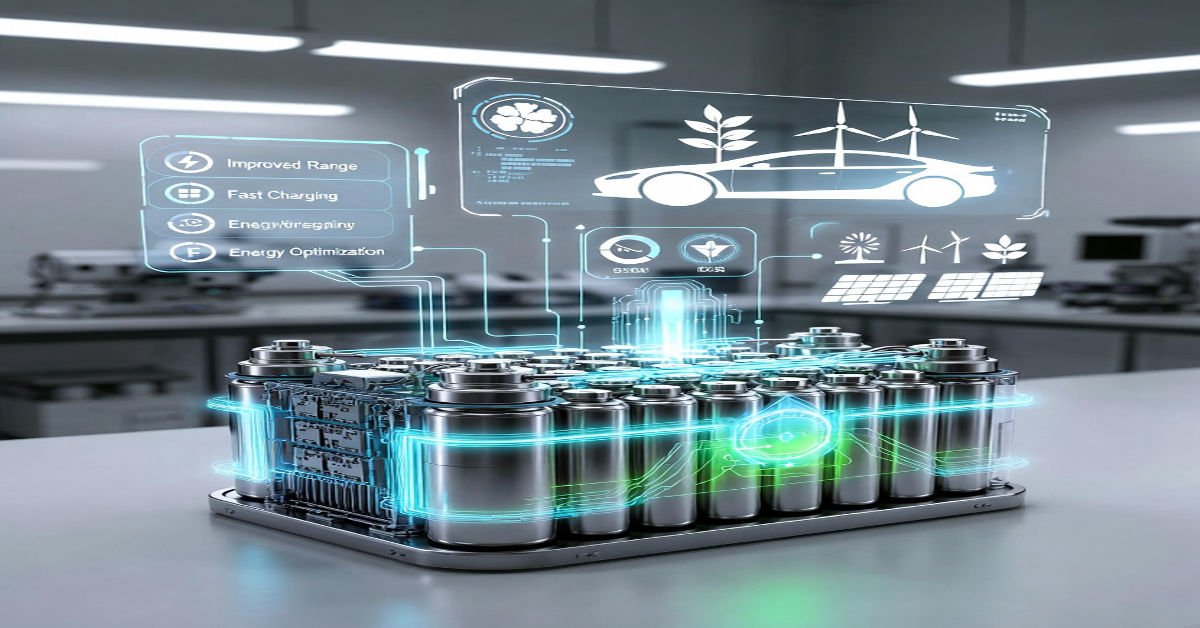
The global shift toward electric vehicles (EVs) is no longer a future promise—it is an accelerating reality. At the heart of this transformation lies one critical component: the battery. Over the past decade, EV battery efficiency breakthroughs have reshaped what electric mobility means for consumers, manufacturers, and governments alike. These innovations are not just about extending driving range; they are redefining safety, cost, sustainability, and long-term energy resilience.
As someone who closely follows EV technology trends and industry developments, it is clear that battery efficiency is now the single most important factor determining how quickly electric vehicles replace internal combustion engines. This article explores the latest EV battery efficiency breakthroughs, how they work, why they matter, and what they mean for the future of transportation.
Understanding EV Battery Efficiency
EV battery efficiency refers to how effectively a battery converts stored energy into usable power for driving, while minimizing energy loss during charging, discharging, and storage. Higher efficiency means longer range, faster charging, reduced heat loss, and better overall vehicle performance.
Battery efficiency is influenced by multiple factors, including:
-
Cell chemistry
-
Thermal management
-
Charging technology
-
Battery management systems (BMS)
-
Manufacturing precision
Recent breakthroughs address all of these areas simultaneously, creating compounding benefits for EV owners.
Why EV Battery Efficiency Breakthroughs Matter
Improving battery efficiency is not just a technical milestone—it has real-world implications for affordability, environmental impact, and mass adoption.
Efficient batteries allow manufacturers to use fewer raw materials while delivering the same or better performance. This directly reduces vehicle cost and lowers dependency on critical minerals. For consumers, it means less range anxiety, lower charging expenses, and longer battery lifespan.
From a sustainability perspective, efficiency breakthroughs reduce energy waste, cut lifecycle emissions, and make renewable energy integration more practical.
Key EV Battery Efficiency Breakthroughs Driving Change
Advanced Lithium-Ion Cell Chemistry
Modern lithium-ion batteries are far more efficient than early EV cells. Innovations in cathode and anode materials—such as high-nickel cathodes and silicon-enhanced anodes—have significantly increased energy density.
These improvements allow batteries to store more energy in the same physical space, reducing vehicle weight and improving efficiency per kilometer.
Solid-State Battery Technology
Solid-state batteries represent one of the most talked-about EV battery efficiency breakthroughs. By replacing liquid electrolytes with solid materials, these batteries offer:
-
Higher energy density
-
Reduced internal resistance
-
Improved thermal stability
-
Lower energy loss during charging
Although still in early commercialization stages, solid-state batteries have the potential to dramatically improve EV efficiency while enhancing safety.
Next-Generation Battery Management Systems (BMS)
Battery efficiency is no longer just about chemistry—it is also about intelligence. Modern BMS software uses real-time data, AI algorithms, and predictive analytics to optimize energy flow.
These systems balance cell usage, prevent overcharging, and reduce degradation, ensuring the battery operates at peak efficiency throughout its lifespan.
Thermal Management Breakthroughs
Heat is one of the biggest enemies of battery efficiency. Excessive heat leads to energy loss, faster degradation, and safety risks. Recent innovations in thermal management have transformed battery performance.
Manufacturers now use liquid cooling, phase-change materials, and integrated heat pumps to maintain optimal battery temperature across diverse climates. This ensures consistent efficiency whether the vehicle operates in extreme cold or heat.
Fast-Charging Efficiency Improvements
Early fast-charging technologies often sacrificed efficiency for speed, leading to energy loss and battery wear. Modern breakthroughs have changed this balance.
Advanced charging protocols and optimized current flow now allow ultra-fast charging with minimal efficiency loss. As a result, EVs can recharge up to 80% capacity in minutes rather than hours, without compromising battery health.
Major EV Battery Efficiency Breakthroughs and Their Impact
| Breakthrough Area | Efficiency Benefit | Impact on EV Users |
|---|---|---|
| Advanced cell chemistry | Higher energy density | Longer driving range |
| Solid-state batteries | Lower energy loss | Faster, safer charging |
| Intelligent BMS | Optimized energy usage | Extended battery life |
| Thermal management | Reduced heat waste | Stable performance |
| Fast-charging tech | Minimal efficiency drop | Shorter charging time |
This table highlights how multiple innovations work together to deliver real-world efficiency gains.
Manufacturing Innovations Improving Battery Efficiency
Battery efficiency is also influenced by how cells are manufactured. Precision manufacturing techniques, such as laser welding, dry electrode coating, and automated quality control, reduce defects and internal resistance.
These improvements lead to more consistent cell performance and lower energy losses across entire battery packs. As manufacturing scales, efficiency gains are becoming more affordable and widely available.
EV Battery Efficiency and Sustainability
One of the most important outcomes of efficiency breakthroughs is their contribution to sustainability. Efficient batteries require fewer raw materials per kilometer driven, reducing environmental impact.
Additionally, improved efficiency makes battery recycling more viable. Cells that degrade slowly retain usable capacity longer, supporting second-life applications such as grid storage and renewable energy buffering.
Real-World Driving Efficiency Gains
Efficiency breakthroughs are not just laboratory achievements—they are visible on the road. Modern EVs now travel significantly farther per kilowatt-hour than models from just five years ago.
Drivers benefit from:
-
Reduced charging frequency
-
Lower electricity costs
-
Improved performance consistency
-
Greater confidence on long trips
These real-world gains are a direct result of cumulative efficiency innovations.
EV Efficiency Improvements Over Time
| Year Range | Average Range per kWh | Key Efficiency Drivers |
|---|---|---|
| 2015–2017 | Low to moderate | Early lithium-ion tech |
| 2018–2020 | Moderate | Improved cathode design |
| 2021–2023 | High | Advanced BMS and cooling |
| 2024–2026 | Very high | AI optimization and new chemistries |
This progression shows how efficiency breakthroughs continue to accelerate EV performance.
Role of AI and Data Analytics in Battery Efficiency
Artificial intelligence has become a powerful tool in battery optimization. AI-driven systems analyze driving patterns, charging habits, and environmental conditions to dynamically adjust battery behavior.
These systems help minimize energy waste, predict maintenance needs, and improve long-term efficiency. As AI models evolve, battery systems will become even more adaptive and user-specific.
Challenges That Still Remain
Despite impressive progress, challenges remain. Some efficiency breakthroughs require rare materials or complex manufacturing processes that increase costs. Scaling solid-state batteries and next-generation chemistries remains a technical hurdle.
There is also a need for standardized charging infrastructure that fully supports high-efficiency batteries. Without compatible systems, efficiency gains cannot be fully realized by consumers.
Government Policies Supporting Battery Efficiency
Governments worldwide recognize the importance of battery efficiency in achieving climate goals. Incentives for research, domestic manufacturing, and energy-efficient EVs have accelerated innovation.
Efficiency-focused regulations also encourage automakers to prioritize performance per unit of energy, rather than simply increasing battery size.
What EV Battery Efficiency Breakthroughs Mean for Consumers
For everyday drivers, these breakthroughs translate into tangible benefits:
-
More kilometers per charge
-
Lower total cost of ownership
-
Improved resale value
-
Enhanced safety and reliability
Efficiency-focused design ensures that EVs are not only environmentally responsible but also economically practical.
Future Outlook: The Next Wave of Breakthroughs
The future of EV battery efficiency looks promising. Research is advancing in areas such as lithium-sulfur batteries, sodium-ion alternatives, and fully recyclable cell architectures.
As these technologies mature, efficiency gains will continue to reduce costs and expand access to electric mobility across global markets.
Expert Perspective on Battery Efficiency Trends
Industry experts agree that the next decade will prioritize efficiency over sheer capacity. Instead of larger batteries, manufacturers are focusing on smarter, lighter, and more efficient energy storage systems.
This shift aligns with global sustainability goals and consumer demand for practical, long-lasting EVs.
Conclusion: Efficiency Is the True EV Revolution
EV battery efficiency breakthroughs are quietly revolutionizing transportation. While flashy designs and autonomous features attract attention, efficiency improvements deliver the most lasting impact.
1 thought on “EV Battery Efficiency Breakthroughs”