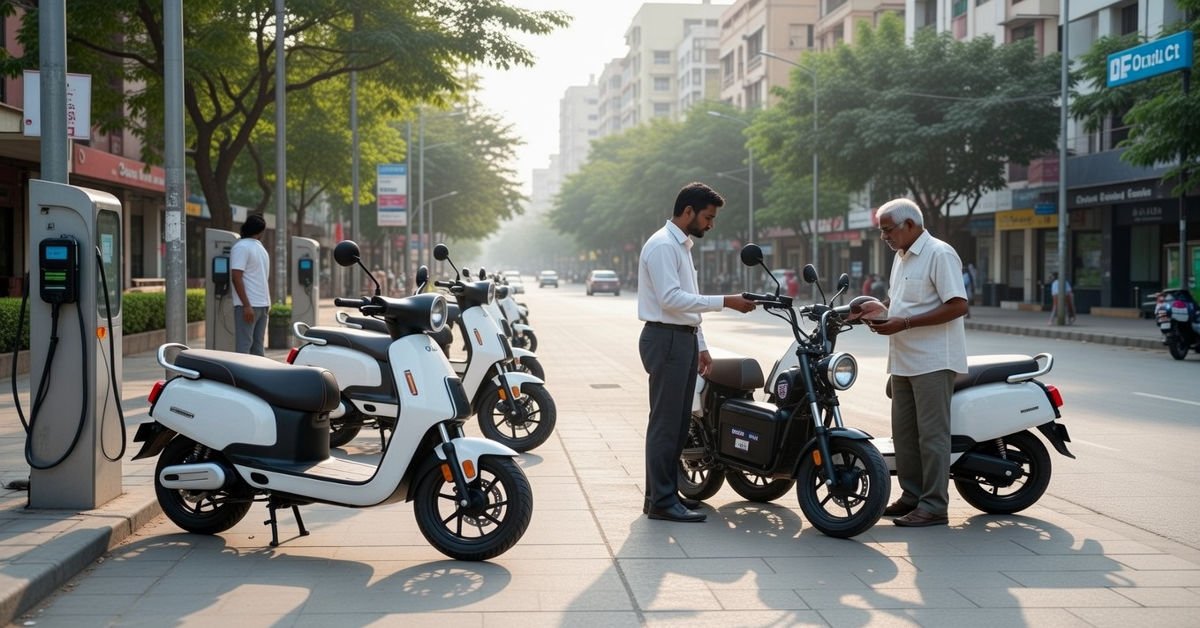
EV bikes under 50,000 in India revolution in India is no longer limited to premium scooters and high-end electric motorcycles. With rising fuel prices, growing environmental awareness, and government incentives, the demand for low-cost electric bikes has increased sharply. Today, several manufacturers offer EV bikes under ₹50,000, making electric mobility accessible to students, daily commuters, and budget-conscious households.
This article explores the best options available in this price range, their features, advantages, limitations, and what buyers should realistically expect. Drawing from market trends, user experiences, and industry insights, this guide aims to help readers make an informed decision when choosing a low-budget electric bike.
Why EV Bikes Under ₹50,000 Are Gaining Popularity
The shift towards electric transportation is driven by three major factors: affordability, sustainability, and practicality. EV bikes priced under ₹50,000 appeal to a wide audience because they combine low running costs with simple operation.
For many first-time EV buyers, these entry-level models serve as an introduction to electric mobility. They are ideal for:
-
Short daily commutes (5–25 km)
-
Students and young professionals
-
Senior citizens
-
Delivery workers
-
Urban households seeking a second vehicle
Unlike petrol bikes, electric bikes require no fuel purchases and very little maintenance. Charging them at home costs only a few rupees per day, making them extremely economical over time.
Key Features of EV Bikes in This Price Segment
Electric bikes under ₹50,000 are designed to be practical rather than performance-oriented. Their features focus on safety, efficiency, and ease of use.
Common features include:
-
Speed range: 20–25 km/h (many models do not require a driving license)
-
Battery type: Lead-acid or entry-level lithium-ion
-
Range: 40–70 km per charge
-
Charging time: 4–6 hours
-
Weight capacity: 120–150 kg
-
Brakes: Drum brakes (front and rear)
-
Suspension: Basic telescopic or spring suspension
-
Lighting: LED headlamp and indicators
-
Display: Digital or semi-digital dashboard
These bikes are primarily meant for city use and smooth roads, rather than highways or rough terrain.
Top EV Bikes Under ₹50,000 in India (2026 Market Snapshot)
The following table highlights some popular electric bikes and scooters available in the sub-₹50,000 category.
| Model Name | Approx Price (₹) | Range (km) | Top Speed (km/h) | Battery Type | Ideal For |
|---|---|---|---|---|---|
| Ampere Reo Li Plus | 49,900 | 60 | 25 | Lithium-ion | Students, city commuting |
| Hero Electric Flash LX | 44,990 | 50 | 25 | Lead-acid | Short daily travel |
| Avon E Scoot 504 | 45,000 | 65 | 24 | Lead-acid | Budget buyers |
| Okinawa Lite | 49,999 | 60 | 25 | Lithium-ion | Lightweight riders |
| Ujaas eGo T3 | 42,000 | 55 | 25 | Lead-acid | Delivery & errands |
Prices may vary by state subsidies and dealer offers.
Performance Expectations: What You Get Under ₹50,000
It is important for buyers to set realistic expectations. EV bikes in this price range are not designed for speed or long highway travel. Instead, they focus on reliability and cost efficiency.
Speed and Handling
Most models have a top speed between 20 and 25 km/h. This makes them safe for city traffic and suitable for beginners. However, overtaking and steep slopes may feel slow when riding with a passenger.
Battery and Charging
Lead-acid batteries are common in this segment due to lower cost, but they have a shorter lifespan than lithium-ion batteries. On average, lead-acid batteries last 1.5 to 2 years, while lithium-ion batteries can last 3 to 4 years.
Charging can be done using a standard household socket. A full charge usually costs between ₹8 and ₹15 depending on electricity tariffs.
Comfort and Design
Most EV bikes under ₹50,000 have simple designs with plastic body panels and lightweight frames. Seats are usually flat and wide, making them comfortable for short trips. Storage space is limited but sufficient for small items.
Cost Comparison: EV Bike vs Petrol Bike
One of the strongest reasons to choose an EV bike is long-term savings.
| Factor | EV Bike (Under ₹50,000) | Petrol Bike |
|---|---|---|
| Fuel/Charging Cost (monthly) | ₹200–300 | ₹2,000–3,000 |
| Maintenance | Very low | Moderate to high |
| Oil changes | Not required | Required |
| Emissions | Zero | High |
| Noise | Silent | Loud |
Over a year, an EV bike user can save ₹20,000–30,000 in fuel and maintenance compared to a petrol bike.
Government Subsidies and Support
The Indian government promotes electric mobility through schemes like FAME (Faster Adoption and Manufacturing of Electric Vehicles). Some states also provide additional subsidies, reducing the effective cost of EV bikes.
For example:
-
Delhi and Maharashtra offer purchase incentives
-
Road tax and registration fees are often waived
-
Charging infrastructure is expanding in urban areas
These benefits make EV bikes under ₹50,000 even more affordable for the average buyer.
Who Should Buy an EV Bike Under ₹50,000
This category is best suited for:
-
Students: Affordable transportation for college and coaching centers
-
Daily commuters: Office travel within 10–15 km radius
-
Senior citizens: Easy to ride, low speed, and lightweight
-
Delivery agents: Cost-effective short-distance operations
-
Eco-conscious users: Reducing carbon footprint
However, it may not be ideal for:
-
Highway travel
-
Long-distance touring
-
Heavy load usage
-
High-speed enthusiasts
Advantages of Budget EV Bikes
Low Running Cost
Charging costs are minimal compared to petrol. A full charge costs less than a cup of tea in many cities.
Environment Friendly
Zero tailpipe emissions mean cleaner air and reduced noise pollution.
Simple Maintenance
No clutch, gearbox, or engine oil changes. Maintenance mainly involves brakes, tires, and battery checks.
Easy to Ride
Automatic transmission and light weight make these bikes beginner-friendly.
Limitations and Challenges
Despite their benefits, budget EV bikes also have limitations.
-
Limited speed and range
-
Battery replacement cost can be high after a few years
-
Not suitable for rural roads with poor infrastructure
-
Fewer service centers in smaller towns
-
Lower resale value compared to petrol bikes
Buyers must consider these factors before purchasing.
Safety and Reliability Considerations
Safety should always be a priority. Buyers should ensure that:
-
The battery has proper certification
-
The charger is original and ISI marked
-
The bike has proper brakes and lights
-
Warranty is clearly mentioned by the dealer
Reliable brands usually offer 2–3 years warranty on battery and motor.
Expert Buying Tips
When choosing an EV bike under ₹50,000, follow these expert guidelines:
-
Check battery type: Prefer lithium-ion if budget allows.
-
Verify range: Choose a model that meets your daily travel needs.
-
Service network: Ensure nearby service centers exist.
-
Warranty terms: Read battery replacement policy carefully.
-
Test ride: Comfort and braking performance should be checked in person.
-
Spare parts availability: Confirm with dealer before purchase.
Future of Low-Cost EV Bikes in India
The future of affordable electric bikes looks promising. With advances in battery technology and government support, prices are expected to decrease further while performance improves.
Manufacturers are working on:
-
Longer battery life
-
Faster charging
-
Better design and durability
-
Smart connectivity features
Within the next few years, EV bikes under ₹50,000 may become the primary mode of transport for short-distance urban commuting.
Frequently Asked Questions (FAQ)
Do EV bikes under ₹50,000 need a driving license?
Most models with top speed below 25 km/h do not require a license or registration. However, rules may vary by state.
How long does the battery last?
Lead-acid batteries last around 1.5–2 years. Lithium-ion batteries can last up to 4 years with proper care.
Is charging safe at home?
Yes, if you use the company-provided charger and a stable power socket.
Can these bikes run in rain?
Yes, most are water-resistant but should not be submerged in water.
Conclusion: Are EV Bikes Under ₹50,000 Worth Buying?
EV bikes under ₹50,000 represent a practical and economical solution for urban mobility in India. While they cannot replace high-speed motorcycles or long-range scooters, they serve their purpose exceptionally well for short daily commutes.
With minimal running costs, low maintenance, and environmental benefits, these bikes are especially suitable for students, working professionals, and families seeking a second vehicle. As technology improves and charging infrastructure expands, the value of budget electric bikes will only increase.
1 thought on “EV bikes under 50,000 in India”