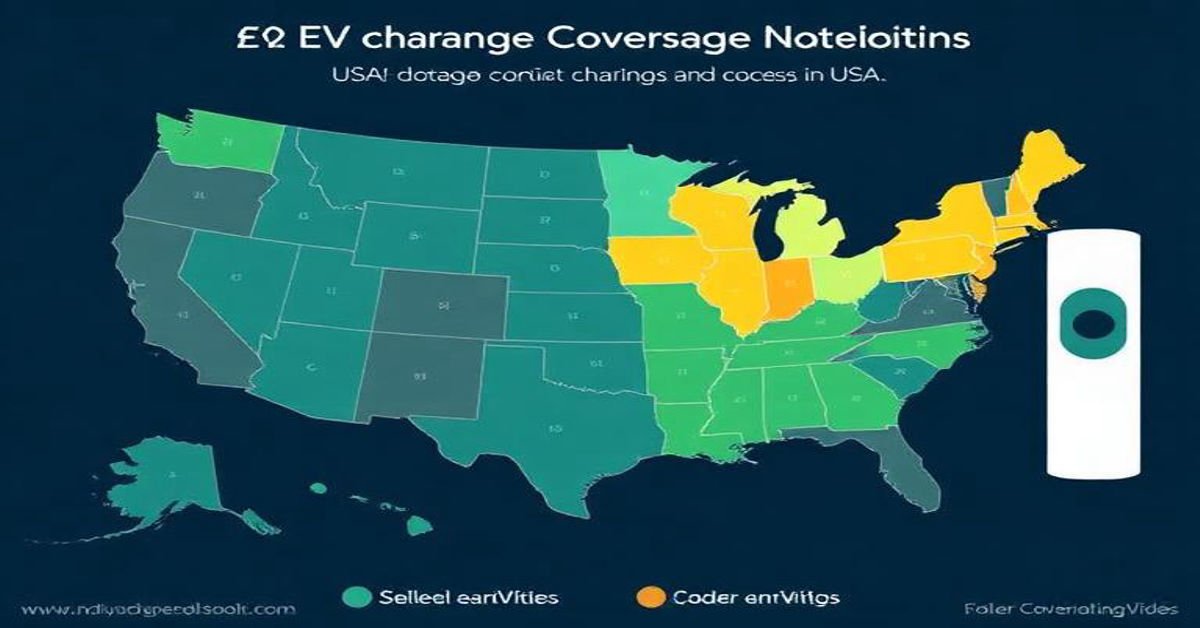
EV Charging Coverage Gaps in USA are transforming how we think about transportation, sustainability, and energy independence. However, as adoption accelerates, the infrastructure that supports EVs—most notably EV charging networks—must keep pace. While much progress has been made, significant coverage gaps remain across the United States, affecting accessibility, convenience, and overall confidence in EV ownership. In this article, we take an in-depth, expert-driven look at the current state of EV charging infrastructure in the U.S., the nature of coverage gaps, the factors behind these gaps, and the opportunities that lie ahead.
Introduction: The Rapid Rise of EVs and Why Charging Infrastructure Matters
Over the past decade, EV sales in the United States have grown rapidly. With commitments from major automakers to electrify their lineups and policy incentives such as federal tax credits, EV adoption is expected to continue its upward trend.
However, EV drivers depend heavily on public charging networks, especially in areas where residential charging is limited (e.g., apartment complexes). Unlike gasoline, which can be pumped almost anywhere, EV charging requires infrastructure that is still under development.
This brings us to the heart of the issue: EV charging coverage gaps.
What Are EV Charging Coverage Gaps?
EV charging coverage gaps refer to geographic or demographic areas where access to charging stations is insufficient relative to demand. These gaps may manifest in several ways:
-
Regions with very few or no charging stations
-
Long distances between charging points on highways
-
Urban areas with limited accessible chargers
-
Disparities between affluent vs. underserved communities
Identifying and understanding these gaps is critical to fostering equitable and efficient EV adoption.
Current EV Charging Infrastructure in the USA: An Overview
Before we dive into gaps, let’s review the latest landscape of EV charging infrastructure.
| Region | Approx. Number of Public EV Chargers | Level 2 Chargers | DC Fast Chargers |
|---|---|---|---|
| Northeast | 40,000+ | 32,000 | 8,000 |
| Midwest | 25,000+ | 20,000 | 5,000 |
| South | 30,000+ | 24,000 | 6,000 |
| West | 60,000+ | 45,000 | 15,000 |
| Total (USA) | 155,000+ | 121,000 | 34,000 |
Data values are approximate and represent public charging stations registered with major networks and government databases.
Types of EV Chargers
-
Level 1: Slowest charging, typically at home
-
Level 2: Common public and workplace charging
-
DC Fast Chargers: High-speed stations mainly along highways and busy corridors
While a growing number of chargers nationwide is a positive sign, the distribution of these chargers is uneven, which leads to coverage issues.
Mapping the Coverage Gaps
1. Rural and Remote Areas
One of the most prominent gaps in EV charging coverage exists in rural and remote regions. These areas often have:
-
Low population density
-
Limited EV adoption
-
High investment cost for infrastructure
As a result, EV drivers in these regions face range anxiety due to long distances between chargers.
For example, in parts of the Great Plains, Appalachia, and mountainous Western states, drivers may travel 50–100+ miles without a reliable charging option.
2. Interstate Highway Corridors
While major interstate highways have seen increased deployment of DC fast chargers, critical corridors remain underserved. This includes:
-
Sections of I-40, I-70, I-90, and other transcontinental routes
-
Rural stretches without any fast charging within a reasonable radius (e.g., 50 miles)
Coverage gaps on highways directly impact long-distance EV travel, limiting tourism and commercial EV fleet operations.
3. Urban Underserved Neighborhoods
Contrary to common belief, not all cities have ample charging access. Many urban centers have coverage gaps, especially in neighborhoods that:
-
Have lower income
-
Rely on street parking (no home chargers)
-
Lack investment in charging infrastructure
These gaps introduce equity concerns, as residents without home charging are disproportionately affected.
4. Multi-Dwelling Unit (MDU) Complexes
An often-overlooked coverage issue is charging access at apartments, condos, and rental properties. Many EV owners in MDUs cannot install chargers due to:
-
Cost barriers
-
Lack of electrical infrastructure
-
Landlord approval challenges
This gap highlights the importance of residential charging policy reforms.
Why Coverage Gaps Exist: Core Challenges Explained
Understanding why these charging gaps exist helps stakeholders address them more effectively.
1. High Infrastructure Costs
Installing charging stations—especially DC fast chargers—requires:
-
Electrical upgrades
-
Civil construction
-
Permitting and planning
These costs are often higher in rural areas or places with limited utility capacity.
2. Uneven Incentive Distribution
While federal and state incentives exist, they often:
-
Favor high-demand urban areas
-
Require match funding
-
Are difficult for smaller communities to access
Smaller municipalities may lack grant-writing expertise or budget flexibility, leading to slower deployment.
3. Utility Grid Limitations
In many regions, the local electrical grid cannot support the load required for fast chargers without upgrades. Federal support often covers:
-
Charger hardware
-
Site preparation
—but not grid enhancement, which poses a bottleneck.
4. Market Risk Perceptions
Investors and charging companies may be hesitant to expand into:
-
Areas with low EV adoption
-
Territories with uncertain return on investment
-
Locations lacking long-term utility partnerships
This risk aversion slows coverage growth in critical zones.
Impact of Coverage Gaps on EV Adoption
Coverage gaps don’t just inconvenience drivers—they inhibit electric mobility adoption and create broader societal implications.
1. Range Anxiety and Consumer Confidence
Even a few miles without a charger can trigger range anxiety, discouraging potential EV buyers. Comprehensive coverage is essential to:
-
Build consumer confidence
-
Support long-distance travel
-
Normalize EV usage for all drivers
2. Economic Development Barriers
Areas lacking charging stations risk being overlooked by:
-
EV-centric travelers
-
Commercial EV fleets
-
EV manufacturers and service providers
Improving coverage can attract investment and tourism.
3. Equity and Accessibility Issues
Underserved communities often coincide with:
-
Lower-income populations
-
Limited public transportation
-
Housing without garages
Without accessible charging, these groups cannot fully benefit from EV cost savings and environmental advantages.
Case Studies: Where Gaps Are Most Evident
Here we analyze specific regions with notable coverage challenges.
| Region / State | Key Coverage Issues | Contributing Factors |
|---|---|---|
| Wyoming | Sparse chargers | Low population density; limited investment |
| West Virginia | Few DC fast chargers | Rugged terrain; grid constraints |
| Mississippi | Urban & rural gaps | Economic barriers; policy focus elsewhere |
| Upstate NY | Winter conditions; few chargers | Severe cold; high grid demand |
Wyoming: A Rural Charging Challenge
Wyoming exemplifies rural charging gaps. With vast open spaces and few populated cities, EV infrastructure is sparse. Travelers must plan routes carefully, and local businesses miss out on potential EV tourism.
West Virginia: Terrain and Investment Hurdles
West Virginia’s mountainous terrain raises installation costs. Additionally, limited state-level EV policies have slowed the pace of charger rollout.
Mississippi: Dual Urban-Rural Disparities
Mississippi highlights that coverage gaps are not exclusively rural. Urban centers like Jackson lack sufficient Level 2 and fast chargers, compounded by economic development challenges.
Federal and State Efforts to Close Gaps
1. Bipartisan Infrastructure Law (BIL)
The 2021 Bipartisan Infrastructure Law allocated $7.5 billion for EV charging deployment across the U.S., including:
-
National network of fast chargers
-
Focus on rural and underserved areas
-
Competitive grants for states
This funding serves as a catalyst to fill coverage gaps.
2. State Incentive Programs
Several states have launched complementary programs, such as:
-
Rebates for public chargers
-
Incentives for workplace and residential chargers
-
Utility-run EV infrastructure pilots
State efforts vary based on local needs, budgets, and political priorities.
3. Public-Private Partnerships
Collaboration between governments, utilities, and private companies accelerates deployment. These partnerships:
-
Share investment risk
-
Align infrastructure with demand patterns
-
Improve operational reliability
Innovations and Solutions for Coverage Gaps
Addressing coverage gaps requires smart strategies, including:
1. Smart Charger Placement Using Data Analytics
By analyzing traffic flow, EV registration data, and travel patterns, planners can optimize charger locations for maximum impact.
2. Grid-Aware Charging Systems
Advancements in grid integration allow chargers to adapt to local electrical capacity, reducing upgrade costs.
3. Community-Focused Solutions
Local governments and nonprofits can drive community charging hubs in areas lacking home chargers.
4. Incentives for Rural Deployment
Policy proposals include:
-
Higher subsidies for rural charging
-
Utility rate relief for EV stations
-
Mandatory coverage targets
The Future of EV Charging in the USA
While challenges persist, progress is unmistakable. Industry commitments, evolving policy frameworks, and technological innovation point toward a more connected charging ecosystem.
Key trends shaping the future include:
-
Ultrafast charging technologies
-
Wireless and mobile charging solutions
-
Integration with renewable energy
-
Vehicle-to-grid (V2G) capabilities
By narrowing coverage gaps, the U.S. will empower more drivers to make the switch to electric vehicles.
Conclusion: Bridging the Gaps to Drive the Future
EV charging coverage gaps in the United States represent both a challenge and an opportunity. While gaps currently limit accessibility in rural, urban underserved, and multi-dwelling areas, ongoing investments and innovations are paving the way for a more reliable and inclusive charging network.
Success will require ongoing collaboration between federal and state governments, utilities, private companies, and local communities. As infrastructure improves, EV adoption will follow, creating economic, environmental, and mobility benefits for all Americans.
Frequently Asked Questions (FAQ)
What is considered a ‘coverage gap’?
A coverage gap refers to an area where charging stations are sparse or absent relative to EV driver needs, resulting in long distances between available chargers.
Are there enough fast chargers for long-distance travel?
While major highways have seen improvements, significant stretches—especially in rural regions—still lack reliable fast chargers.
Can EV charging coverage be equitable?
Yes, with targeted policy support, community planning, and incentives, charging access can expand to underserved and low-income areas.
How is the government supporting EV infrastructure?
Through funding like the Bipartisan Infrastructure Law, state incentives, and public-private partnerships aimed at expanding charging networks.
2 thoughts on “EV Charging Coverage Gaps in USA”