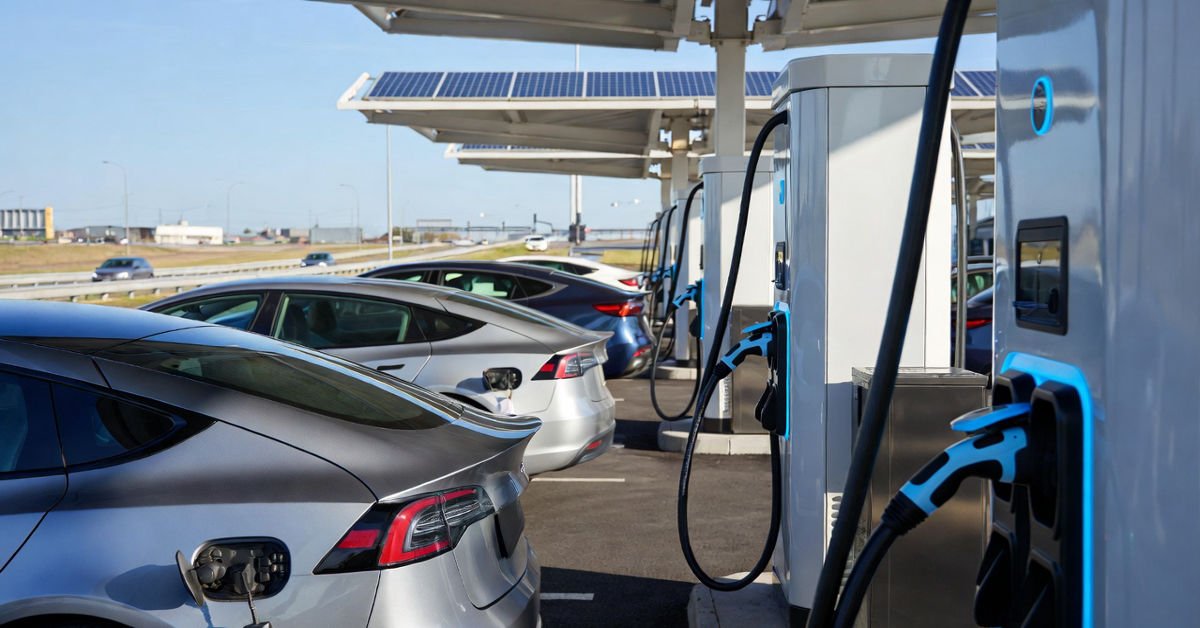
The electric vehicle (EV) market in the United States is evolving at an unprecedented pace. One of the biggest reasons behind this rapid adoption is the arrival of new fast charging EV models that significantly reduce charging time while delivering better range, performance, and technology. For many buyers, charging speed has become just as important as driving range or price.
In the early days of EVs, drivers often worried about long charging hours and limited public charging stations. Today, that concern is steadily disappearing. Automakers are introducing next-generation EVs that support DC fast charging, ultra-fast 800-volt platforms, and compatibility with expanding charging networks across the USA.
This article provides a detailed, trustworthy overview of new fast charging EV models available in the USA, how fast-charging technology works, why it matters, and which models are setting new benchmarks in 2025 and beyond.
Why Fast Charging Matters for EV Buyers in the USA
Fast charging is a critical factor for EV adoption, especially in a large country like the United States where long-distance travel is common. Unlike slow home charging, fast charging allows drivers to add hundreds of miles of range in minutes rather than hours.
Key benefits of fast charging EVs include:
-
Reduced waiting time during road trips
-
Improved convenience for urban and apartment dwellers
-
Better alignment with gasoline vehicle refueling habits
-
Increased confidence among first-time EV buyers
With federal investments in charging infrastructure and private companies expanding high-power charging stations, fast charging EVs are becoming more practical for everyday use.
How Fast Charging Technology Works
Fast charging EVs primarily rely on DC (Direct Current) fast chargers, which bypass the vehicle’s onboard charger and send power directly to the battery. Modern EVs support charging speeds ranging from 150 kW to over 350 kW, depending on battery design and architecture.
Many new EV models use 800-volt battery systems, allowing higher power transfer with less heat and energy loss. This technology is one of the main reasons newer EVs can charge from 10% to 80% in under 20 minutes.
Charging Levels Explained
| Charging Level | Power Output | Typical Use Case | Charging Speed |
|---|---|---|---|
| Level 1 | 120V | Home outlet | Very slow |
| Level 2 | 240V | Home & public | Moderate |
| DC Fast Charging | 150–350 kW | Highways & cities | Very fast |
DC fast charging is the standard for new EV models targeting U.S. buyers who value time efficiency.
New Fast Charging EV Models Available in the USA
Automakers are now competing not just on range, but on how quickly that range can be added. Below are some of the most notable new and upcoming fast charging EV models in the USA.
Tesla Models with Fast Charging
Tesla continues to lead in charging convenience thanks to its Supercharger network and constant vehicle upgrades.
Popular fast charging Tesla models include:
-
Tesla Model 3 (Highland refresh)
-
Tesla Model Y Long Range
-
Tesla Cybertruck
Tesla vehicles can add up to 200 miles of range in about 15 minutes using Superchargers, making them ideal for long-distance travel.
Ford Electric Vehicles
Ford has made significant progress in the EV space, especially with fast charging support.
Key Ford fast charging EVs:
-
Mustang Mach-E (newer trims)
-
F-150 Lightning
These models support DC fast charging up to 150 kW, allowing drivers to regain useful range quickly during stops.
Hyundai Fast Charging EV Lineup
Hyundai is widely praised for its 800-volt EV technology.
Notable models include:
-
Ioniq 5
-
Ioniq 6
These vehicles can charge from 10% to 80% in approximately 18 minutes, rivaling some luxury EVs at a lower price point.
Kia EV Models
Kia’s EVs are gaining popularity in the U.S. for their balance of performance and charging speed.
Top fast charging Kia EVs:
-
EV6
-
EV9
Both models support ultra-fast charging and are suitable for families and road-trip enthusiasts.
General Motors Ultium Platform EVs
General Motors has introduced its Ultium battery platform to power next-generation EVs.
Fast charging GM models include:
-
Chevrolet Blazer EV
-
Chevrolet Equinox EV
-
Cadillac Lyriq
These vehicles are designed to support high-speed charging while maintaining battery longevity.
Comparison Table: New Fast Charging EV Models in the USA
| EV Model | Max Charging Speed | Platform Type | Approx. 10–80% Time | Vehicle Segment |
|---|---|---|---|---|
| Tesla Model Y | 250 kW | 400V | ~20 min | SUV |
| Hyundai Ioniq 5 | 350 kW | 800V | ~18 min | Crossover |
| Kia EV6 | 350 kW | 800V | ~18 min | Crossover |
| Ford Mustang Mach-E | 150 kW | 400V | ~38 min | SUV |
| Cadillac Lyriq | 190 kW | Ultium | ~30 min | Luxury SUV |
Charging Infrastructure Growth in the USA
Fast charging EV adoption is closely tied to infrastructure availability. The U.S. government and private players are investing heavily in nationwide charging networks.
Key developments include:
-
Expansion of highway fast charging corridors
-
Increased compatibility with CCS and NACS connectors
-
Retail and workplace fast charging installations
As charging stations become more common, fast charging EVs are becoming a realistic option even for drivers without home chargers.
Battery Health and Fast Charging
A common concern among buyers is whether frequent fast charging harms the battery. Modern EVs are designed with advanced thermal management systems that regulate heat and charging speed.
Manufacturers recommend:
-
Using fast charging primarily during travel
-
Relying on Level 2 charging for daily needs
-
Avoiding constant charging to 100%
Following these guidelines helps preserve battery health while enjoying fast charging benefits.
Cost Considerations for Fast Charging EVs
Fast charging EVs may have a slightly higher upfront cost due to advanced battery systems. However, long-term savings from reduced fuel and maintenance expenses often offset the initial price.
Additional financial benefits include:
-
Federal EV tax credits (for eligible models)
-
Lower operating costs than gasoline vehicles
-
Reduced dependence on fuel price fluctuations
Who Should Buy a Fast Charging EV?
Fast charging EVs are ideal for:
-
Long-distance commuters
-
Ride-share and delivery drivers
-
Families who travel frequently
-
Apartment residents without overnight charging
These vehicles offer flexibility and peace of mind for diverse driving needs.
Future Trends in Fast Charging EV Technology
Looking ahead, the next generation of EVs in the USA is expected to feature:
-
Sub-15-minute charging times
-
Solid-state battery development
-
Wider adoption of 800-volt platforms
-
Improved charging efficiency in cold climates
These innovations will further close the gap between EVs and traditional fuel vehicles.
Final Thoughts
The rise of new fast charging EV models in the USA marks a major milestone in the transition to sustainable transportation. With shorter charging times, improved infrastructure, and a growing range of models across all price segments, EV ownership is becoming more practical than ever.