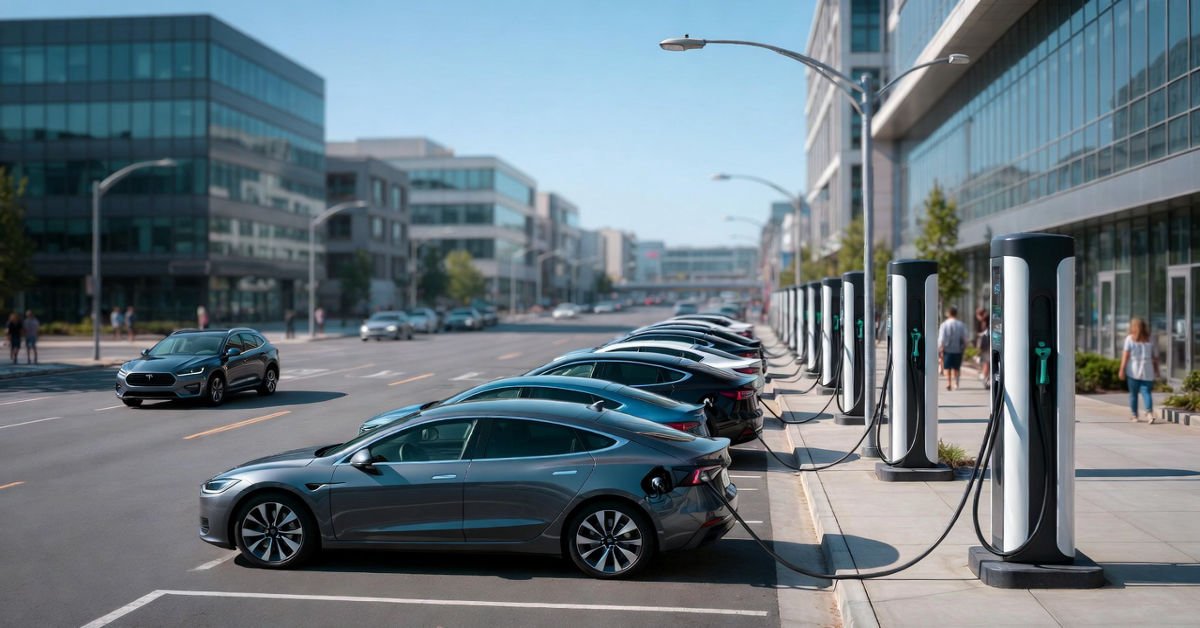
The United States is experiencing a rapid shift toward electric mobility. As electric vehicle (EV) adoption grows, the need for reliable and accessible charging infrastructure has become a national priority. Among the most impactful solutions is the development of on street EV charging stations. These stations allow drivers without home charging access—especially apartment residents and urban commuters—to conveniently charge their vehicles where they park every day.
On street EV charging stations in the USA are transforming city transportation, reducing emissions, and supporting federal sustainability goals. This guide explores how these stations work, where they are installed, their benefits, challenges, policies, and what the future holds for this essential public infrastructure.
Understanding On Street EV Charging Stations
On street EV charging stations are publicly accessible chargers installed along curbsides, sidewalks, or designated roadside parking areas. Unlike private chargers located in homes or workplaces, these stations are part of municipal infrastructure and are available to the general public.
They are designed to integrate seamlessly into urban environments without disrupting traffic or pedestrian flow. Most are connected to existing electrical grids and often use smart technology for billing, monitoring, and energy efficiency.
Key Characteristics of On Street Charging
-
Located in residential neighborhoods and commercial zones
-
Designed for short-term and overnight parking
-
Usually Level 2 chargers (some fast chargers in busy corridors)
-
Operated by municipalities or private charging networks
Why On Street EV Charging Matters in the USA
The majority of Americans live in cities or suburbs where private garages are not always available. According to transportation studies, nearly 40% of urban households lack off-street parking. Without public charging, EV ownership would be difficult for these residents.
On street charging fills this critical gap and promotes equitable access to clean transportation.
Primary Benefits
-
Encourages EV adoption among apartment dwellers
-
Reduces reliance on fossil fuels
-
Supports state and federal climate goals
-
Improves air quality in cities
-
Enhances local property value and business traffic
Types of On Street EV Charging Stations in the USA
Different charging technologies are used depending on traffic volume, location, and energy demand.
| Charging Type | Power Output | Average Charging Time | Typical Locations |
|---|---|---|---|
| Level 1 Charging | 120V | 8–20 hours | Residential streets |
| Level 2 Charging | 240V | 3–6 hours | Downtown areas, parking zones |
| DC Fast Charging | 480V+ | 20–60 minutes | High-traffic corridors |
Level 2 chargers dominate most on street installations due to their balance of speed and grid compatibility. DC fast chargers are more expensive and usually installed near highways or transit hubs.
How On Street EV Charging Stations Work
On street EV chargers operate using networked software that enables drivers to locate stations, pay for electricity, and monitor charging status.
Basic Process
-
Driver parks in designated EV charging spot
-
Connects vehicle to charging unit
-
Authenticates via mobile app, RFID card, or credit card
-
Charging begins automatically
-
User receives notification when charging completes
Many stations are equipped with smart meters and remote monitoring systems to ensure safety and efficiency.
Major Cities Leading On Street EV Charging in the USA
Several U.S. cities have become pioneers in deploying on street EV charging networks.
| City | Number of Chargers | Key Programs |
|---|---|---|
| Los Angeles | 5,000+ | LA Charge Up Program |
| New York City | 3,000+ | NYC Curbside Charging Initiative |
| San Francisco | 2,500+ | Clean Transportation Program |
| Chicago | 1,500+ | EV Infrastructure Expansion |
| Seattle | 1,200+ | Climate Action Plan |
These cities prioritize underserved neighborhoods and integrate chargers into streetlight poles and parking meters to reduce installation costs.
Government Policies Supporting On Street EV Charging
Federal and state governments actively support the expansion of EV infrastructure.
Key Policy Initiatives
-
Bipartisan Infrastructure Law (2021) allocated $7.5 billion for EV charging networks
-
National Electric Vehicle Infrastructure (NEVI) Program focuses on nationwide coverage
-
State-level rebates and tax credits
-
Utility company partnerships
Municipalities can apply for grants to install chargers in residential zones and commercial districts.
Economic Impact of On Street EV Charging Stations
Beyond environmental benefits, these stations create strong economic value.
| Economic Benefit | Description |
|---|---|
| Job Creation | Installation, maintenance, and software management |
| Local Business Growth | Drivers spend time and money nearby while charging |
| Property Value Increase | EV-ready neighborhoods attract buyers |
| Utility Revenue | Increased electricity demand benefits power companies |
Small businesses near charging stations often see higher foot traffic and longer customer visits.
Challenges in Deploying On Street EV Charging
While promising, the expansion of curbside charging also presents obstacles.
Major Challenges
-
Limited grid capacity in older neighborhoods
-
High installation costs
-
Parking enforcement issues
-
Vandalism and maintenance needs
-
Public awareness and education
Cities must coordinate with utility providers, traffic departments, and residents to ensure smooth implementation.
Safety and Accessibility Considerations
Safety and accessibility are critical factors in public charging design.
| Safety Feature | Purpose |
|---|---|
| Weatherproof casing | Protects equipment from rain and snow |
| Cable management systems | Prevents tripping hazards |
| LED lighting | Improves nighttime visibility |
| ADA compliance | Ensures access for disabled users |
Proper signage and road markings also help avoid misuse by non-EV vehicles.
Environmental Benefits of On Street EV Charging
The environmental impact of on street charging is substantial when combined with renewable energy.
-
Reduces greenhouse gas emissions
-
Lowers noise pollution
-
Supports renewable power integration
-
Decreases urban smog
Many cities now pair chargers with solar energy and smart grids to maximize sustainability.
Private Sector Involvement
Private companies play a major role in expanding charging networks.
| Company Type | Role |
|---|---|
| Charging Networks | Operate and manage stations |
| Utility Companies | Provide power and grid upgrades |
| Tech Firms | Develop apps and smart systems |
| Auto Manufacturers | Fund infrastructure projects |
Public-private partnerships accelerate deployment while reducing financial burden on cities.
Future of On Street EV Charging in the USA
The future of curbside EV charging looks promising. Experts predict that by 2035, the USA will need over 1 million public chargers to support EV growth.
Emerging Trends
-
Wireless charging embedded in roads
-
AI-powered demand forecasting
-
Vehicle-to-grid (V2G) integration
-
Smart parking systems
-
Renewable-powered microgrids
These innovations will make charging faster, cheaper, and more efficient.
Best Practices for Cities Installing On Street EV Charging
| Best Practice | Reason |
|---|---|
| Community engagement | Builds public trust |
| Strategic placement | Maximizes usage |
| Clear signage | Prevents misuse |
| Maintenance plans | Ensures reliability |
| Data monitoring | Improves performance |
Cities that follow these guidelines achieve higher utilization rates and user satisfaction.
How Drivers Benefit from On Street EV Charging
For EV owners, curbside charging offers daily convenience.
-
No need for private garage
-
Affordable charging options
-
Reduced range anxiety
-
Reliable access to power
-
Integration with navigation apps
Drivers can plan trips more confidently knowing chargers are nearby.
Comparison: Home Charging vs On Street Charging
| Feature | Home Charging | On Street Charging |
|---|---|---|
| Accessibility | Limited to homeowners | Open to public |
| Installation cost | High | Funded by city or network |
| Charging speed | Moderate | Moderate to fast |
| Convenience | High for homeowners | High for urban residents |
Both systems complement each other within a complete charging ecosystem.
Public Awareness and Education
Education campaigns are essential for widespread adoption.
Cities promote EV charging by:
-
Hosting community workshops
-
Offering incentives
-
Providing user guides
-
Installing informational signage
-
Partnering with schools and businesses
Well-informed citizens are more likely to trust and use the infrastructure.
Conclusion
On street EV charging stations in the USA represent a vital step toward a cleaner, more sustainable transportation system. They provide equitable access to electric vehicle charging, support environmental goals, stimulate economic growth, and modernize urban infrastructure.
As cities continue to invest in smart technology and renewable energy integration, on street EV charging will become as common as streetlights and parking meters. With government support, private sector innovation, and community participation, the USA is building a future where electric mobility is accessible to everyone.