Introduction
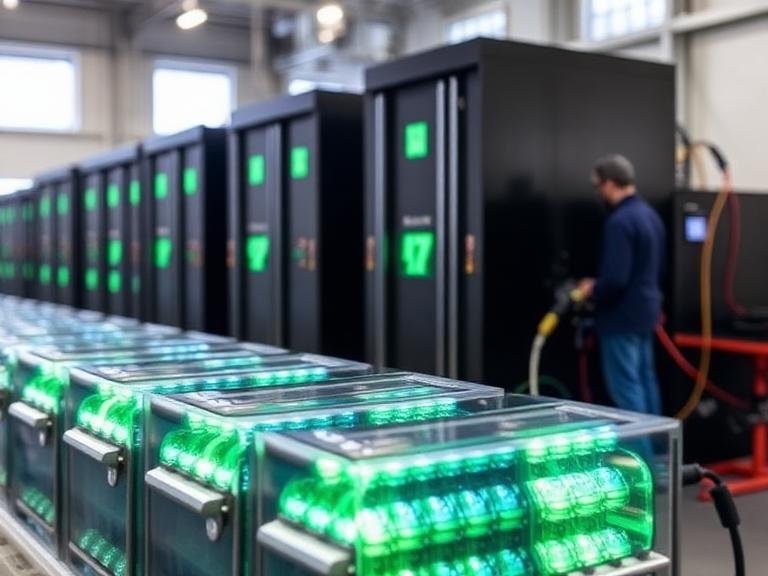
The transition to electric vehicles (EVs) and sustainable energy systems is one of the most defining shifts of the 21st century. Central to this evolution is battery technology — the powerhouse behind EVs, renewable energy storage, and clean innovation. Recognising this, the UK Government has embarked on a strategic and large-scale investment journey to expand its battery technology ecosystem, strengthen domestic manufacturing, boost research and development (R&D), and secure the nation’s role in the global clean tech race.
In this article, we dive deeply into how the UK government is investing in battery technology, the key programmes and funding initiatives driving this transformation, and what it means for industries like electric vehicles, energy storage, and the broader green economy.
The UK’s National Vision for Batteries
The UK Government’s ambition is both clear and transformative: to build a world-class battery industry by 2030 that supports the electrification of transport, powers renewable energy systems and stimulates economic growth.
This vision is outlined in the UK Battery Strategy, a comprehensive policy framework launched in 2023 that sets out how the UK will design, develop, produce and sustain a competitive battery supply chain.
📌 Key Objective: Establish a globally competitive battery ecosystem — from research to manufacturing, recycling, and end-use applications.
The strategy focuses on three core areas:
-
Designing and developing future battery technologies
-
Strengthening domestic manufacturing and supply chains
-
Making the UK a leader in sustainable and circular battery systems
This holistic approach is not only about electric cars — it also targets grid-scale energy storage, advanced materials, recycling technologies, and industrial innovation.
Government Funding Initiatives: A Breakdown
The UK government has deployed hundreds of millions of pounds in targeted programmes, grants and strategic investments. Below is a summary of key funding initiatives.
Table 1 – Major UK Government Battery Investment Schemes
| Programme / Fund | Purpose | Investment Value | Key Focus |
|---|---|---|---|
| Battery Innovation Programme | Research, innovation, industrial scale-up | £452m (to 2030) | Next-gen battery tech and commercialisation |
| Faraday Battery Challenge | Earlier R&D & industry support | £610m (total) | Foundation of battery innovation |
| Advanced Manufacturing Plan (AMP) | Support automotive & battery manufacturing | £2bn+ (automotive) | Gigafactory support & supply chain strengthening |
| UK Battery Industrialisation Centre (UKBIC) | Scale-up production and skills | £108m+ | Manufacturing development |
| AESC Gigafactory Funding | Gigafactory capital support | £1bn | Sunderland battery plant support |
| Recycling and Circular Materials Projects | Sustainable battery reuse | £8.1m+ | Recycling of battery materials |
These investments share a clear theme: support across the full battery value chain — from academia to industrial manufacturing and sustainability solutions.
Powering Innovation: Battery Research and Development
One of the strongest pillars of Government investment is funding research aimed at advancing battery science and materials.
The Faraday Battery Challenge
Initially launched in 2017, this programme became the foundation of the UK’s battery R&D ecosystem.
-
Budget: £610 million invested toward battery research and next-gen technologies.
-
Goal: To make the UK a science superpower in battery innovation.
-
Benefits: Partnerships between universities, industry and researchers across cutting-edge battery technologies.
Battery Innovation Programme (BIP)
Evolving from the Faraday Battery Challenge, the Battery Innovation Programme is a cornerstone initiative funded with £452 million between 2026 and 2030.
What makes BIP significant?
-
Bridges the gap between research and industrial application.
-
Helps UK companies bring battery innovations to market faster and at scale.
-
Encourages academic and commercial collaboration.
⚡ Outcome: Creates a vibrant pipeline of technology and elevates the UK’s global battery competitiveness.
Suggested Image 1 – Battery R&D Labs (place after this section)
Strategic Industrial Investment: Gigafactories & Manufacturing
Beyond research, government funding has been used to catalyse major industrial developments.
Gigafactory Funding in Sunderland
A landmark announcement saw the UK Government support a £1 billion investment into a large-scale EV battery gigafactory in Sunderland, backed by the UK National Wealth Fund and export financing.
📍 Impact:
-
Enough production capacity for batteries supplying over 100,000 EVs annually.
-
Strengthens domestic EV battery production.
-
Creates jobs and anchors supply chains in the UK.
UK Battery Industrialisation Centre (UKBIC)
The UKBIC plays a central role in industrial scale-up, supporting manufacturers, innovators, and skills development necessary to bring lab discoveries into scaled battery production.
Key Highlights:
-
£108 million facility in Warwickshire.
-
Open access support for battery developers and manufacturers.
-
Critical bridge between research and commercial production.
Suggested Image 2 – Gigafactory exterior and UKBIC facility
Sustainability & Circular Economy in Batteries
Battery technology doesn’t stop at manufacturing; sustainability and end-of-life reuse are critical.
Battery Recycling Initiatives
The UK Government has funded projects such as the battery recycling project backed by Jaguar Land Rover, securing £8.1 million to reclaim valuable materials like lithium, nickel and cobalt from used EV batteries.
Why this matters:
-
Reduces dependency on raw material imports.
-
Lowers environmental impact of battery disposal.
-
Boosts local supply of critical battery materials.
Wider Economic Impact & Job Creation
Government investment in battery technology is not only a climate strategy — it is a job creation and economic development engine.
Economic Benefits
According to government and industry figures:
-
Battery sector investments could support 100,000+ jobs by 2040.
-
New manufacturing and R&D roles are dispersed across regions.
Skills & Regional Growth
From Sunderland to the West Midlands and North East, battery projects are revitalising local economies with high-skill, well-paid jobs — especially in engineering and advanced manufacturing roles.
Suggested Image 3 – EV battery manufacturing line with workers
Government & Industry Collaboration
The success of the UK battery strategy comes from deep collaboration between government, industry, research institutions, and investors.
🌐 Examples of Collaboration:
-
Innovate UK partners with private firms to commercialise technologies.
-
Faraday Institution links universities with industry projects.
-
Private investors co-fund infrastructure like battery storage and gigafactories.
These partnerships expand the resource pool, boost innovation velocity, and attract global investors to the UK market.
What This Means for EV Adoption in the UK
All these investments directly support the expansion and affordability of electric vehicles:
Lower Costs
-
R&D into next-gen batteries (faster charging, cheaper materials) helps lower unit costs.
-
Recycling reduces raw material cost pressures.
Increased Supply
-
Domestic gigafactories reduce reliance on imports.
-
Local production shortens supply chains and strengthens UK EV manufacturing.
Consumer Confidence
As battery technology improves and becomes more affordable, the uptake of EVs in the UK is expected to accelerate, aiding climate goals and reducing transport emissions.
Challenges and Future Opportunities
While the UK’s battery strategy is ambitious, it faces challenges:
-
Global competition from Asian and European battery producers.
-
Need for skilled workforce expansion.
-
Infrastructure, such as charging networks, must keep pace with EV growth.
However, continued government backing, innovation acceleration and industry partnerships position the UK strategically for future growth.
Conclusion: Energising a Greener Tomorrow
The UK Government’s investment in battery technology is one of the most comprehensive national efforts anywhere in the world. By funding cutting-edge research, scaling up manufacturing, enabling sustainable recycling and nurturing public-private collaboration, the UK is shaping a future anchored in clean energy and advanced mobility.
From strengthening economic resilience to enhancing global competitiveness and powering a new generation of electric vehicles, these investments not only benefit the UK’s EV sector but also ensure long-term environmental and industrial prosperity.
2 thoughts on “UK Government Investment in Battery Technology”