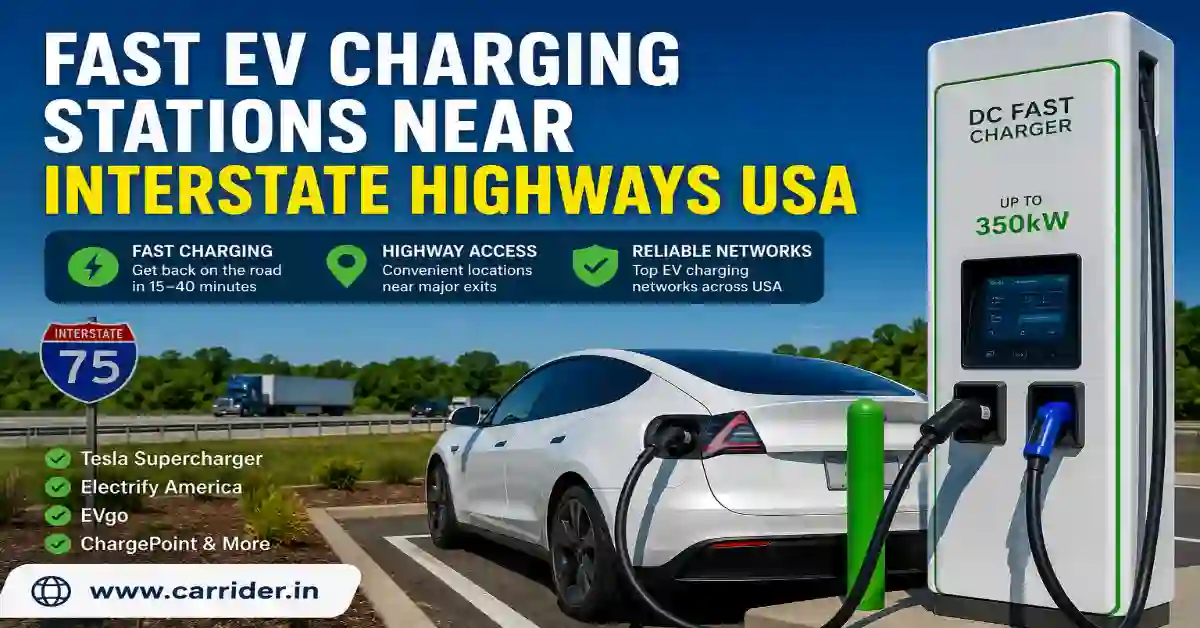
Fast EV Charging Stations Near Interstate Highways USA: A few years ago, the biggest concern during a road trip was finding a clean restroom or a decent cup of coffee. These days, if you’re driving an electric vehicle, the question becomes much simpler. I learned this the hard way during a road trip from Tennessee to Florida. My EV showed enough range on paper, but real-world driving was a different story. Air conditioning, highway speeds, traffic, and unexpected detours drained the battery faster than expected.
At one point, I exited the interstate expecting a charging station only to discover it was offline. That experience taught me something important: finding fast EV charging stations near interstate highways isn’t just about convenience—it’s essential for stress-free travel.
If you’re planning a long-distance EV trip across the United States, here’s what you need to know about locating reliable fast chargers, avoiding common mistakes, and making highway travel much easier.
Why Interstate Fast Charging Matters
Most EV owners charge at home overnight. That’s usually enough for daily commuting.
Road trips are different.
When you’re driving hundreds of miles on interstate highways such as I-95, I-10, I-40, I-70, I-80, or I-75, waiting several hours for a Level 2 charger simply isn’t practical.
Fast charging stations can add significant range in 15 to 40 minutes, depending on your vehicle and battery condition.
Instead of turning a 10-hour trip into a 15-hour journey, DC fast chargers help keep travel times reasonable.
Understanding Different Types of EV Chargers
Before searching for charging stations, it’s helpful to understand the basics.
Level 1 Charging
- Uses a standard household outlet
- Very slow charging speed
- Best for overnight charging
Level 2 Charging
- Common at hotels, workplaces, and parking garages
- Faster than household charging
- Good for extended stops
DC Fast Charging
- Designed for highway travel
- Can add substantial range quickly
- Found at dedicated charging hubs near major interstates
For road trips, DC fast charging is usually what drivers want.
Popular Fast Charging Networks Near Interstate Highways
Over the past few years, I have used several charging networks while traveling through multiple states.
Each has strengths and weaknesses.
Tesla Supercharger Network
Many EV drivers consider this the gold standard for road-trip charging.
Benefits include:
- Large nationwide coverage
- Reliable uptime
- Easy navigation through the vehicle system
- Convenient highway locations
Many newer stations are located directly off interstate exits, making them ideal for long-distance travel.
Electrify America
One of the most common non-Tesla charging networks in the country.
You’ll often find Electrify America stations near:
- Walmart locations
- Shopping centers
- Major interstate exits
The charging speeds can be extremely fast when everything works properly.
EVgo
EVgo stations are frequently located near urban centers and major travel corridors.
Good features include:
- Wide compatibility
- Convenient locations
- Mobile app integration
ChargePoint
ChargePoint offers a mix of Level 2 and fast charging stations.
Many interstate travelers use ChargePoint as a backup option when preferred chargers are unavailable.
Apps I Use Before Every EV Road Trip
One lesson I learned quickly is never rely on a single charging source.
I always check multiple apps before departing.
PlugShare
This is probably the most useful EV travel app available.
Why it’s helpful:
- User reviews
- Real-time feedback
- Photos of charging locations
- Reports of broken chargers
Drivers often update conditions within hours.
A Better Route Planner (ABRP)
ABRP is excellent for trip planning.
It calculates:
- Charging stops
- Battery consumption
- Elevation changes
- Weather impact
For long interstate trips, it can save a lot of guesswork.
Google Maps
Google Maps has improved significantly for EV drivers.
Many charging stations now include:
- Availability information
- Reviews
- Business hours
- Navigation assistance
Manufacturer Apps
Vehicle-specific apps often provide the most accurate battery and charging information.
These include apps from:
- Tesla
- Ford
- Rivian
- Hyundai
- Kia
- General Motors
How I Plan Charging Stops Along Interstate Highways
After several long trips, I developed a simple process.
Step 1: Identify Major Charging Corridors
Most interstate routes now have substantial charging infrastructure.
Examples include:
- I-95 (East Coast)
- I-75 (Midwest to Florida)
- I-10 (Southern United States)
- I-40 (Cross-country route)
- I-80 (Northern route)
These highways generally offer frequent charging opportunities.
Step 2: Locate Backup Chargers
Never assume your planned charger will be available.
I always identify at least two backup locations nearby.
This habit has saved me multiple times.
Step 3: Charge Earlier Than Necessary
One common mistake among new EV owners is waiting until the battery becomes critically low.
I usually start looking for charging opportunities around 20-30% battery rather than waiting until 5%.
Step 4: Combine Charging With Breaks
Charging becomes much less frustrating when paired with normal travel stops.
Good charging locations include:
- Restaurants
- Coffee shops
- Grocery stores
- Travel plazas
- Shopping centers
By the time I’ve eaten lunch or grabbed coffee, the vehicle is often ready to continue.
Real Interstate Charging Experience
During a trip through Georgia and Florida, I stopped at a fast charging station located near a major interstate exit.
The station was next to several restaurants and convenience stores.
Instead of sitting in the car watching the charging screen, I spent about 25 minutes eating lunch.
When I returned, the battery had gained enough range for several more hours of driving.
That experience changed how I view EV charging.
Instead of treating charging as a delay, I started treating it as a planned rest stop.
Common Mistakes EV Drivers Make
Depending on One Charger
If that charger is occupied or offline, your trip can become stressful quickly.
Always have alternatives.
Ignoring Weather Conditions
Cold temperatures can reduce range significantly.
Hot weather and heavy air-conditioning usage can also affect efficiency.
Arriving With Very Low Battery
Unexpected road closures or traffic jams can increase energy consumption.
Maintain a safety buffer.
Not Checking Recent Reviews
A charging station may appear operational on a map while experiencing technical issues.
Recent user reviews often reveal problems before you arrive.
States With Strong Interstate Charging Coverage
Charging infrastructure continues expanding nationwide, but some states stand out.
California
One of the most mature EV charging ecosystems in the country.
Texas
Rapid growth along major interstate corridors.
Florida
Strong charging coverage due to tourism and long-distance travel demand.
Georgia
Major investments have improved interstate charging availability.
Colorado
Popular charging routes support mountain travel and tourism.
What to Look for in a Highway Charging Stop
Not all charging locations are equal.
I generally prefer stations that offer:
- Multiple charging stalls
- Good lighting
- Restrooms nearby
- Food options
- Safe surroundings
- Positive user reviews
A charging station located beside a travel center is often more convenient than an isolated parking lot.
The Future of Interstate EV Charging
Fast EV Charging Stations Near Interstate Highways USA.
New stations are being installed near interstate highways across the United States every month.
Faster chargers, better reliability, improved route planning, and broader network compatibility are making EV road trips easier than ever.
For drivers who were hesitant about long-distance electric travel a few years ago, today’s charging landscape is dramatically better.
Final Thoughts
My first EV road trip involved range anxiety, constant charger checks, and more planning than I expected.
Fast EV Charging Stations Near Interstate Highways USA. Today, interstate travel in an electric vehicle feels much more routine.
The biggest lesson I learned is that preparation matters more than battery size. Using reliable apps, planning backup charging locations, and choosing fast charging stations near interstate highways can transform a stressful journey into an enjoyable one.
If you’re preparing for your first long EV trip, spend a few minutes planning your charging stops before leaving. That small amount of preparation can save hours of frustration and help you enjoy the drive rather than worrying about the battery gauge.

One thought on “Fast EV Charging Stations Near Interstate Highways USA”