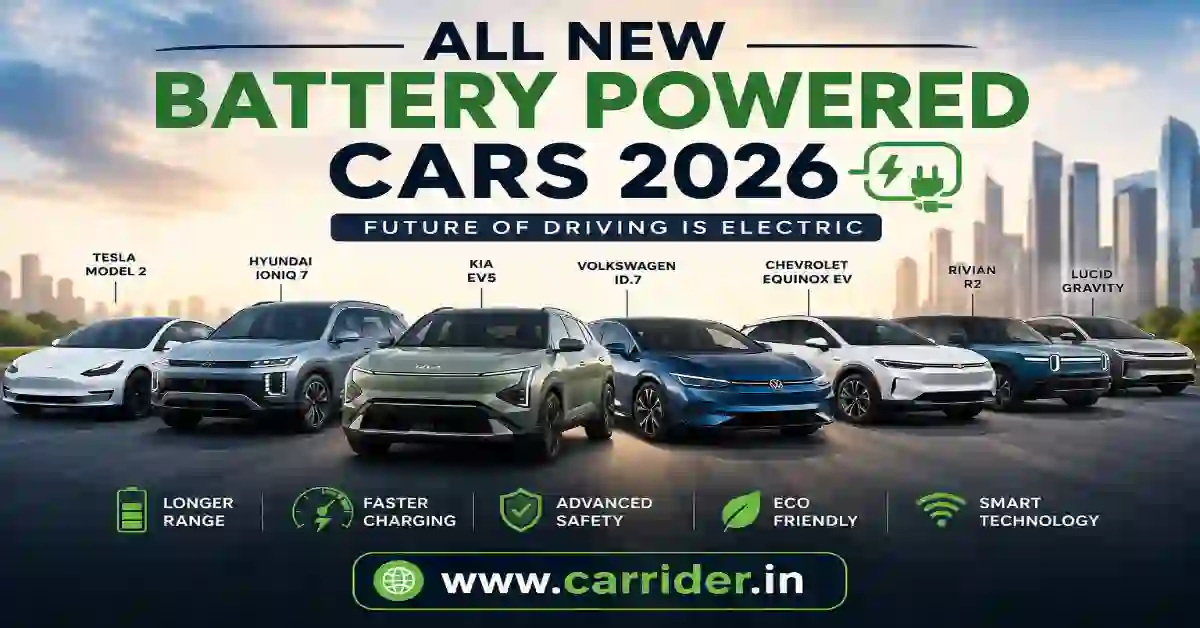
All New Battery Powered Cars 2026 I thought the biggest challenge would be charging. Surprisingly, it wasn’t. The real challenge was figuring out which EV actually fit my daily needs. Some models looked great on paper but offered less real-world range than expected. Others came packed with features I never used. That experience taught me one thing: buying a battery-powered car isn’t just about range or speed anymore.
As we move into 2026, automakers are launching a new generation of electric vehicles that are smarter, more efficient, and more practical than ever before. Whether you’re planning your first EV purchase or thinking about upgrading from an older model, the upcoming battery-powered cars of 2026 are worth paying attention to.
In this guide, I’ll walk through the most anticipated electric cars expected in 2026, what makes them different, and what buyers should know before making a decision.
Why 2026 Could Be a Big Year for Electric Cars
Over the last few years, EV technology has improved rapidly. Battery costs have dropped, charging networks have expanded, and manufacturers are finally focusing on affordability instead of only premium models.
Some trends expected in 2026 include:
- Longer driving ranges
- Faster charging speeds
- Improved battery durability
- Better software integration
- More affordable entry-level EVs
- Enhanced safety technologies
For everyday drivers, this means fewer compromises compared to traditional gasoline vehicles.
Expected New Battery Powered Cars in 2026
1. Tesla Model 2 (Expected)
Tesla has been teasing a more affordable electric car for years, and many industry analysts believe 2026 could finally be the year it arrives.
Expected Highlights
| Feature | Expected Specification |
|---|---|
| Range | 300-400 km |
| Charging | Fast DC Charging |
| Seating | 5 Passengers |
| Price Segment | Entry-Level EV |
What excites many buyers is the possibility of Tesla technology becoming available at a much lower price point than current models.
2. Hyundai Ioniq 7
Hyundai has earned a strong reputation in the EV space with the Ioniq lineup.
The Ioniq 7 is expected to be a large family SUV designed for long-distance travel.
Key Features
- Spacious three-row seating
- Advanced driver assistance systems
- Ultra-fast charging capability
- Premium interior technology
For families planning road trips, this could become one of the most practical electric SUVs available.
3. Kia EV5
Kia has surprised many buyers by offering impressive features without luxury-level pricing.
The EV5 is expected to target families looking for:
- SUV practicality
- Good range
- Modern cabin design
- Competitive pricing
From what we’ve seen in previous Kia EV launches, the company tends to focus heavily on real-world usability rather than flashy marketing claims.
4. Volkswagen ID.7
Volkswagen continues expanding its electric lineup globally.
The ID.7 aims to offer:
- Sedan comfort
- Long highway range
- Advanced infotainment features
- Improved battery efficiency
Drivers who spend significant time commuting may find this model particularly appealing.
5. Chevrolet Equinox EV
One of the most talked-about affordable EVs is the Equinox EV.
Why It Matters
Many consumers want an electric vehicle but don’t want to spend luxury-car money.
The Equinox EV promises:
- Affordable pricing
- Practical SUV design
- Family-friendly space
- Competitive driving range
If Chevrolet delivers on pricing expectations, it could attract many first-time EV buyers.
6. Rivian R2
Adventure enthusiasts are paying close attention to Rivian’s upcoming R2.
Expected features include:
- Off-road capability
- Rugged design
- Advanced battery technology
- Large cargo capacity
For outdoor travelers and camping enthusiasts, Rivian may continue to carve out its own niche in the EV market.
7. Lucid Gravity
Lucid has already impressed many reviewers with luxury-focused EVs.
The Gravity SUV is expected to combine:
- Luxury interior materials
- High performance
- Long range
- Advanced driver technologies
While likely positioned in the premium segment, it demonstrates how quickly EV technology is advancing.
Real-World Things Buyers Should Consider Before Purchasing an EV
Many articles focus only on specifications.
In my experience, daily usage matters much more.
Before choosing a battery-powered car, consider:
Your Daily Driving Distance
If you drive less than 50 kilometers per day, almost any modern EV will meet your needs.
Many people end up paying extra for range they rarely use.
Home Charging Availability
This is often more important than battery size.
Having a charger at home can completely change the ownership experience.
Without home charging, buyers should check nearby public charging stations before purchasing.
Long-Distance Travel Habits
Ask yourself:
- How often do you take road trips?
- Are charging stations available along your routes?
- How much time are you willing to spend charging?
These answers help determine whether a particular EV suits your lifestyle.
Common Mistakes First-Time EV Buyers Make
I’ve spoken with several EV owners who shared lessons they learned after purchasing.
Mistake 1: Focusing Only on Range
Range is important, but charging speed matters too.
A car with slightly less range but much faster charging may be more convenient.
Mistake 2: Ignoring Charging Infrastructure
Before buying, check available charging networks in your area.
Many buyers assume chargers are everywhere, which isn’t always true.
Mistake 3: Buying Features You’ll Never Use
Some premium models include:
- Advanced autonomous systems
- Luxury entertainment packages
- High-performance driving modes
While impressive, many owners rarely use these features.
Mistake 4: Not Considering Battery Warranty
Battery replacement is expensive.
Always compare:
- Battery warranty coverage
- Manufacturer reputation
- Service network availability
How Battery Technology Is Improving in 2026
One reason many experts are excited about upcoming EVs is battery development.
Manufacturers are investing heavily in:
Faster Charging
Some next-generation batteries could significantly reduce charging times.
Improved Lifespan
Modern batteries are designed to last much longer than early EV generations.
Many manufacturers now offer warranties extending up to 8 years or more.
Better Efficiency
New battery chemistry allows vehicles to travel farther using the same amount of stored energy.
This translates into:
- More range
- Lower operating costs
- Better long-term value
Are Battery Powered Cars Cheaper to Run?
Based on owner experiences and industry data, electric vehicles generally offer lower operating costs.
Typical Savings Areas
| Expense Category | Gas Vehicle | Electric Vehicle |
| Fuel | Higher | Lower |
| Oil Changes | Required | Not Required |
| Engine Maintenance | Frequent | Reduced |
| Brake Wear | Higher | Often Lower |
Actual savings depend on electricity prices and driving habits, but many owners report noticeable reductions in monthly transportation costs.
Who Should Consider Buying an EV in 2026?
An electric vehicle may be a good fit if you:
- Drive daily for commuting
- Have access to home charging
- Want lower maintenance costs
- Prefer quieter driving
- Plan to keep the vehicle for several years
However, buyers who frequently travel to remote areas without charging infrastructure should research carefully before switching.
Final Thoughts
The electric vehicle market in 2026 looks more exciting than ever. Manufacturers are no longer building EVs only for technology enthusiasts. They’re creating practical vehicles for families, commuters, and everyday drivers.
If there’s one lesson I’ve learned from watching the EV market evolve, it’s this: don’t buy based solely on advertisements or specifications. Think about how you’ll actually use the vehicle every day.
The best battery-powered car isn’t necessarily the one with the biggest battery or the fastest acceleration. It’s the one that fits your lifestyle, charging habits, budget, and long-term needs.
For many buyers, 2026 could finally be the year electric vehicles become the easiest choice rather than the experimental one.

One thought on “All New Battery Powered Cars 2026”