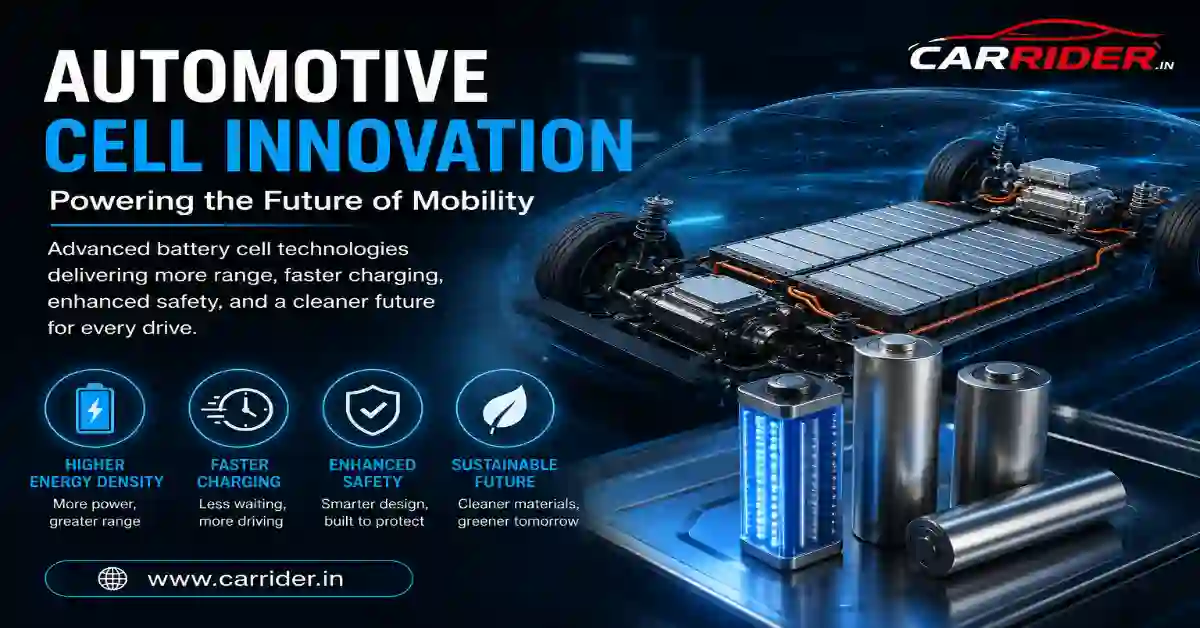
Automotive Cell Innovation I had a conversation with a friend who owned an electric vehicle. At that time, one of his biggest concerns wasn’t performance or comfort—it was battery range. He constantly checked the dashboard to see how much charge was left before taking longer trips.
Fast forward to today, and the situation has changed dramatically.
Modern electric vehicles can travel much farther, charge faster, and last longer than many people expected. The reason behind this transformation isn’t just better cars—it’s something happening deep inside the battery itself. That’s where automotive cell innovation comes into play.
After following the EV industry closely and testing several electric vehicles at auto expos and dealership demonstrations, I’ve noticed that battery technology has become the biggest area of competition among automakers. Companies are investing billions into developing safer, cheaper, and more efficient battery cells.
Let’s explore what automotive cell innovation really means, why it matters, and how it is shaping the future of transportation.
What Is Automotive Cell Innovation?
Automotive cell innovation refers to improvements in battery cell technology used in electric vehicles (EVs), hybrid vehicles, and future mobility solutions.
A battery pack consists of thousands of individual cells working together. These cells store and release electrical energy that powers the vehicle.
When manufacturers talk about innovation, they’re usually focusing on:
- Increasing driving range
- Reducing charging time
- Improving battery lifespan
- Lowering production costs
- Enhancing safety
- Reducing environmental impact
In simple terms, better battery cells mean better electric cars.
Why Battery Cells Matter More Than Ever
When most people compare cars, they look at horsepower, design, or features.
However, in the EV world, the battery often determines:
| Factor | Impact on Vehicle |
|---|---|
| Range | How far you can drive |
| Charging Speed | How quickly you can recharge |
| Weight | Vehicle efficiency |
| Cost | Final purchase price |
| Safety | Protection during accidents |
| Lifespan | Long-term ownership costs |
A small improvement in battery cell technology can significantly improve the overall driving experience.
That’s why automakers are racing to develop next-generation cells.
My First Experience Learning About EV Batteries
During an automotive technology exhibition, I attended a session where engineers demonstrated how battery cells have evolved over the last decade.
One thing surprised me.
Many people assume EV innovation is mostly software-related. In reality, much of the progress happens inside battery chemistry labs.
Engineers showed older battery cells alongside modern designs. The newer versions stored more energy while occupying nearly the same space.
That was when I realized battery innovation isn’t just a technical upgrade—it’s the foundation of the entire electric vehicle revolution.
Major Types of Battery Cells Used Today
Different manufacturers use different battery technologies depending on their goals.
1. Lithium-Ion Cells
These remain the most common battery cells in electric vehicles.
Benefits include:
- High energy density
- Proven reliability
- Established manufacturing processes
- Good performance across different climates
Most modern EVs rely heavily on lithium-ion technology.
2. LFP (Lithium Iron Phosphate) Cells
LFP batteries have become increasingly popular.
Advantages include:
- Lower cost
- Improved safety
- Longer lifespan
- Reduced dependence on expensive materials
One trade-off is slightly lower energy density compared to some lithium-ion alternatives.
3. Solid-State Cells
This is one of the most exciting innovations currently under development.
Instead of liquid electrolytes, solid-state batteries use solid materials.
Potential benefits include:
- Faster charging
- Greater safety
- Longer range
- Higher energy storage capacity
Although promising, large-scale commercial adoption is still developing.
Breakthroughs Driving Automotive Cell Innovation
Several advancements are pushing battery technology forward.
Higher Energy Density
Energy density determines how much energy a battery can store relative to its size.
Higher energy density means:
- Longer driving range
- Smaller battery packs
- Reduced vehicle weight
Many manufacturers are working to increase energy density without compromising safety.
Faster Charging Technology
One common complaint among potential EV buyers is charging time.
Modern cell innovations are reducing this concern.
New battery designs can:
- Accept higher charging currents
- Generate less heat
- Maintain performance over thousands of charging cycles
Some next-generation batteries aim to deliver substantial charging in just minutes rather than hours.
Improved Thermal Management
Heat is one of the biggest challenges for battery performance.
Innovative cell designs now include:
- Better cooling systems
- Advanced separators
- Improved electrolyte materials
These upgrades help maintain efficiency while extending battery life.
Cell-to-Pack Technology
Traditionally, battery packs included modules between cells and the final battery structure.
New designs eliminate some of these layers.
Benefits include:
- Lower weight
- Higher efficiency
- Better packaging
- Increased range
This approach allows manufacturers to use available space more effectively.
Real-World Benefits for Drivers
Many battery innovations sound technical, but the benefits are very practical.
Longer Trips
Drivers can travel farther without worrying about charging stops.
Lower Ownership Costs
Improved durability means batteries may last much longer before replacement becomes necessary.
Better Resale Value
Vehicles with advanced battery systems often retain value more effectively.
Enhanced Safety
Modern battery designs reduce risks associated with overheating and thermal events.
Common Mistakes People Make When Discussing EV Batteries
Over the years, I’ve noticed several misconceptions.
Mistake 1: Assuming All Batteries Are the Same
Different chemistries offer different strengths.
Some prioritize range while others prioritize affordability and longevity.
Mistake 2: Focusing Only on Range
Range matters, but charging speed and battery lifespan are equally important.
A vehicle with slightly lower range but faster charging may be more practical.
Mistake 3: Ignoring Battery Management Systems
Even the best battery cells require intelligent software management.
Battery Management Systems (BMS) help:
- Monitor temperatures
- Balance cells
- Prevent overcharging
- Extend battery life
The battery and software must work together.
How Manufacturers Are Competing Through Cell Innovation
Today’s automotive industry is investing heavily in battery research.
Key areas include:
Reducing Raw Material Costs
Manufacturers are seeking alternatives to expensive materials like cobalt.
This helps lower EV prices.
Increasing Production Efficiency
New manufacturing methods allow batteries to be produced more quickly and consistently.
Improving Sustainability
Companies are focusing on:
- Battery recycling
- Renewable manufacturing processes
- Reduced environmental impact
These efforts help make EV adoption more sustainable over the long term.
The Role of Artificial Intelligence in Battery Development
One fascinating trend is the use of AI in battery research.
Researchers now use advanced software tools to:
- Analyze battery performance
- Predict degradation patterns
- Discover new materials
- Optimize charging algorithms
What once required years of testing can now be accelerated through simulation and machine learning.
What the Future Might Look Like
If current innovation continues, future electric vehicles may offer:
- Charging times under 10 minutes
- Ranges exceeding 800 kilometers
- Lower battery costs
- Longer battery lifespans
- Improved cold-weather performance
While some of these advancements are still under development, the progress seen over the last decade suggests rapid improvement will continue.
Practical Tips for EV Owners
If you currently own an electric vehicle, here are a few lessons many experienced drivers learn over time:
Avoid Constant Full Charges
Keeping the battery at 100% all the time may increase long-term wear.
Use Manufacturer-Recommended Charging Methods
Following official guidance helps preserve battery health.
Monitor Battery Software Updates
Manufacturers often release updates that improve efficiency and charging performance.
Manage Extreme Temperatures
Whenever possible, park in shaded or protected areas during extreme weather conditions.
These habits can help maximize battery lifespan.
Final Thoughts
Automotive cell innovation is quietly transforming the entire transportation industry. While flashy vehicle designs and advanced software often receive the spotlight, the real breakthroughs are happening inside battery cells.
From longer driving ranges to faster charging and improved safety, every major advancement in electric vehicles depends on continued battery innovation. As manufacturers develop new chemistries, smarter designs, and more sustainable production methods, drivers can expect electric vehicles to become even more practical and affordable.
The next generation of automotive batteries won’t simply power cars—they’ll redefine what people expect from personal transportation.

One thought on “Automotive Cell Innovation: How Advanced Battery Technology Is Transforming Electric Vehicles”