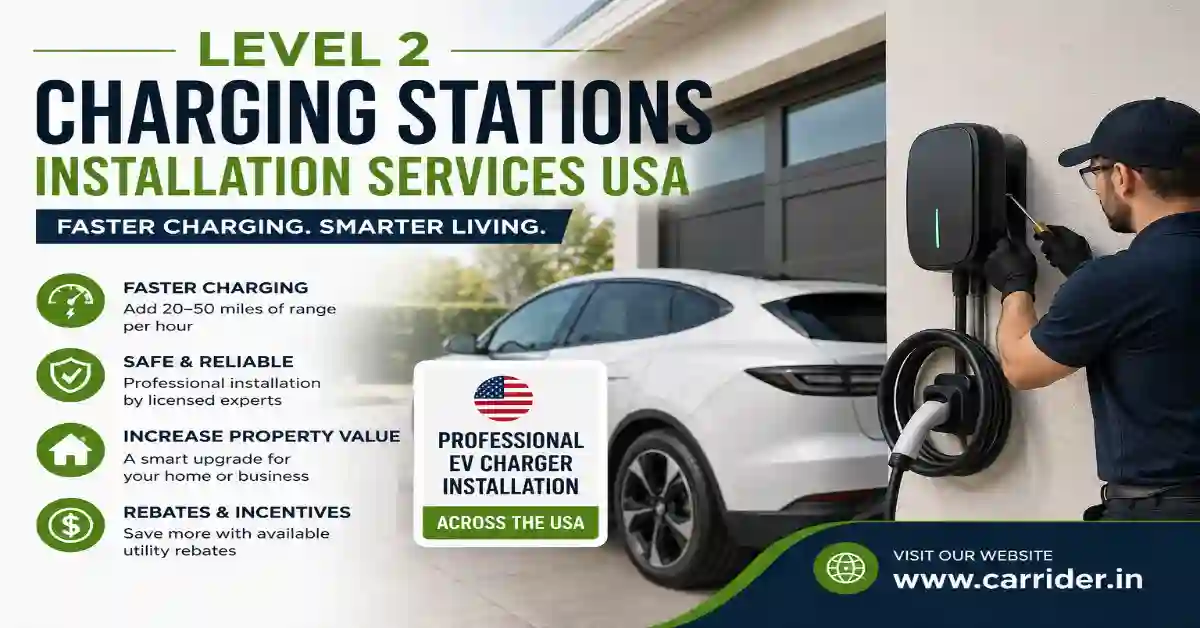
Level 2 Charging Stations Installation Services USA. A few years ago, charging an electric vehicle seemed simple. Plug it into a regular wall outlet overnight and you’re good to go. That’s exactly what I thought when I bought my first EV. The reality was very different. Using a standard Level 1 charger added only a few miles of range every hour. After a few weeks of daily commuting, grocery runs, and weekend trips, I realized I was spending too much time waiting for the battery to recharge. That’s when I started looking into Level 2 charging station installation services in the USA. If you’re considering installing a Level 2 charger at home or for a business, here’s what I learned during the process, including costs, common mistakes, and how to choose the right installer.
What Is a Level 2 EV Charging Station?
A Level 2 charger uses a 240-volt electrical connection, similar to what powers many electric dryers or ovens.
Compared to a basic household outlet, a Level 2 charger can dramatically reduce charging times.
Typical charging speeds:
| Charger Type | Voltage | Charging Speed |
|---|---|---|
| Level 1 | 120V | 3–5 miles of range per hour |
| Level 2 | 240V | 20–50 miles of range per hour |
| DC Fast Charger | 400V+ | Up to 200+ miles in under an hour |
For most homeowners in the United States, Level 2 charging offers the best balance between speed and installation cost.
Why More Americans Are Installing Level 2 Chargers
The growth of electric vehicles has changed how people think about fueling their cars.
Instead of stopping at gas stations, many EV owners now prefer charging overnight at home.
Some benefits include:
- Faster charging times
- Greater convenience
- Increased property appeal
- Potential utility rebates
- Lower charging costs compared to public stations
After installing mine, I rarely needed to visit public charging stations except during long road trips.
That convenience alone made the investment worthwhile.
Signs You Need a Level 2 Charger
Not everyone needs one immediately.
However, a Level 2 installation becomes valuable if:
- You drive more than 30 miles daily
- Your vehicle battery is large
- You own multiple EVs
- You frequently run low on charge
- Public charging stations are far away
Many EV owners start with Level 1 charging and upgrade later after realizing how much time they’re losing.
That’s exactly what happened in my case.
How Professional Installation Services Work
One mistake I almost made was trying to hire a general handyman.
EV charging equipment requires electrical expertise and compliance with local building codes.
A professional installation service typically follows these steps.
Step 1: Site Assessment
An electrician evaluates:
- Existing electrical panel capacity
- Distance from panel to charging location
- Garage layout
- Outdoor installation requirements
- Permit needs
This assessment helps determine whether your current electrical system can support the charger.
Step 2: Electrical Panel Inspection
Many older homes have 100-amp service panels.
Modern EV chargers may require:
- 40-amp circuit
- 50-amp circuit
- 60-amp circuit
In some situations, a panel upgrade becomes necessary.
This can significantly affect project costs.
Step 3: Permit and Code Compliance
Most municipalities require permits for EV charger installations.
Professional installers usually handle:
- Permit applications
- Electrical inspections
- Code compliance requirements
Skipping permits may create issues during future home sales.
Step 4: Charger Installation
The electrician installs:
- Dedicated circuit breaker
- Wiring
- Charging unit
- Safety disconnects if required
Most installations can be completed within a few hours.
Step 5: Testing and Setup
The final stage includes:
- Safety testing
- Wi-Fi configuration
- Mobile app setup
- Charging speed verification
A good installer will also explain basic maintenance and troubleshooting.
Popular Level 2 Chargers in the USA
Several brands are widely used by homeowners.
Tesla Wall Connector
Popular among Tesla owners because of:
- Fast charging capability
- Sleek design
- Integration with Tesla vehicles
ChargePoint Home Flex
One of the most flexible options available.
Features include:
- App-based monitoring
- Adjustable power settings
- Utility rebate compatibility
Emporia EV Charger
A budget-friendly option that still includes smart features.
Many homeowners choose it because it delivers strong value for the price.
JuiceBox
Known for:
- Smart scheduling
- Energy tracking
- Utility program participation
Typical Installation Costs in the USA
Costs vary by state, electrical setup, and charger location.
General estimates:
| Installation Type | Typical Cost |
| Simple installation | $500–$1,200 |
| Moderate installation | $1,200–$2,500 |
| Panel upgrade required | $2,500–$5,000+ |
These figures often exclude the charger itself.
Premium chargers may cost an additional $400–$1,000 or more.
Factors That Affect Installation Price
Many homeowners are surprised by how much prices vary.
Major cost factors include:
Distance from Electrical Panel
Longer wire runs require:
- More materials
- More labor
- Additional conduit
Even an extra 50 feet can noticeably increase costs.
Panel Upgrades
This is often the biggest expense.
If your electrical panel lacks capacity, upgrades may be required before installation can begin.
Outdoor Installations
Outdoor charging stations generally need:
- Weatherproof equipment
- Protective conduit
- Additional mounting hardware
These requirements can increase project costs.
Local Permit Fees
Permit costs vary widely between cities and counties.
Some areas charge minimal fees while others require multiple inspections.
Common Mistakes Homeowners Make
After talking with installers and other EV owners, I noticed several recurring mistakes.
Buying the Charger Before Getting an Inspection
Many people purchase a charger first and later discover their electrical system cannot support it without upgrades.
Getting an assessment beforehand can prevent surprises.
Choosing the Cheapest Electrician
EV charging systems involve significant electrical loads.
Experience matters.
A low quote may not include permits, inspections, or proper load calculations.
Ignoring Future Needs
Some homeowners install a charger sized only for their current vehicle.
A larger-capacity charger may be a smarter long-term investment if another EV is likely in the future.
Forgetting About Utility Rebates
Many utility companies offer incentives for EV charging equipment.
Checking available programs before installation can save hundreds of dollars.
Home vs Business Installation Services
Residential and commercial installations have different requirements.
Residential Projects
Typically involve:
- One or two charging stations
- Garage installation
- Lower power requirements
Commercial Projects
May require:
- Multiple charging ports
- Load management systems
- ADA compliance considerations
- Network connectivity
- Ongoing maintenance
Businesses often use chargers to attract customers, support employees, or comply with sustainability goals.
Questions to Ask Before Hiring an Installer
Before signing a contract, ask:
- Are you licensed and insured?
- Have you installed EV chargers before?
- Will you handle permits?
- What warranty is included?
- Can you provide references?
- Is a panel upgrade necessary?
- What charger models do you recommend?
These questions helped me avoid a contractor who had general electrical experience but very little EV charging experience.
How Long Does Installation Take?
Simple installations can often be completed within a single day.
More complex projects involving:
- Service upgrades
- Level 2 Charging Stations Installation Services USA
- Trenching
- Commercial infrastructure
may require several days or even weeks.
Planning ahead is especially important if you’re expecting delivery of a new EV soon.
Are Level 2 Chargers Worth It?
Level 2 Charging Stations Installation Services USA.
For most EV owners, absolutely.
The biggest benefit isn’t just faster charging—it’s convenience.
After my installation was complete, charging became something I rarely thought about. I simply plugged in at night and woke up with a full battery each morning.
That change made owning an electric vehicle much easier.
For households that rely on an EV every day, a professionally installed Level 2 charging station is often one of the most practical upgrades you can make.
The key is choosing a qualified installer, understanding your home’s electrical capacity, and planning for future charging needs rather than just today’s requirements.
1 thought on “Level 2 Charging Stations Installation Services USA”