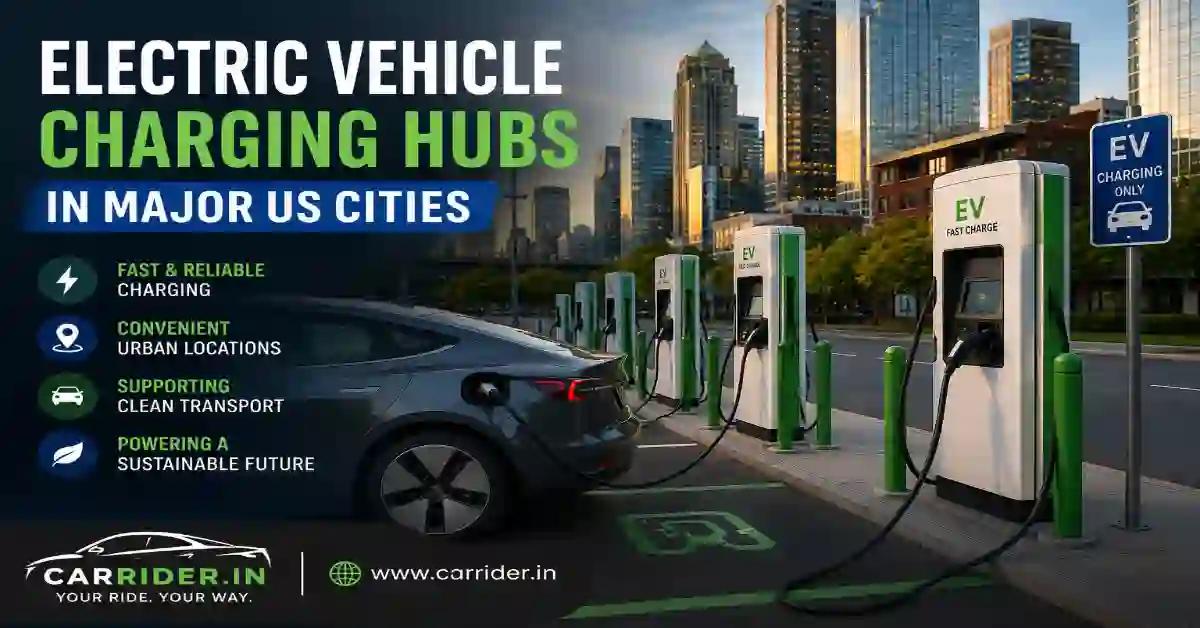
Electric Vehicle Charging Hubs in Major US Cities with less than 15% battery remaining, scrolling through charging apps and wondering if I had made a mistake by leaving my gas-powered car behind. What surprised me was not only how many charging stations were available, but how different the charging experience was from city to city.
Since then, I’ve spent time driving EVs in several major US cities, including New York, Los Angeles, San Francisco, Chicago, and Houston. One thing has become clear: the quality of charging infrastructure can make or break the EV ownership experience.
If you’re planning to buy an electric vehicle, relocate to a new city, or simply want to understand where charging is easiest, here’s a practical look at EV charging hubs in major US cities and what drivers can realistically expect.
Why EV Charging Hubs Matter
When people think about electric vehicles, they often focus on battery range. In reality, charging convenience is usually more important.
Most urban drivers don’t travel hundreds of miles every day. Instead, they need reliable charging options near:
- Apartment buildings
- Workplaces
- Shopping centers
- Airports
- Downtown districts
- Public parking garages
A well-designed charging hub allows multiple vehicles to charge simultaneously and often includes fast-charging equipment that can provide substantial battery replenishment during a short stop.
What Makes a Good EV Charging Hub?
Not all charging stations are equal.
The best charging hubs typically offer:
Multiple Charging Ports
Nothing is more frustrating than arriving at a station only to find every charger occupied.
Large charging hubs often provide:
- 10 to 50+ charging stalls
- Dedicated EV parking spaces
- Real-time availability updates
Fast Charging Capability
Level 2 chargers are useful for longer parking sessions.
DC Fast Chargers are ideal for:
- Road trips
- Rideshare drivers
- Delivery fleets
- Busy commuters
Depending on vehicle compatibility, some fast chargers can add significant driving range in less than 30 minutes.
Safety and Accessibility
Good charging locations are:
- Well-lit
- Easy to access
- Near restaurants and stores
- Available 24/7
I learned this lesson the hard way after arriving at a charger hidden behind an industrial warehouse late at night. Since then, location quality has become just as important as charging speed.
EV Charging in New York City
New York City has made major investments in electric transportation infrastructure.
Drivers can find charging hubs in:
- Manhattan parking garages
- Public curbside charging locations
- Airport parking facilities
- Commercial parking lots
One challenge is that many residents live in apartment buildings without private garages. As a result, public charging demand is higher than in many other cities.
Popular charging networks include:
- Tesla Supercharger network
- ChargePoint
- EVgo
- Blink Charging
For city residents, overnight charging at public garages is often the most practical solution.
Los Angeles: One of the Best Cities for EV Drivers
Los Angeles has embraced electric vehicles more aggressively than most US cities.
It’s common to find chargers at:
- Shopping malls
- Grocery stores
- Office complexes
- Hotels
- Entertainment venues
Because many residents drive longer distances, fast-charging infrastructure is especially important.
One thing I noticed while visiting Los Angeles was how easy it was to combine charging with daily errands. Instead of making a dedicated charging trip, many drivers simply plug in while shopping or working.
San Francisco and the Bay Area
San Francisco is often considered one of the most EV-friendly regions in the country.
The Bay Area benefits from:
- High EV adoption rates
- Technology-focused infrastructure investment
- Extensive public charging coverage
Many charging hubs are integrated into:
- Office campuses
- Public transit facilities
- Municipal parking garages
- Retail centers
The competition among charging providers has also improved service quality and charger reliability.
Chicago’s Growing EV Network
Chicago has rapidly expanded public charging infrastructure.
Drivers can now access charging hubs at:
- Downtown parking structures
- Transit-oriented developments
- Shopping districts
- Suburban commuter lots
Winter weather creates unique challenges because cold temperatures can reduce battery efficiency.
During one winter trip, I noticed range estimates dropping faster than expected. Having reliable fast-charging stations nearby made a significant difference.
For EV owners in colder climates, planning charging stops becomes even more important during winter months.
Houston and the Rise of EV Infrastructure
Houston may not be the first city people associate with electric vehicles, but charging infrastructure has grown considerably.
Recent developments include:
- Highway fast-charging corridors
- Retail-based charging hubs
- Fleet charging facilities
- Workplace charging programs
As EV adoption increases across Texas, charging availability continues to improve throughout major metropolitan areas.
Popular EV Charging Networks Across US Cities
Several charging providers dominate the urban charging landscape.
Tesla Supercharger
Known for:
- Extensive coverage
- High charging speeds
- Reliable operation
Many newer locations now support charging for selected non-Tesla vehicles as well.
ChargePoint
One of the largest charging networks in North America.
Benefits include:
- Wide availability
- User-friendly mobile app
- Public and workplace charging options
EVgo
EVgo focuses heavily on fast charging.
It’s especially useful for:
- Urban drivers
- Rideshare operators
- Frequent travelers
Electrify America
Electrify America has expanded rapidly across major cities and interstate routes.
Strengths include:
- High-power charging
- Broad geographic coverage
- Modern charging equipment
Useful Apps Every EV Driver Should Install
One mistake many new EV owners make is relying on a single charging app.
I recommend having at least three options installed.
PlugShare
Useful for:
- Finding chargers
- Reading user reviews
- Checking station reliability
ChargePoint App
Allows users to:
- Locate chargers
- Start charging sessions
- Monitor charging progress
EVgo App
Helpful for accessing EVgo’s fast-charging network.
Tesla App
Essential for Tesla owners and increasingly useful for accessing compatible charging locations.
Common Mistakes New EV Owners Make
Waiting Too Long to Charge
Many drivers treat EVs like gas vehicles and wait until battery levels become very low.
A better habit is charging whenever convenient.
Ignoring Charging Speeds
Not every charger delivers the same power output.
Before arriving, check:
- Charger type
- Maximum charging rate
- Vehicle compatibility
Depending on a Single Network
Stations occasionally experience outages or maintenance issues.
Having backup options prevents unnecessary stress.
Not Planning for Peak Times
Popular charging hubs can become busy during:
- Holiday weekends
- Rush hours
- Major city events
Checking availability beforehand saves time.
How to Find the Best Charging Hub Near You
Follow these simple steps:
Step 1: Open a Charging App
Use:
- PlugShare
- ChargePoint
- EVgo
- Tesla
Step 2: Filter by Charger Speed
Select fast charging if you need a quick battery top-up.
Step 3: Check Recent Reviews
User reviews often reveal:
- Broken chargers
- Parking issues
- Wait times
Step 4: Verify Availability
Many networks display live charger status.
Step 5: Have a Backup Option
Always save a second nearby charging location.
The Future of Urban EV Charging
The next few years will likely bring major improvements.
Cities are investing in:
- Faster charging technology
- Smart grid integration
- Public charging expansion
- Apartment charging solutions
- Fleet charging infrastructure
We’re also seeing more charging hubs designed as destinations, offering coffee shops, workspaces, restrooms, and convenience services while drivers wait.
For EV owners, this means charging will become less of a task and more of a seamless part of daily life.
Final Thoughts
Electric Vehicle Charging Hubs in Major US Cities I’ve found that charging anxiety is often worse before you own an EV than after. Once you learn where the reliable charging hubs are and which apps provide accurate information, the process becomes surprisingly routine.
The best cities already offer thousands of charging options, and infrastructure continues to improve every year. Whether you’re commuting in New York, running errands in Los Angeles, navigating San Francisco traffic, or traveling through Houston and Chicago, finding a charging hub is becoming easier than ever.
The key is simple: use the right apps, understand your vehicle’s charging capabilities, and avoid waiting until your battery is nearly empty. Those small habits can make EV ownership far more convenient and enjoyable.