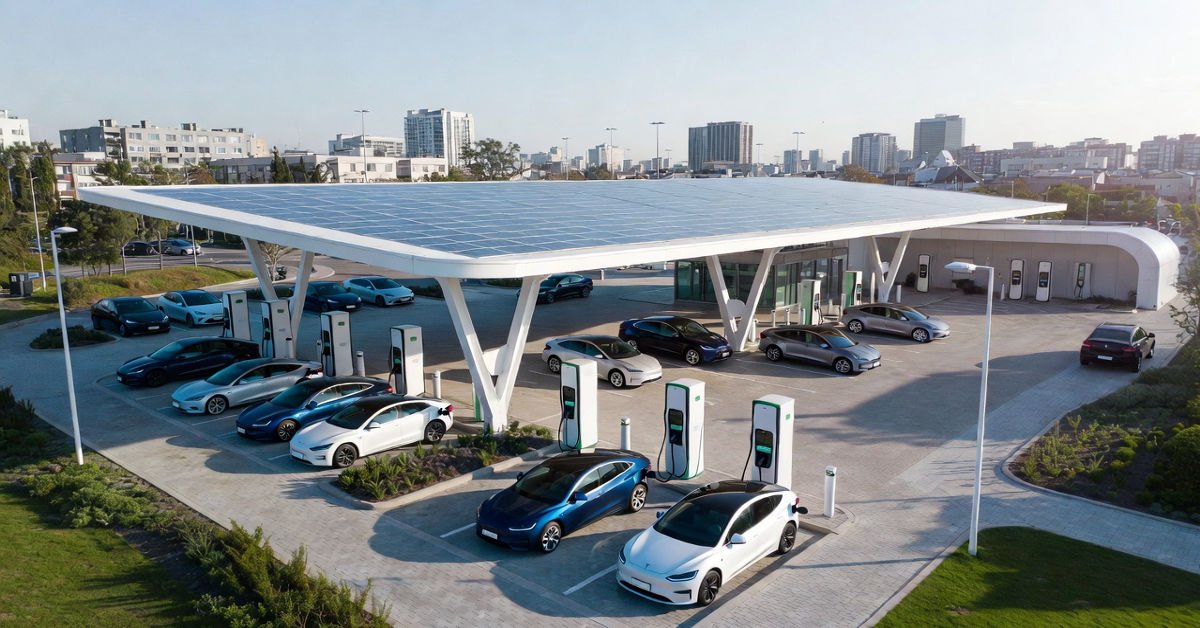
The shift towards electric vehicles (EVs) is no longer a future prediction; it is a global reality. Governments, businesses, and individuals are increasingly adopting EVs due to environmental concerns, rising fuel costs, and technological advancements. However, the growth of EVs relies heavily on the availability and accessibility of public EV charging stations. Installing these stations strategically and efficiently is critical to supporting the EV revolution.
This article explores the benefits, planning, technology, costs, regulations, and best practices for public EV charging station installation, providing an in-depth guide for businesses, municipalities, and stakeholders interested in sustainable mobility.
The Importance of Public EV Charging Station Installation
Public EV charging stations play a pivotal role in accelerating EV adoption. Unlike home charging, public stations allow EV owners to charge their vehicles while on the go, making long trips feasible and reducing range anxiety.
Key benefits of installing public EV charging stations include:
-
Promoting sustainability: Encourages EV adoption, reducing greenhouse gas emissions.
-
Economic development: Boosts local businesses as drivers spend time near commercial locations.
-
Infrastructure support: Strengthens a city’s readiness for the future of transportation.
-
Government incentives: Many regions provide tax credits or grants for EV infrastructure development.
Table 1: Benefits of Public EV Charging Station Installation
| Benefit | Description | Example |
|---|---|---|
| Sustainability | Reduces carbon footprint | EV adoption reduces fuel emissions |
| Economic Growth | Attracts customers and supports local businesses | Shopping malls with chargers increase dwell time |
| Accessibility | Provides charging options for those without home chargers | Apartment residents rely on public stations |
| Incentives | Eligible for government grants or tax breaks | Federal EV infrastructure grants |
Types of EV Charging Stations
Public EV charging stations come in different types depending on charging speed and technology. Understanding these options is crucial for proper installation planning.
-
Level 1 Charging (Slow Charging)
-
Provides 2–5 miles of range per hour.
-
Uses a standard 120V household outlet.
-
Best for locations with long dwell times, such as offices or parking lots.
-
-
Level 2 Charging (Moderate Charging)
-
Offers 10–60 miles of range per hour.
-
Requires a 240V outlet or dedicated charging unit.
-
Common in malls, workplaces, and urban centers.
-
-
DC Fast Charging (Rapid Charging)
-
Provides 60–300 miles of range per 30 minutes.
-
Uses high-voltage direct current (400–900V).
-
Ideal for highways, major intersections, and busy urban hubs.
-
Table 2: Comparison of EV Charging Types
| Type | Voltage | Charging Speed | Best Use Case |
|---|---|---|---|
| Level 1 | 120V | 2–5 miles/hr | Residential, low-use areas |
| Level 2 | 240V | 10–60 miles/hr | Commercial, urban, workplace |
| DC Fast | 400–900V | 60–300 miles/30 min | Highways, high-traffic areas |
Site Selection for Public EV Charging
Choosing the right location for public EV charging station installation is a strategic decision that impacts usage, ROI, and infrastructure efficiency. Consider the following factors:
-
Traffic patterns: High vehicle traffic ensures consistent use.
-
Proximity to amenities: Near shops, restaurants, and rest areas.
-
Accessibility: Easy entry and exit for all vehicle sizes.
-
Electric grid availability: Sufficient power supply and minimal upgrades needed.
-
Safety and security: Well-lit, monitored, and safe locations.
Table 3: Criteria for Site Selection
| Factor | Importance | Notes |
|---|---|---|
| Traffic Flow | High | Ensures station utilization |
| Amenities | Medium | Encourages dwell time while charging |
| Accessibility | High | Accommodates all EV types |
| Power Supply | High | Reduces installation cost and downtime |
| Safety | Medium | Enhances user trust and adoption |
Steps for Public EV Charging Station Installation
Installing a public EV charging station involves a structured process. Below is a step-by-step guide:
-
Feasibility Study
Conduct a feasibility study to determine potential demand, power requirements, and site suitability. -
Planning and Design
Decide on the charging type, number of units, parking layout, and accessibility features. -
Permits and Approvals
Obtain necessary permits from local authorities, utility companies, and environmental agencies. -
Electrical Infrastructure
Upgrade or install power supply lines, transformers, and necessary electrical panels. -
Equipment Procurement
Select reliable and certified EV chargers. Consider smart charging options for monitoring and payments. -
Installation and Testing
Professionally install chargers and test for safety, functionality, and network connectivity. -
Maintenance and Support
Implement a maintenance schedule to ensure uninterrupted service. Consider remote monitoring for fast issue resolution.
Table 4: Installation Process Overview
| Step | Action | Duration |
|---|---|---|
| Feasibility Study | Assess demand and site | 2–4 weeks |
| Planning & Design | Layout, charger selection | 3–6 weeks |
| Permits & Approvals | Regulatory compliance | 2–8 weeks |
| Electrical Infrastructure | Power setup | 4–12 weeks |
| Equipment Procurement | Order and delivery | 2–6 weeks |
| Installation & Testing | Physical setup | 1–4 weeks |
| Maintenance | Ongoing | Continuous |
Technology Trends in Public EV Charging
Modern public EV charging stations integrate advanced technologies to improve user experience, efficiency, and sustainability.
-
Smart Charging: Monitors usage patterns, energy costs, and provides real-time availability.
-
Renewable Energy Integration: Solar-powered charging stations reduce grid dependency.
-
Mobile App Connectivity: Allows users to locate stations, pay remotely, and schedule charging.
-
Vehicle-to-Grid (V2G): Enables EVs to feed energy back to the grid, stabilizing electricity supply.
Cost Considerations
The cost of public EV charging station installation varies depending on charging type, location, and infrastructure needs. Here’s an estimated breakdown:
-
Level 2 Chargers: $3,000–$10,000 per unit
-
DC Fast Chargers: $30,000–$150,000 per unit
-
Site Preparation: $5,000–$50,000 depending on grid upgrades
-
Permits & Fees: $500–$5,000 depending on region
Table 5: Estimated Costs
| Component | Level 2 | DC Fast |
|---|---|---|
| Charger Unit | $3,000–$10,000 | $30,000–$150,000 |
| Installation & Site Prep | $5,000–$20,000 | $10,000–$50,000 |
| Permits & Fees | $500–$1,500 | $1,000–$5,000 |
| Total Estimated Cost | $8,500–$31,500 | $41,000–$205,000 |
Despite high upfront costs, EV charging stations can generate revenue through usage fees, subscriptions, and advertising, making them economically viable in the long term.
Regulatory Compliance and Incentives
Governments worldwide encourage EV infrastructure development by offering incentives and enforcing regulations. Key considerations include:
-
Zoning and Land Use Regulations: Ensure your site complies with local zoning laws.
-
Electrical Codes and Safety Standards: NEC (National Electrical Code) and IEC standards for safety compliance.
-
Incentive Programs: Tax credits, grants, and rebates for installing EV chargers. For example, the U.S. Infrastructure Investment and Jobs Act (IIJA) allocates funds for EV infrastructure development.
Table 6: Example Incentives for Public EV Charging
| Country | Incentive | Description |
|---|---|---|
| USA | Federal Tax Credit | Up to 30% of installation costs |
| EU | Grants & Subsidies | Varies by country, supports DC fast chargers |
| China | Policy Support | Local governments provide subsidies for EV stations |
| India | FAME Scheme | Incentives for EV infrastructure in urban areas |
Challenges in Public EV Charging Station Installation
While public EV charging is essential, there are challenges to address:
-
High Initial Investment: Installation and grid upgrades are costly.
-
Grid Capacity Limitations: Power availability may be insufficient for multiple fast chargers.
-
User Awareness: Lack of information about charging station locations can limit usage.
-
Maintenance Requirements: Chargers require regular checks to prevent downtime.
Solutions include government subsidies, integrating renewable energy, and mobile applications for station location tracking.
Best Practices for Public EV Charging Station Installation
To maximize efficiency and user satisfaction, follow these best practices:
-
Choose high-traffic locations: Airports, shopping centers, and transit hubs.
-
Install multiple charging types: Offer Level 2 and DC fast chargers to serve all users.
-
Integrate with renewable energy: Solar or wind energy reduces operational costs.
-
Provide clear signage: Easy-to-find stations encourage usage.
-
Regular maintenance: Ensure uptime and reliability.
-
Offer user-friendly payment options: Mobile apps, cards, or contactless payments.
Future Outlook
The future of public EV charging station installation looks promising. Advancements in battery technology, vehicle-to-grid systems, and renewable energy integration will make EVs more practical and environmentally friendly.
By 2030, governments plan to expand charging networks significantly, ensuring EV adoption continues to grow globally. Businesses and municipalities investing now will benefit from long-term sustainability, economic growth, and leadership in clean energy.
Conclusion
Public EV charging station installation is a cornerstone of the EV revolution. It enhances accessibility, promotes sustainability, supports economic growth, and prepares cities for the future of mobility. By understanding site selection, technology, costs, regulations, and best practices, stakeholders can implement effective charging networks that benefit users, communities, and the environment.

2 thoughts on “Public EV Charging Station Installation”