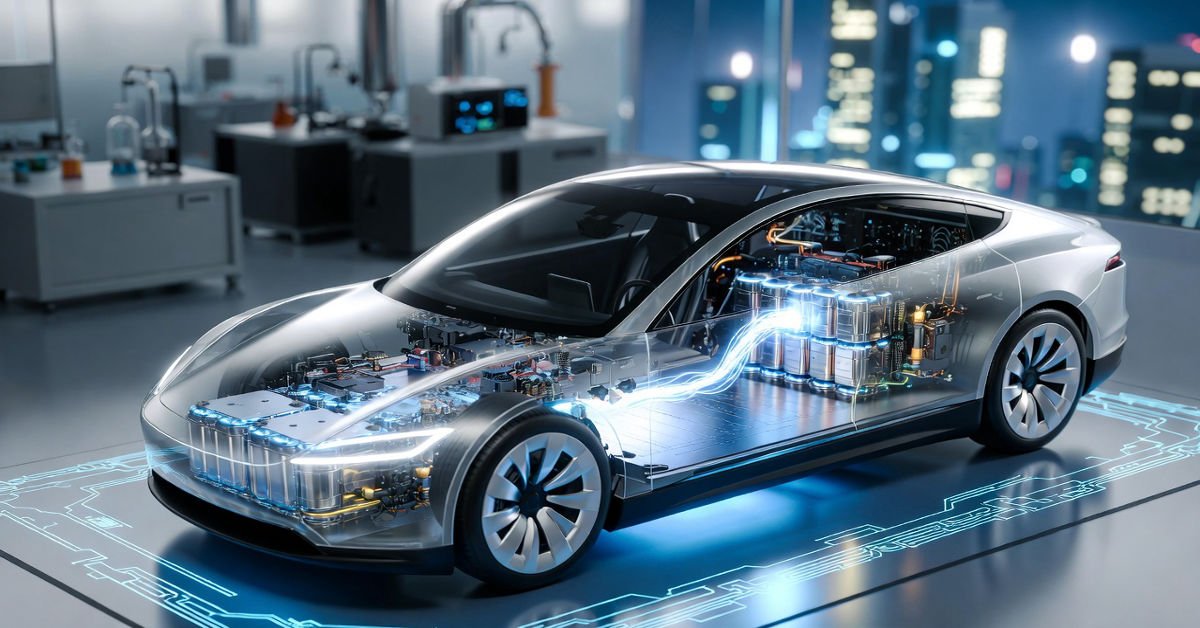
Electric Car Solid-State Battery Update industry is entering a defining era. While lithium-ion batteries have powered the first wave of electric mobility, their limitations in safety, charging speed, energy density, and long-term sustainability have pushed researchers and automakers to search for better solutions. Among all emerging technologies, solid-state batteries are widely viewed as the most promising breakthrough.
What Is a Solid-State Battery?
A solid-state battery replaces the liquid or gel electrolyte found in traditional lithium-ion batteries with a solid electrolyte made from ceramics, polymers, or sulfide-based materials. This single change transforms the entire battery structure and performance profile.
In a standard lithium-ion battery:
-
Liquid electrolytes allow ions to move between the anode and cathode.
-
These liquids are flammable and sensitive to heat and damage.
In a solid-state battery:
-
The electrolyte is solid and non-flammable.
-
This greatly reduces the risk of fires and thermal runaway.
-
Higher energy density becomes possible because lithium metal anodes can be safely used.
Why Solid-State Batteries Matter for Electric Cars
Solid-state batteries are not just a small improvement; they represent a fundamental shift in how EVs store and deliver energy. The main advantages include:
-
Higher energy density, allowing cars to travel farther on a single charge
-
Improved safety, with much lower fire risk
-
Faster charging times, potentially under 15 minutes
-
Longer lifespan, meaning fewer battery replacements
-
Better performance in extreme temperatures
These features address the most common concerns of EV buyers: range anxiety, charging speed, and safety.
Current Solid-State Battery Developments (2025–2026 Update)
Major automakers and battery manufacturers are racing to commercialize solid-state battery technology. Some have already produced prototype vehicles, while others are in advanced testing phases.
Key Industry Players and Progress
| Company | Development Status | Expected Market Entry | Key Focus |
|---|---|---|---|
| Toyota | Advanced prototypes tested | 2027–2028 | High durability and mass production |
| QuantumScape | Pilot-scale production cells | 2026–2027 | Lithium-metal anode technology |
| Samsung SDI | Lab-scale high-capacity cells | 2027 | Improved energy density |
| BMW & Solid Power | Joint development trials | 2027 | EV integration testing |
| Hyundai | Internal testing and partnerships | 2028 | Cost reduction and safety |
These companies are focusing not only on performance but also on making solid-state batteries affordable and scalable.
How Solid-State Batteries Improve EV Range
One of the most exciting updates in solid-state battery development is the dramatic increase in energy density. Traditional lithium-ion batteries average between 250 and 300 Wh/kg. Solid-state batteries are projected to exceed 400 Wh/kg and may eventually reach 500 Wh/kg.
This improvement could mean:
-
EVs with 800–1,000 km (500–620 miles) range
-
Smaller battery packs with the same driving distance
-
Lighter vehicles with better efficiency
For drivers, this translates to fewer charging stops and more confidence during long journeys.
Charging Speed: A Game-Changer for EV Adoption
Solid-state batteries can handle higher voltages and faster ion movement due to their stable electrolyte structure. Many prototypes have demonstrated the ability to charge up to 80% in less than 15 minutes.
Charging Comparison Table
| Feature | Lithium-Ion Battery | Solid-State Battery |
|---|---|---|
| Average Charge Time (80%) | 30–45 minutes | 10–15 minutes |
| Overheating Risk | Moderate | Very low |
| Charging Cycles | 1,000–1,500 | 2,500+ |
| Degradation Rate | Medium | Low |
Fast charging is essential for making EVs as convenient as gasoline vehicles, and solid-state batteries bring the industry much closer to that goal.
Safety Improvements and Fire Risk Reduction
Battery fires are rare but highly publicized. Liquid electrolytes are flammable and can leak or overheat under stress. Solid electrolytes do not ignite easily and are more resistant to physical damage.
Safety benefits include:
-
Lower chance of short circuits
-
Reduced risk during accidents
-
Improved thermal stability
-
Safer storage and transportation
This is particularly important for public transport, electric buses, and commercial fleets where reliability and safety are critical.
Environmental and Sustainability Impact
Solid-state batteries may also help reduce the environmental footprint of EV manufacturing.
Potential benefits include:
-
Less reliance on cobalt and nickel
-
Longer battery life, reducing waste
-
Improved recycling efficiency
-
Higher energy efficiency per unit of raw material
As regulations tighten around mining and emissions, these sustainability advantages make solid-state batteries attractive from both economic and environmental perspectives.
Challenges Slowing Mass Adoption
Despite their promise, solid-state batteries face several hurdles before reaching mass production.
Manufacturing Complexity
Producing solid electrolytes requires extremely precise conditions. Any small defect can reduce performance or cause failure. Scaling from laboratory cells to millions of units is a major technical challenge.
High Production Costs
Current solid-state cells cost significantly more than lithium-ion batteries. Specialized materials and processes make them expensive, although costs are expected to decline as technology matures.
Durability Issues
Some solid electrolytes develop microscopic cracks during charging and discharging. These cracks can allow lithium dendrites to form, reducing battery life and safety.
Solid-State Batteries vs Lithium-Ion: Detailed Comparison
| Feature | Lithium-Ion Battery | Solid-State Battery |
|---|---|---|
| Electrolyte | Liquid or gel | Solid |
| Energy Density | Medium | High |
| Safety | Fire risk possible | Much safer |
| Charging Speed | Moderate | Very fast |
| Lifespan | 8–10 years | 12–15 years |
| Cost (Current) | Lower | Higher |
| Market Availability | Widely available | Limited prototypes |
This comparison highlights why solid-state batteries are viewed as the next generation of EV power storage.
Real-World Testing and Pilot Projects
Several automakers have begun road testing solid-state batteries in prototype vehicles. These tests aim to measure:
-
Performance in hot and cold climates
-
Long-term degradation
-
Charging behavior under real driving conditions
-
Integration with existing EV platforms
Early results show promising consistency and reliability, especially in extreme temperatures where lithium-ion batteries struggle.
Impact on Electric Vehicle Design
Solid-state batteries allow engineers to rethink EV design:
-
Thinner battery packs free up cabin space
-
Lighter structures improve handling and efficiency
-
Higher voltage systems enhance motor performance
-
Simplified cooling systems reduce complexity
These design changes may result in sleeker vehicles with better aerodynamics and more interior room.
Consumer Benefits in the Coming Years
For everyday drivers, the shift to solid-state batteries means:
-
Shorter charging stops
-
Longer travel distances
-
Lower maintenance costs
-
Improved resale value
-
Enhanced peace of mind regarding safety
These improvements could accelerate EV adoption worldwide and make electric cars the default choice rather than an alternative.
Market Timeline and Future Outlook
While some manufacturers have announced small-scale production by 2026–2027, full mass adoption is likely to occur closer to 2030. The first vehicles will probably be premium models due to higher costs, with mainstream models following later.
Projected Timeline
| Year | Milestone |
|---|---|
| 2025–2026 | Pilot production and testing |
| 2027–2028 | Limited commercial models |
| 2029–2030 | Wider market availability |
| Beyond 2030 | Cost parity with lithium-ion |
As economies of scale improve, solid-state batteries are expected to become the standard for electric vehicles.
Expert Opinions and Industry Confidence
Battery scientists and automotive engineers consistently describe solid-state technology as the most realistic long-term successor to lithium-ion. Government funding and private investment are increasing rapidly, signaling strong confidence in commercialization.
Independent research institutions report that solid-state batteries could double the energy efficiency of EVs while cutting failure rates significantly.
What This Means for the EV Industry
The transition to solid-state batteries could reshape the entire automotive ecosystem:
-
Charging infrastructure may evolve to support higher power levels
-
Insurance costs could drop due to improved safety
-
Used EV markets may strengthen with longer battery life
-
Electric aviation and shipping may become feasible
In short, solid-state batteries do not just improve EVs—they expand what electric mobility can achieve.
Conclusion
The Electric Car Solid-State Battery Update reveals a technology on the brink of transformation. With higher energy density, faster charging, greater safety, and longer lifespan, solid-state batteries represent the next major milestone in electric vehicle innovation.
While challenges remain in manufacturing and cost reduction, the progress made by leading automakers and battery developers shows that commercial adoption is no longer a question of “if” but “when.” As testing continues and production scales up, solid-state batteries are expected to redefine driving range, safety standards, and consumer confidence in electric cars.
2 thoughts on “Electric Car Solid-State Battery Update”