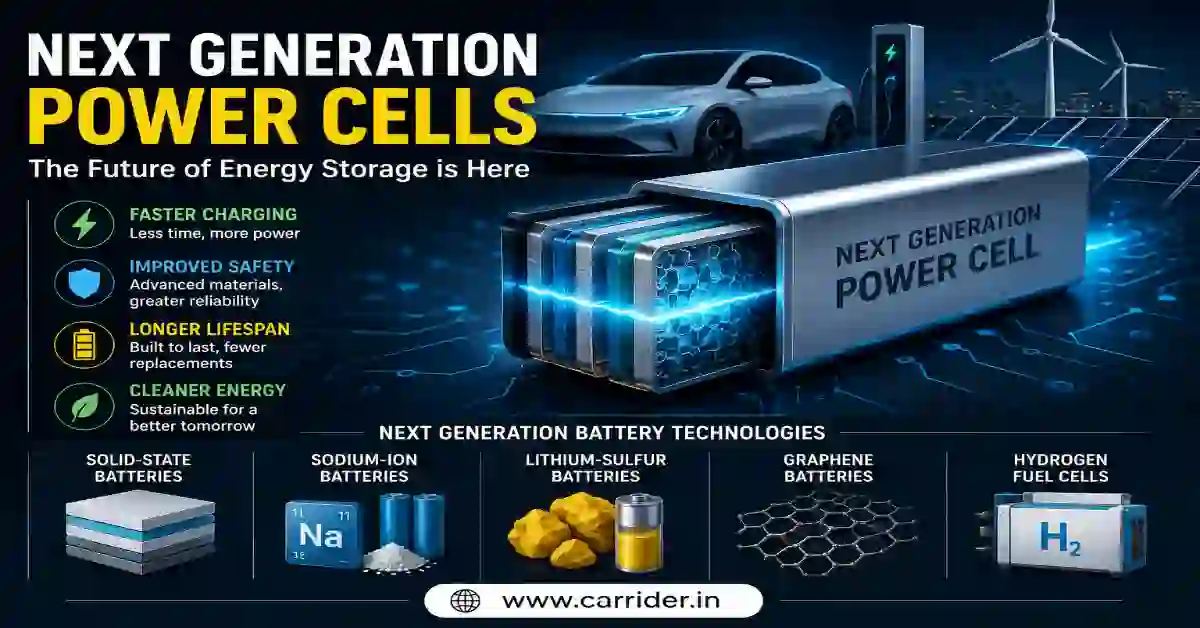
Next Generation Power Cells: A few years ago, I was on a road trip with friends when something happened that made me pay much more attention to battery technology. We were driving an electric vehicle, and everything was going smoothly until we realized the nearest charging station was occupied. We ended up waiting nearly an hour just to continue our journey. That experience made me wonder: why are batteries still one of the biggest limitations in modern technology? Our phones are smarter than ever. Electric vehicles are becoming more common.
Homes are starting to store solar energy. Yet many of these innovations still depend on battery technology that has limitations in charging speed, lifespan, safety, and energy storage. This is where next generation power cells come into the picture. Researchers, manufacturers, and technology companies around the world are investing billions of dollars to develop advanced power cells that can store more energy, charge faster, last longer, and operate more safely than traditional batteries. Let’s explore what these power cells are, how they work, and why they may shape the future of transportation, renewable energy, and consumer electronics.
What Are Next Generation Power Cells?
The term “next generation power cells” refers to advanced energy storage technologies designed to replace or improve current lithium-ion batteries.
Traditional lithium-ion batteries have powered devices for decades, but they face several challenges:
- Limited energy density
- Long charging times
- Battery degradation over time
- Fire and overheating risks
- Dependence on rare materials
Next generation power cells aim to solve these problems while delivering better performance and sustainability.
These technologies are being developed for:
- Electric vehicles
- Smartphones
- Laptops
- Renewable energy systems
- Medical devices
- Aerospace applications
- Industrial equipment
Why Current Batteries Need Improvement
Many people assume battery technology advances as quickly as smartphones or computers. In reality, battery development is much more complicated.
Over the years, I have used several smartphones that felt outdated not because of their processors or cameras, but because the battery performance dropped significantly after two or three years.
This is one of the biggest frustrations consumers face.
Current lithium-ion batteries typically lose capacity after repeated charging cycles. As batteries age, devices require more frequent charging and deliver less reliable performance.
For larger applications like electric vehicles, battery limitations become even more noticeable.
Manufacturers are looking for ways to:
- Increase driving range
- Reduce charging times
- Improve safety
- Lower production costs
- Reduce environmental impact
Types of Next Generation Power Cells
1. Solid-State Batteries
Solid-state batteries are often considered the most promising successor to traditional lithium-ion technology.
Unlike conventional batteries that use liquid electrolytes, solid-state batteries use solid materials to transport ions.
Benefits
- Higher energy density
- Faster charging
- Improved safety
- Reduced risk of leakage
- Longer lifespan
Several automotive companies are investing heavily in solid-state battery development because they could dramatically increase electric vehicle range.
Imagine charging an electric vehicle in minutes instead of hours.
That’s one of the main goals behind this technology.
2. Sodium-Ion Batteries
Lithium is valuable but relatively expensive and geographically concentrated.
Sodium, on the other hand, is abundant and inexpensive.
Sodium-ion batteries use sodium instead of lithium for energy storage.
Advantages
- Lower production costs
- More sustainable supply chain
- Better performance in cold environments
- Reduced dependence on scarce resources
While sodium-ion batteries currently store less energy than premium lithium-ion batteries, rapid improvements are making them increasingly attractive.
3. Lithium-Sulfur Batteries
Lithium-sulfur technology has attracted attention because sulfur is inexpensive and widely available.
Potential advantages include:
- Higher energy capacity
- Lower weight
- Reduced material costs
These characteristics could be especially useful for:
- Drones
- Aviation
- Portable electronics
- Long-range electric vehicles
Researchers continue working on durability challenges before widespread adoption becomes practical.
Read more:
4. Graphene-Based Power Cells
Graphene is one of the most exciting materials in modern science.
It is incredibly thin, lightweight, and highly conductive.
Graphene-enhanced batteries may offer:
- Ultra-fast charging
- Improved efficiency
- Longer lifespan
- Better heat management
Although commercial adoption is still developing, graphene technology has shown promising results in laboratory and pilot projects.
5. Hydrogen Fuel Cells
Hydrogen fuel cells differ from traditional batteries because they generate electricity through a chemical reaction rather than storing large amounts of electrical energy directly.
Common Uses
- Heavy trucks
- Buses
- Industrial machinery
- Backup power systems
Benefits include:
- Quick refueling
- Long operating range
- Low emissions
One challenge remains the development of hydrogen production and distribution infrastructure.
Real-World Applications
Electric Vehicles
The transportation industry may benefit the most from next generation power cells.
Current EV buyers often consider:
- Charging availability
- Driving range
- Battery lifespan
Advanced battery technologies could help solve all three concerns.
Future vehicles may travel farther while requiring fewer charging stops.
Renewable Energy Storage
One challenge with solar and wind energy is inconsistency.
The sun doesn’t shine all day.
The wind doesn’t blow constantly.
Advanced power cells can store excess energy generated during peak production periods and release it when needed.
This helps improve grid reliability and renewable energy adoption.
Consumer Electronics
Most people interact with battery technology every day.
Imagine:
- Smartphones lasting several days per charge
- Laptops operating for extended work sessions
- Smartwatches requiring charging only once a week
These improvements may become possible as next generation power cells mature.
Common Misunderstandings About Advanced Batteries
Mistake 1: Assuming New Technology Arrives Overnight
Many people expect revolutionary battery technologies to appear immediately after headlines announce breakthroughs.
In reality, commercial deployment often takes years.
Research, testing, safety validation, manufacturing, and cost optimization require significant time.
Mistake 2: Believing Bigger Batteries Are Always Better
A larger battery isn’t necessarily the best solution.
Engineers also focus on:
- Efficiency
- Weight reduction
- Thermal management
- Charging speed
The goal is better overall performance, not just larger capacity.
Mistake 3: Ignoring Environmental Impact
Battery innovation isn’t only about performance.
Sustainability matters too.
Manufacturers increasingly evaluate:
- Material sourcing
- Recycling processes
- Carbon footprint
- Supply chain ethics
Future power cells must be both powerful and environmentally responsible.
Practical Tips for Consumers
Even before next generation power cells become mainstream, there are steps users can take to maximize battery life.
Avoid Extreme Temperatures
Heat is one of the biggest battery killers.
Try not to leave devices in direct sunlight or hot vehicles.
Use Quality Chargers
Cheap charging accessories can negatively affect battery health.
Use manufacturer-approved or certified charging equipment whenever possible.
Keep Software Updated
Many updates include battery optimization improvements.
Avoid Constant Full Discharges
Modern batteries generally perform better when they are not regularly drained to zero percent.
Challenges That Still Need Solving
Despite impressive progress, several hurdles remain.
Manufacturing Costs
Many advanced battery technologies remain expensive to produce at scale.
Supply Chain Development
New materials require new sourcing and manufacturing processes.
Infrastructure
Technologies such as hydrogen fuel cells need significant infrastructure investment.
Long-Term Testing
Manufacturers must verify safety and reliability over years of real-world use.
These challenges explain why widespread adoption takes time.
What the Future Might Look Like
Based on current industry trends, the next decade could bring major changes.
We may see:
- Electric vehicles with significantly longer range
- Charging times measured in minutes
- More affordable energy storage systems
- Greater renewable energy integration
- Safer consumer electronics
- Reduced dependence on scarce materials
Some technologies will succeed faster than others, but the direction is clear: energy storage is becoming smarter, safer, and more efficient.
Final Thoughts
Whenever people talk about the future of technology, they usually focus on artificial intelligence, robotics, or smart devices. Yet many of those innovations depend on one critical component: reliable energy storage.
From my own experience with battery limitations in phones, laptops, and electric vehicles, it’s easy to see why researchers are racing to develop better solutions.
Next generation power cells may not attract as many headlines as flashy gadgets, but they have the potential to influence almost every part of modern life. Whether it’s powering cleaner transportation, supporting renewable energy, or helping devices last longer between charges, these advancements could quietly become one of the most important technological shifts of the coming decade.
