As electric vehicles (EVs) become more common worldwide, installing a home EV charger has moved from being a luxury to a necessity. While public charging infrastructure continues to expand, most EV owners still rely on home charging for daily convenience, cost savings, and battery longevity.
One of the most common questions new and existing EV owners ask is: Should I choose a 7kW or a 22kW home EV charger?
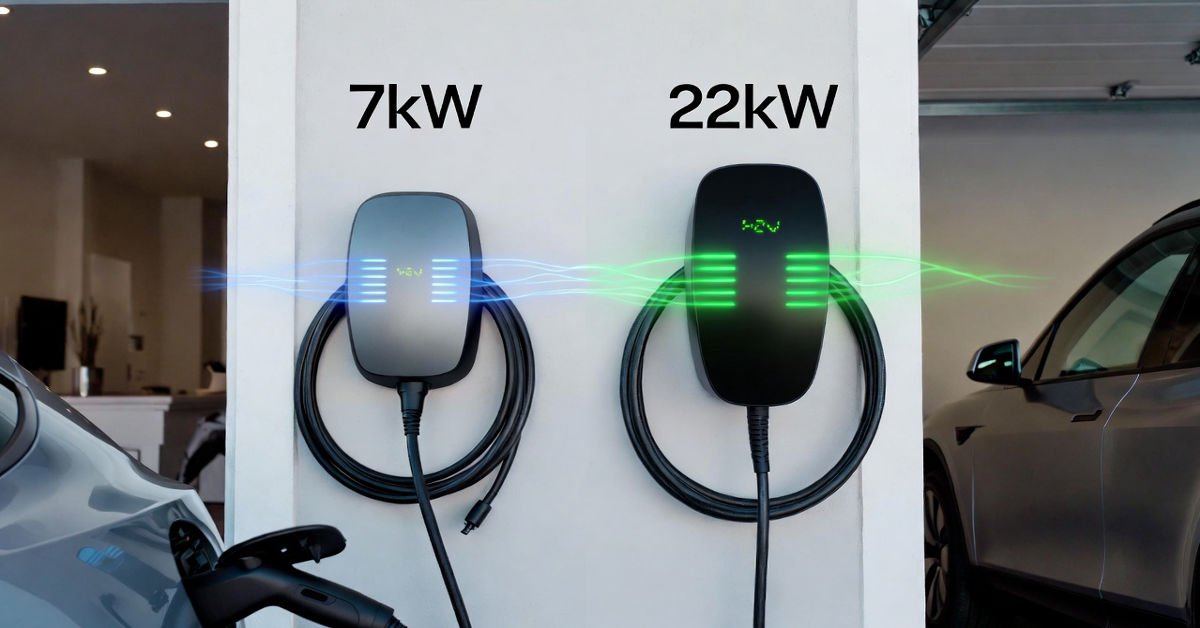
This detailed guide compares home EV charger 7kW vs 22kW, helping you understand real-world charging speeds, installation requirements, costs, compatibility, safety considerations, and long-term value. Whether you drive a compact EV or a premium electric SUV, this article will help you make an informed decision based on experience, expertise, and practical ownership insights.
Understanding Home EV Charging Basics
Before comparing charger power levels, it’s important to understand how home EV charging works.
An EV charger does not store electricity. Instead, it safely delivers power from your home’s electrical supply to your vehicle’s onboard charger, which then manages battery charging.
Charging speed depends on three main factors:
-
Charger power rating (kW)
-
Vehicle’s onboard charger capacity
-
Electrical supply available at your home
Even if you install a high-power charger, your car will only charge as fast as its onboard charger allows.
What Is a 7kW Home EV Charger?
A 7kW EV charger is the most common home charging solution in many countries. It typically runs on a single-phase electricity supply, which is standard in residential homes.
Key Characteristics of a 7kW Charger
-
Uses single-phase power
-
Ideal for overnight charging
-
Compatible with most electric cars
-
Lower installation and upgrade costs
-
Highly energy-efficient and safe for daily use
For most EV owners, a 7kW charger provides enough range replenishment for everyday driving needs.
What Is a 22kW Home EV Charger?
A 22kW EV charger is a high-power AC charger that requires a three-phase electrical connection. These chargers are often seen in commercial settings but are increasingly considered for large homes with suitable electrical infrastructure.
Key Characteristics of a 22kW Charger
-
Requires three-phase power
-
Significantly faster charging (if supported by the vehicle)
-
Higher installation and electrical upgrade costs
-
Best suited for high-usage or multi-EV households
-
Future-ready for advanced EV technology
While powerful, not every home or EV can fully utilize a 22kW charger.
Home EV Charger 7kW vs 22kW: Key Differences at a Glance
| Feature | 7kW Home EV Charger | 22kW Home EV Charger |
|---|---|---|
| Power Output | 7 kilowatts | 22 kilowatts |
| Electrical Supply | Single-phase | Three-phase |
| Typical Charging Time (0–100%) | 6–10 hours | 2–4 hours |
| Installation Cost | Lower | Higher |
| Vehicle Compatibility | Almost all EVs | Limited by onboard charger |
| Best For | Daily home charging | Fast home charging, future EVs |
This table highlights why choosing the right charger depends more on your usage pattern than raw power alone.
Real-World Charging Time Comparison
Charging times vary based on battery size and vehicle limitations. Below is a practical comparison for a typical 60 kWh EV battery.
| Charger Type | Estimated Charging Time | Overnight Friendly |
|---|---|---|
| 7kW Charger | 8–9 hours | Yes |
| 22kW Charger | 3–4 hours | Yes |
In daily use, many EV owners charge only 20–40% overnight, making 7kW chargers more than sufficient.
Vehicle Compatibility: A Critical Factor
One of the most misunderstood aspects of 7kW vs 22kW chargers is vehicle compatibility.
Onboard Charger Limits
Most EVs currently sold come with onboard chargers rated between:
-
7kW to 11kW (single or three-phase)
Very few vehicles can accept the full 22kW AC charging speed.
| EV Segment | Typical Max AC Charging |
|---|---|
| Entry-level EVs | 7kW |
| Mid-range EVs | 7–11kW |
| Premium EVs | 11–22kW (select models only) |
Installing a 22kW charger does not guarantee 22kW charging unless your EV supports it.
Installation Requirements Explained
7kW Charger Installation
-
Works with standard residential power
-
Minimal wiring upgrades
-
Faster approval process
-
Lower electrician and hardware costs
22kW Charger Installation
-
Requires three-phase power supply
-
Electrical panel upgrades often needed
-
Higher safety and compliance checks
-
May require utility provider approval
In many residential areas, three-phase power is unavailable or expensive to install.
Cost Comparison: Charger and Installation
| Cost Component | 7kW Charger | 22kW Charger |
|---|---|---|
| Charger Unit Cost | Lower | Higher |
| Electrical Upgrade | Rare | Often required |
| Installation Cost | Affordable | Expensive |
| Long-Term ROI | High | Depends on usage |
For most homeowners, the total cost difference can be substantial, sometimes double or more for 22kW installations.
Energy Efficiency and Grid Impact
Both chargers are energy-efficient, but power draw differs.
-
7kW chargers draw power gradually, reducing strain on home wiring and local grids.
-
22kW chargers draw high current, which may increase peak load charges where applicable.
From a grid-friendly and sustainability standpoint, 7kW chargers align better with residential energy usage patterns.
Safety and Compliance Considerations
Modern EV chargers include multiple safety layers, but installation quality matters more at higher power levels.
Safety Features to Look For
-
Overcurrent protection
-
Temperature monitoring
-
Surge protection
-
Automatic power cutoff
-
Certified compliance standards
22kW chargers require stricter safety compliance due to higher electrical loads.
Smart Features: What Matters More Than Power
Many buyers focus only on kW rating, but smart features often deliver more value:
-
Wi-Fi and app control
-
Scheduled charging
-
Load balancing
-
Energy usage tracking
-
Solar integration
These features are widely available in both 7kW and 22kW chargers, often making power rating less important than intelligence.
Daily Driving Needs vs Charging Power
Let’s consider real-world usage:
| Daily Distance | Recommended Charger |
|---|---|
| Under 50 km/day | 7kW |
| 50–120 km/day | 7kW |
| 120+ km/day | 7kW or 22kW |
| Multiple EVs | 22kW (with load management) |
Most private EV owners drive well within the capabilities of a 7kW charger.
Future-Proofing: Is 22kW Worth It?
Some buyers choose 22kW chargers for future readiness. While EV technology is improving, most manufacturers are focusing on faster DC charging, not higher AC charging.
Future-proofing considerations:
-
Battery sizes increasing
-
Smart load management becoming standard
-
Grid limitations still apply
For most homes, a smart 7kW charger offers better long-term value than a basic 22kW charger.
7kW vs 22kW for Solar and Home Energy Systems
If you use rooftop solar:
-
7kW chargers integrate easily with solar generation
-
22kW chargers may exceed real-time solar output
Smart solar-aware charging works more efficiently at lower power levels.
Who Should Choose a 7kW Home EV Charger?
A 7kW charger is ideal if you:
-
Charge mainly overnight
-
Drive moderate daily distances
-
Own a single EV
-
Want lower installation costs
-
Prefer energy-efficient home charging
Who Should Choose a 22kW Home EV Charger?
A 22kW charger makes sense if you:
-
Have three-phase power already installed
-
Own an EV that supports 22kW AC charging
-
Need faster turnaround charging at home
-
Operate multiple EVs
-
Plan long-term premium EV ownership
Expert Verdict: Home EV Charger 7kW vs 22kW
From an experience-based and expert perspective, 7kW home EV chargers meet the needs of over 80% of private EV owners. They balance speed, cost, safety, and efficiency perfectly for residential use.
22kW chargers are powerful but situational, best reserved for specific use cases where infrastructure and vehicle compatibility justify the investment.
Final Conclusion
Choosing between a home EV charger 7kW vs 22kW is less about maximum speed and more about real-world practicality.
For most homeowners, a 7kW charger delivers dependable, affordable, and stress-free charging every day. A 22kW charger, while impressive, only offers true value when your home and vehicle can fully support it.

4 thoughts on “Home EV Charger 7kW vs 22kW”