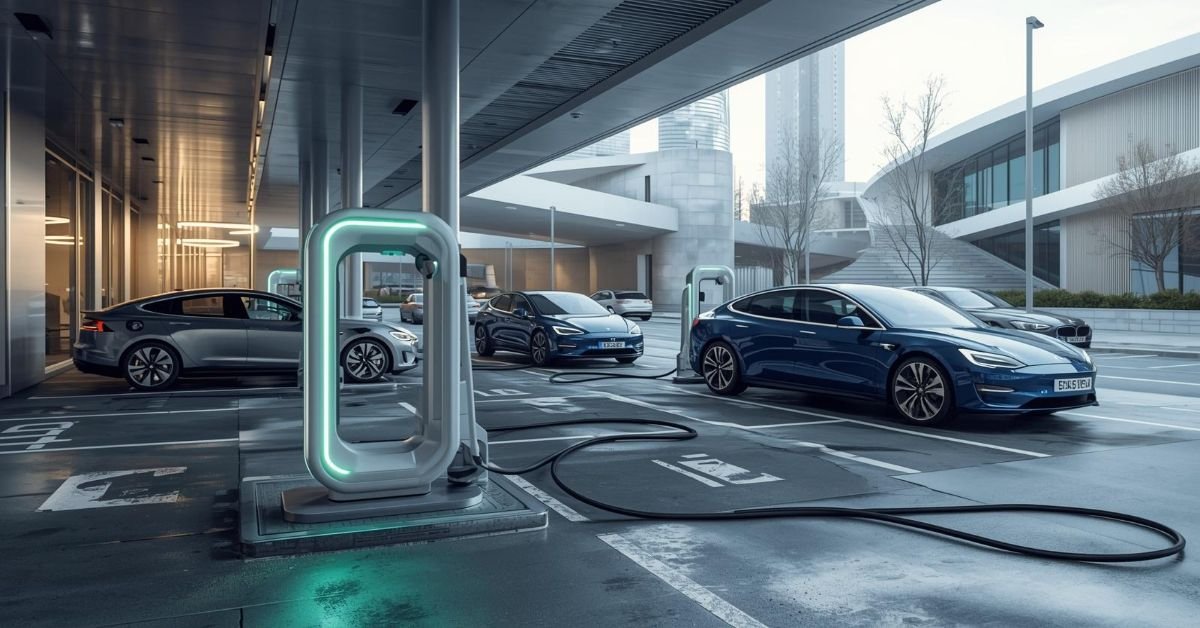
The future of electric vehicle (EV) charging stations in the UK is entering a transformative phase, driven by rapid technological innovation, strong government policy support, and increasing consumer adoption. As the UK moves toward its net-zero emissions goals and prepares to phase out petrol and diesel vehicles, charging infrastructure is becoming a critical pillar of the transition.
Overview: Why EV Charging Infrastructure Matters
EV charging infrastructure is the backbone of electric mobility. One of the biggest barriers to EV adoption is range anxiety, the fear that a vehicle will run out of charge before reaching its destination.
To address this, the UK government and private sector are investing heavily in expanding and improving charging networks.
Current State of EV Charging in the UK
The UK has already made significant progress:
- Over 116,000 public chargers installed by the end of 2025
- More than 26,000 rapid and ultra-rapid chargers
- Over 1 million home chargers in use
Read more:Home EV Charger 7kW vs 22kW
UK EV Charging Infrastructure Growth
| Year | Total Chargers | Rapid/Ultra-Rapid Chargers | Growth Rate |
|---|---|---|---|
| 2024 | 102,771 | 22,997 | — |
| 2025 | 116,052 | 26,378 | 13% overall |
| 2026* | Expected Increase | Rapid expansion | Accelerating |
*Projected based on current trends
Key Trends Shaping the Future
1. Ultra-Fast Charging Technology
The next generation of EV chargers will drastically reduce charging time.
- New 1,500 kW ultra-fast chargers are expected in the UK
- Charging times could drop to 5–10 minutes for significant battery levels
This advancement will make EV charging as convenient as refuelling petrol cars.
2. Massive Infrastructure Expansion
The UK government has committed:
- Funding for 100,000 additional public chargers
- Local infrastructure support for residential areas without driveways
The EV charging market is projected to grow from:
- $1.1 billion (2025) to $12 billion by 2034
This reflects a 30%+ annual growth rate, indicating strong long-term expansion.
3. Smart Charging and AI Integration
Future EV charging stations will be smarter and more efficient:
- AI-powered load balancing
- Smart grids to avoid peak-time overload
- Mobile apps for real-time availability
Smart charging will help reduce energy costs and improve grid stability.
4. Kerbside Charging Revolution
A major challenge in the UK is that:
- Around 9.3 million households lack off-street parking
To solve this:
- Kerbside chargers will expand in urban areas
- Government policies now support cross-pavement charging solutions
5. Reliability Standards (99% Uptime Rule)
New UK regulations require:
- 99% uptime for rapid chargers
This means:
- Better maintenance
- Fewer broken chargers
- Improved consumer trust
However, it may also lead to industry consolidation, with fewer but stronger operators.
6. Integration with Renewable Energy
Future EV charging stations will increasingly use:
- Solar panels
- Battery storage systems
- Vehicle-to-grid (V2G) technology
This allows EVs to:
- Store excess energy
- Supply electricity back to the grid
Read more:EV charging network reviews USA
Types of Future EV Charging Stations
Table: Evolution of Charging Types
| Charging Type | Current Use | Future Development |
|---|---|---|
| Slow (AC) | Home charging | Smart home integration |
| Fast (DC) | Public stations | Increased availability |
| Ultra-Fast | Limited | Mass adoption |
| Wireless Charging | Experimental | Wider deployment |
| Battery Swapping | Rare | Potential niche growth |
Challenges Ahead
Despite strong growth, several challenges remain:
1. Infrastructure Gaps
- Rural and remote areas still lack sufficient chargers
2. High Installation Costs
- Significant upfront investment required
3. Grid Capacity Issues
- Increased EV demand may strain electricity networks
4. Market Competition
- Smaller charging companies may struggle financially
Opportunities for Businesses and Investors
The EV charging sector presents major opportunities:
- Retail locations adding charging hubs
- Fleet charging solutions for logistics companies
- Subscription-based charging services
Global trends show the EV charging industry could reach $873 billion by 2035.
Read more:EV Home Charger Grant USA
Future Outlook: What to Expect by 2030
By 2030, the UK EV charging landscape is expected to feature:
- Charging stations every few miles on major roads
- Ultra-fast charging becoming standard
- Fully integrated smart energy ecosystems
- Seamless payment and booking systems
The focus will shift from availability to efficiency, reliability, and user experience.
Conclusion
The future of EV charging stations in the UK is highly promising, with rapid advancements in technology, infrastructure expansion, and policy support driving growth. While challenges remain, the transition toward a fully electrified transport system is well underway.
For consumers, this means faster charging, lower costs, and greater convenience. For businesses and investors, it represents one of the most dynamic and high-growth sectors of the decade.

One thought on “Future of EV Charging Stations UK”