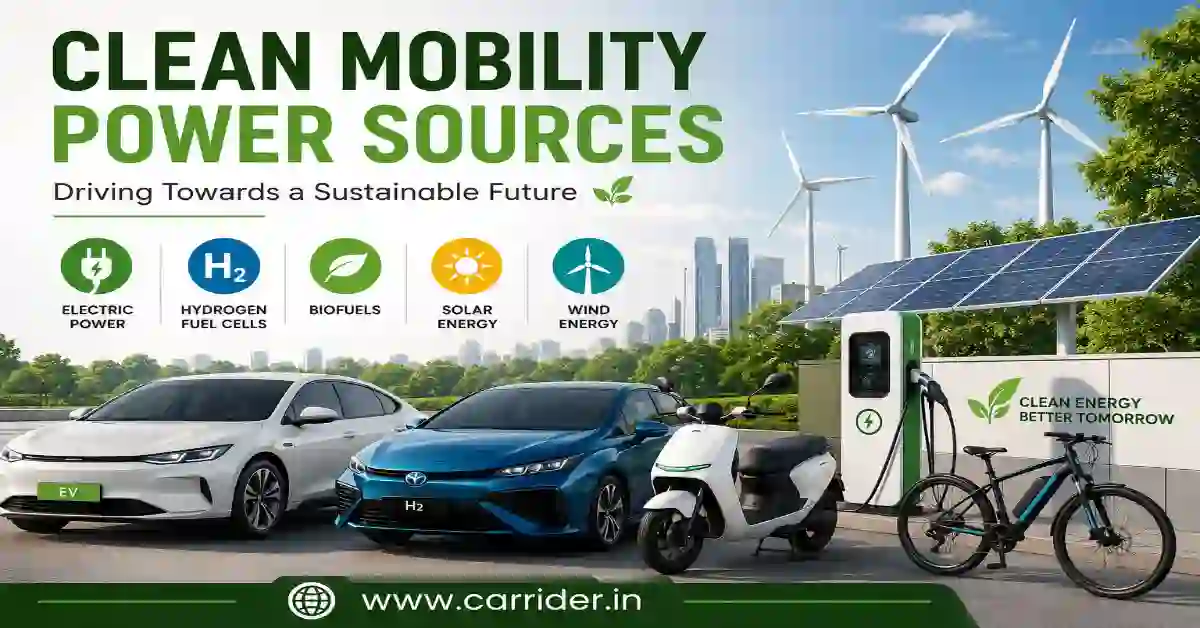
Clean Mobility Power Sources was simple but expensive. Every week, I found myself stopping at a fuel station, watching fuel prices climb higher while wondering if there was a better option. At the same time, traffic congestion and air pollution seemed to get worse every year.
That curiosity led me to explore different clean mobility power sources. I tested electric scooters, researched hybrid vehicles, followed developments in hydrogen technology, and spoke with EV owners in my area. What started as an attempt to save money became a deeper understanding of how transportation is changing.
If you’re trying to understand what powers modern clean mobility solutions and which options make sense in real life, this guide will help.
What Does Clean Mobility Mean?
Clean mobility refers to transportation systems that reduce environmental impact compared to traditional gasoline and diesel vehicles.
The goal is simple:
- Lower carbon emissions
- Reduce air pollution
- Improve energy efficiency
- Use sustainable energy sources
- Create healthier cities
When most people hear “clean mobility,” they immediately think of electric cars. While electric vehicles are important, they are only one part of a much larger ecosystem.
Today’s clean mobility power sources include:
- Battery-electric power
- Hybrid systems
- Hydrogen fuel cells
- Biofuels
- Solar-assisted transportation
- Renewable electricity-based charging systems
Each option has strengths and limitations depending on how and where it is used.
Why Traditional Fuels Are Becoming Less Attractive
One lesson I learned quickly is that fuel costs are only part of the story.
Traditional internal combustion engines depend on fossil fuels that create emissions during operation. Cities around the world are introducing stricter environmental regulations, and manufacturers are investing heavily in cleaner alternatives.
Some common challenges of conventional fuel-powered vehicles include:
- Rising fuel expenses
- Engine maintenance requirements
- Emissions regulations
- Noise pollution
- Dependence on non-renewable resources
This doesn’t mean every petrol or diesel vehicle will disappear overnight, but cleaner alternatives are becoming increasingly practical.
Battery Electric Vehicles (BEVs)
When most people discuss clean mobility today, battery-electric vehicles are usually the first example.
These vehicles store electricity in large battery packs and use electric motors instead of traditional engines.
Examples include:
- Electric cars
- Electric scooters
- Electric bikes
- Electric buses
- Electric delivery vans
My First Experience with an Electric Scooter
The first electric vehicle I used regularly was a small electric scooter.
I expected it to feel underpowered, but I was surprised by the instant acceleration. There was no engine vibration and almost no noise.
The biggest adjustment wasn’t riding the scooter—it was remembering to charge it.
For the first few weeks, I occasionally forgot to plug it in overnight. That simple mistake taught me that clean mobility often requires changing habits rather than learning complicated technology.
Advantages
- Zero tailpipe emissions
- Lower operating costs
- Quiet operation
- Reduced maintenance
- High energy efficiency
Challenges
- Charging infrastructure availability
- Battery replacement costs
- Charging time
- Driving range concerns for some users
For urban commuting, battery-electric transportation is often the most practical clean mobility solution available today.
Hybrid Power Systems
Not everyone is ready to switch completely to electric transportation.
Hybrid vehicles combine a traditional engine with an electric motor.
The electric system assists during acceleration and low-speed driving, improving fuel efficiency.
Why Some Drivers Prefer Hybrids
Several friends who frequently travel long distances chose hybrids instead of fully electric vehicles.
Their reasoning was simple:
- No charging anxiety
- Better fuel economy
- Familiar driving experience
- Easier transition from conventional vehicles
Hybrids can be an excellent stepping stone for people interested in cleaner transportation but concerned about charging infrastructure.
Hydrogen Fuel Cells
Hydrogen fuel cells are one of the most interesting clean mobility technologies currently being developed.
Instead of storing electricity in batteries, these vehicles generate electricity from hydrogen.
The only direct emission is water vapor.
How Hydrogen Vehicles Work
The process is surprisingly straightforward:
- Hydrogen is stored in onboard tanks.
- A fuel cell converts hydrogen into electricity.
- Electricity powers the electric motor.
- Water vapor is released as a byproduct.
Benefits
- Fast refueling
- Long driving ranges
- Zero tailpipe emissions
- Suitable for heavy transportation
Current Limitations
- Limited hydrogen stations
- Higher infrastructure costs
- Complex hydrogen production and storage
Hydrogen technology shows strong potential, especially for trucks, buses, and commercial transportation.
Renewable Electricity as a Power Source
One important point many people overlook is that electric vehicles are only as clean as the electricity used to charge them.
If charging energy comes from renewable sources, the environmental benefits become much greater.
Common renewable power sources include:
Solar Energy
Solar panels can generate electricity for EV charging.
Many homeowners are now combining rooftop solar systems with electric vehicles.
Wind Energy
Wind farms contribute renewable electricity to power grids that support EV charging networks.
Hydroelectric Power
Hydropower remains an important source of clean electricity in many regions.
The combination of renewable energy and electric transportation creates a much more sustainable mobility system.
Electric Public Transportation
Personal vehicles aren’t the only part of clean mobility.
Public transportation is evolving rapidly.
Examples include:
- Electric buses
- Electric metro systems
- Electric trains
- Battery-powered shuttle services
During a recent trip to a major city, I noticed how much quieter newer electric buses were compared to older diesel models.
The difference was immediately noticeable, especially in crowded urban areas.
Public transportation powered by clean energy can reduce emissions on a much larger scale than individual vehicle adoption alone.
The Growing Role of E-Bikes and Micromobility
One of the most practical clean mobility solutions is often overlooked.
Electric bicycles and micromobility devices are transforming short-distance travel.
These include:
- E-bikes
- Electric scooters
- Shared mobility platforms
- Electric cargo bikes
For trips under 10 kilometers, many people discover they don’t need a car at all.
Practical Benefits
- Lower transportation costs
- Easy parking
- Reduced traffic congestion
- Minimal energy consumption
For urban residents, micromobility may offer the fastest return on investment among all clean transportation options.
Common Mistakes People Make When Switching to Clean Mobility
Choosing Technology Before Understanding Usage
Many buyers focus on specifications instead of daily needs.
Ask yourself:
- How far do I travel daily?
- Where can I charge?
- What weather conditions do I face?
These answers matter more than flashy marketing claims.
Ignoring Charging Planning
One of the biggest mistakes new EV owners make is not planning charging routines.
Home charging often becomes the most convenient solution.
Focusing Only on Purchase Price
The total cost of ownership includes:
- Fuel savings
- Maintenance savings
- Insurance
- Battery warranties
- Government incentives
Sometimes a vehicle with a higher purchase price becomes cheaper over several years.
How to Choose the Right Clean Mobility Power Source
Step 1: Evaluate Daily Travel Distance
Short urban trips often work well with:
- E-bikes
- Electric scooters
- Battery-electric cars
Step 2: Consider Charging Availability
Check whether charging is available:
- At home
- At work
- Along common travel routes
Step 3: Calculate Long-Term Costs
Compare:
- Fuel expenses
- Maintenance costs
- Charging costs
- Expected ownership period
Step 4: Research Local Incentives
Many governments offer incentives that significantly reduce adoption costs.
Always verify available programs in your region.
The Future of Clean Mobility
Clean mobility is no longer an experimental concept.
Electric vehicles are becoming mainstream, battery technology continues improving, renewable energy adoption is increasing, and hydrogen solutions are gaining attention for commercial transportation.
What surprised me most during my own exploration wasn’t the technology itself. It was how quickly these options moved from being niche products to practical everyday solutions.
For many people, the transition doesn’t need to happen all at once. Starting with an electric scooter, an e-bike, a hybrid vehicle, or simply using cleaner public transportation can make a meaningful difference.
The future of transportation will likely involve multiple power sources working together. Battery-electric systems, renewable energy, hydrogen fuel cells, and efficient public transportation each have a role to play.
The best clean mobility solution isn’t necessarily the newest or most advanced technology. It’s the one that fits your daily life, reduces environmental impact, and remains practical for your transportation needs.

One thought on “Clean Mobility Power Sources”