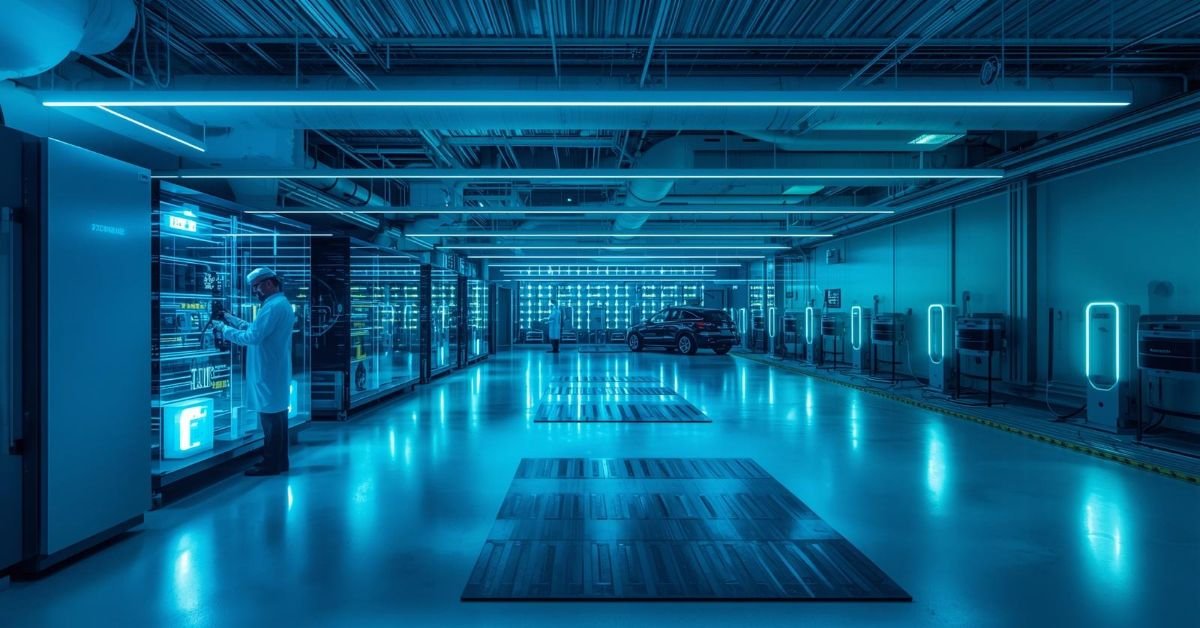
Battery Innovation Startups in the UK, playing a crucial role in accelerating the transition toward clean energy and sustainable mobility. As demand for electric vehicles (EVs), renewable energy storage, and portable electronics continues to rise, UK-based startups are pushing technological boundaries to develop next-generation battery solutions.
This in-depth article explores the evolving landscape of battery innovation startups in the UK, highlighting key players, technologies, challenges, opportunities, and what makes the UK a fertile ground for energy storage breakthroughs.
Why Battery Innovation Matters Today
Battery technology is at the heart of modern energy systems. From powering electric vehicles to storing renewable energy generated by wind and solar farms, batteries enable a more flexible, efficient, and sustainable energy ecosystem.
Key drivers behind battery innovation include:
- Decarbonization goals set by governments
- Rapid adoption of electric vehicles (EVs)
- Increasing reliance on renewable energy sources
- Need for grid stability and energy storage solutions
The UK government has committed to achieving net-zero emissions by 2050, making battery innovation not just important—but essential.
The UK’s Growing Battery Startup Ecosystem
The UK offers a strong foundation for battery startups due to:
- World-class universities like University of Oxford and University of Cambridge
- Government funding initiatives such as the Faraday Battery Challenge
- Access to skilled researchers and engineers
- Strong venture capital and innovation ecosystem
These factors have contributed to the rise of numerous startups focusing on advanced battery chemistries, manufacturing processes, and recycling technologies.
Read more:EV charging options for apartments UK
Top Battery Innovation Startups in the UK
Here are some of the most promising battery startups shaping the future:
1. Britishvolt
Britishvolt gained attention for its ambitious plans to build a large-scale gigafactory in the UK. Although it faced financial challenges, it sparked national conversation around domestic battery manufacturing.
Focus Areas:
- Lithium-ion battery production
- EV battery supply chains
2. Ilika
Ilika specializes in solid-state battery technology, which offers improved safety, higher energy density, and faster charging.
Key Innovation:
- Miniaturized solid-state batteries for IoT devices
- Scalable solutions for EV applications
3. Faradion
Faradion is pioneering sodium-ion batteries, a promising alternative to lithium-ion technology.
Advantages:
- Lower cost materials
- Improved sustainability
- Reduced dependence on rare metals
4. AMTE Power
AMTE Power develops specialized battery cells for niche markets, including electric vehicles and energy storage systems.
Key Strengths:
- Custom battery solutions
- High-performance lithium-ion cells
5. OXIS Energy
OXIS Energy focused on lithium-sulfur batteries, which offer higher energy density compared to traditional lithium-ion batteries.
Key Features:
- Lightweight batteries
- Potential for aviation and aerospace applications
6. Nyobolt
Nyobolt is developing ultra-fast charging batteries that can significantly reduce charging time for EVs.
Innovation Highlights:
- Charging in minutes instead of hours
- High-power density materials
Emerging Battery Technologies in the UK
Battery startups in the UK are working on a range of cutting-edge technologies:
1. Solid-State Batteries
- Replace liquid electrolytes with solid materials
- Safer and more efficient
- Longer lifespan
2. Sodium-Ion Batteries
- Abundant raw materials
- Lower environmental impact
- Cost-effective alternative
3. Lithium-Sulfur Batteries
- Higher energy density
- Lightweight design
- Ideal for aviation and long-range EVs
4. Fast-Charging Technologies
- Reduce charging time dramatically
- Improve EV adoption rates
Comparison of Battery Technologies
| Technology | Energy Density | Cost | Safety | Commercial Readiness |
|---|---|---|---|---|
| Lithium-Ion | High | Medium | Moderate | Mature |
| Solid-State | Very High | High | Very High | Emerging |
| Sodium-Ion | Medium | Low | High | Early Commercial |
| Lithium-Sulfur | Very High | Medium | Moderate | Experimental |
Government Support and Funding
The UK government actively supports battery innovation through programs such as:
Faraday Battery Challenge
- Investment of over £500 million
- Supports research, development, and commercialization
UK Research and Innovation (UKRI)
- Grants for startups and academic partnerships
Advanced Propulsion Centre (APC)
- Focus on low-carbon vehicle technologies
Investment Trends in UK Battery Startups
The battery sector has attracted significant investment in recent years:
| Year | Investment Volume (£ Billion) | Key Trend |
|---|---|---|
| 2020 | 0.5 | Early-stage funding |
| 2022 | 1.2 | EV-focused growth |
| 2024 | 2.0+ | Gigafactory expansion |
Key Investors:
- Venture capital firms
- Government-backed funds
- Automotive manufacturers
Challenges Facing Battery Startups
Despite strong growth, UK battery startups face several challenges:
1. High Capital Requirements
Battery manufacturing requires significant investment in infrastructure and R&D.
2. Supply Chain Constraints
Dependence on raw materials like lithium and cobalt remains a concern.
3. Scaling Production
Transitioning from lab-scale innovation to mass production is complex.
4. Global Competition
Countries like China and the US dominate battery manufacturing.
Opportunities for Growth
The UK battery sector holds immense potential:
- Expansion of gigafactories
- Growth in electric vehicle adoption
- Integration with renewable energy storage
- Advancements in battery recycling technologies
Role of Universities and Research Institutions
Academic institutions play a key role in innovation:
- Research partnerships with startups
- Talent development
- Access to cutting-edge laboratories
Universities like Oxford and Cambridge are at the forefront of battery research, contributing significantly to startup ecosystems.
Read more:Best Portable EV Chargers UK
Battery Recycling and Sustainability
Sustainability is a major focus area:
- Recycling reduces environmental impact
- Recovering valuable materials lowers costs
- Supports circular economy
Startups are increasingly investing in closed-loop battery systems.
Future Outlook of Battery Innovation in the UK
The future looks promising for UK battery startups:
- Strong government backing
- Growing investor interest
- Rapid technological advancements
By 2030, the UK aims to become a major player in the global battery market, supporting both domestic and international demand.
Expert Insights and Industry Perspective
Industry experts believe that the UK’s strength lies in innovation rather than mass manufacturing. By focusing on cutting-edge technologies such as solid-state and sodium-ion batteries, UK startups can carve out a competitive niche globally.
Practical Applications of Battery Innovations
Battery innovations are transforming multiple sectors:
Electric Vehicles (EVs)
- Longer driving ranges
- Faster charging times
Renewable Energy Storage
- Efficient storage of solar and wind energy
Consumer Electronics
- Improved battery life
- Faster charging devices
Aerospace and Defense
- Lightweight, high-energy batteries
How Startups Are Collaborating with Industry
Collaboration is key to success:
- Partnerships with automotive companies
- Joint research with universities
- Government-backed innovation programs
These collaborations accelerate commercialization and reduce time-to-market.
Key Takeaways
- The UK is a leading hub for battery innovation startups
- Technologies like solid-state and sodium-ion batteries are gaining traction
- Strong government support fuels growth
- Challenges remain in scaling and supply chains
- Future opportunities are vast, especially in EVs and renewable energy
Conclusion
Battery innovation startups in the UK are playing a vital role in shaping the future of energy storage and sustainability. With a strong ecosystem of research institutions, government support, and entrepreneurial talent, the UK is well-positioned to lead the next wave of battery technology advancements.
As the world transitions toward cleaner energy solutions, these startups are not just contributing to technological progress—they are helping redefine how energy is stored, distributed, and utilized across industries.
