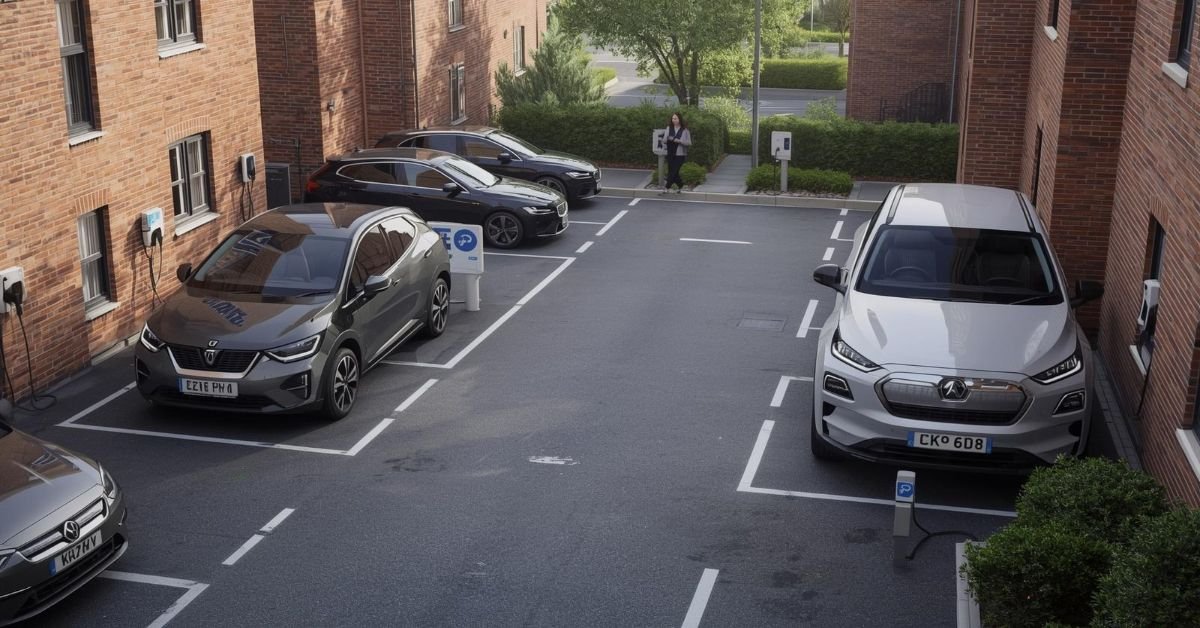
EV charging options for apartments UK across the United Kingdom has brought significant changes to how people think about transportation and energy use. While homeowners with private driveways can install EV chargers relatively easily, apartment residents often face unique challenges. Limited parking control, shared infrastructure, and regulatory considerations can complicate the process.
Understanding the Need for Apartment EV Charging
The UK government’s commitment to phasing out new petrol and diesel vehicles by 2035 has accelerated EV adoption. As more residents switch to electric vehicles, multi-unit residential buildings must adapt.
Apartment dwellers often rely on:
- On-street parking
- Shared car parks
- Limited electrical infrastructure
Without proper charging solutions, EV ownership becomes inconvenient. Therefore, developing accessible and scalable charging options is essential.
Types of EV Charging Options for Apartments
Apartment residents in the UK have several charging options depending on their building setup, ownership rights, and local infrastructure.
1. Dedicated Private EV Chargers
This is the most convenient option for apartment residents with allocated parking spaces.
How it works:
- A charging unit is installed in the resident’s designated parking spot.
- The charger is connected to the building’s electricity supply or the resident’s meter.
Advantages:
- Full control over charging
- Faster charging speeds
- Increased property value
Challenges:
- Requires landlord or freeholder approval
- Installation costs can be high
- Electrical capacity limitations
2. Shared Charging Stations
Many apartment complexes install shared EV chargers for all residents.
How it works:
- Chargers are installed in communal parking areas
- Users book or access via apps or RFID cards
Advantages:
- Cost-effective for buildings
- Encourages EV adoption among residents
Challenges:
- Limited availability during peak hours
- Requires management and billing systems
Read more:Best Portable EV Chargers UK
3. On-Street Charging Solutions
For residents without parking spaces, on-street charging is increasingly common.
Options include:
- Lamp post chargers
- Kerbside charging units
- Pop-up chargers embedded in pavements
Advantages:
- No need for private parking
- Supported by local councils
Challenges:
- Availability varies by location
- Slower charging speeds
4. Workplace Charging
Some apartment residents rely on charging at work.
Advantages:
- Convenient for daily commuters
- Often subsidised by employers
Challenges:
- Not suitable for remote workers
- Limited access outside working hours
5. Public Charging Networks
Public charging stations remain a key option.
Types:
- Rapid chargers (50kW+)
- Ultra-rapid chargers (150kW+)
- Fast chargers (7–22kW)
Advantages:
- Widely available across the UK
- Ideal for long-distance travel
Challenges:
- Higher cost per kWh
- Potential queues
Read more:Latest Electric Car Battery Innovations in the UK
Comparison of EV Charging Options
| Charging Option | Convenience | Cost | Speed | Best For |
|---|---|---|---|---|
| Private Charger | High | High | Fast | Owners with allocated parking |
| Shared Charger | Medium | Medium | Medium | Apartment residents |
| On-Street Charging | Medium | Low-Medium | Slow-Medium | Urban residents |
| Workplace Charging | High | Low | Fast | Daily commuters |
| Public Charging | Medium | High | Very Fast | Occasional use |
Government Grants and Support in the UK
The UK government offers financial support to encourage EV charger installations in residential settings.
EV Chargepoint Grant (for Flats and Rented Properties)
This scheme helps reduce installation costs for apartment residents.
Key benefits:
- Up to 75% of installation cost covered
- Maximum grant per socket available
Eligibility:
- Must live in a flat or rental property
- Must have off-street parking
Infrastructure Grants for Landlords and Building Owners
Landlords can apply for funding to install multiple chargepoints.
Advantages:
- Supports large-scale installations
- Encourages EV-friendly developments
Installation Considerations for Apartments
Installing EV charging infrastructure in apartments involves several technical and administrative factors.
1. Electrical Capacity
Older buildings may not have sufficient capacity.
Solution:
- Load balancing systems
- Upgrading electrical infrastructure
2. Permissions and Legal Requirements
Residents must obtain:
- Landlord or freeholder approval
- Planning permissions (if required)
3. Billing and Energy Management
Shared systems require:
- Smart meters
- User-based billing solutions
4. Future-Proofing
Install scalable systems to accommodate:
- Increasing EV adoption
- Additional charging points
Best Practices for Property Owners
Landlords and property managers play a crucial role in enabling EV charging.
Key Recommendations:
- Conduct a feasibility study
- Install smart charging systems
- Offer flexible billing options
- Communicate clearly with residents
Challenges Facing Apartment EV Charging
Despite progress, several challenges remain:
1. Infrastructure Limitations
Many older buildings require upgrades.
2. Cost Barriers
Installation and maintenance costs can be high.
3. Shared Access Conflicts
Limited chargers can lead to disputes.
4. Regulatory Complexity
Navigating permissions and compliance can be difficult.
Future Trends in Apartment EV Charging
The UK EV charging landscape is evolving rapidly.
1. Smart Charging Technology
- Dynamic load management
- Remote monitoring
2. Wireless Charging
- Inductive charging systems under development
3. Increased Government Support
- More grants and incentives expected
4. Integration with Renewable Energy
- Solar-powered charging systems
Case Study: Apartment EV Charging Implementation
| Feature | Example Implementation |
|---|---|
| Building Type | 50-unit apartment complex |
| Charging Type | Shared smart chargers |
| Funding Source | Government grant + private investment |
| Outcome | 40% EV adoption among residents |
Tips for Apartment Residents
If you live in an apartment and own an EV, consider the following:
- Discuss installation options with your landlord
- Explore government grants
- Use public and workplace charging strategically
- Join resident committees to advocate for EV infrastructure
Environmental and Economic Benefits
Installing EV charging infrastructure in apartments contributes to:
Environmental Impact
- Reduced carbon emissions
- Cleaner urban air
Economic Benefits
- Increased property value
- Attraction of eco-conscious tenants
Read more:Solid-State EV Battery Testing in UK Labs
Conclusion
EV charging options for apartments in the UK are expanding rapidly, offering practical solutions for residents and property owners alike. While challenges remain, government support, technological advancements, and growing demand are driving progress.
Whether through private installations, shared systems, or public infrastructure, apartment dwellers now have multiple pathways to convenient EV charging. By understanding available options and planning strategically, both residents and landlords can contribute to a more sustainable future.

2 thoughts on “EV charging options for apartments UK”