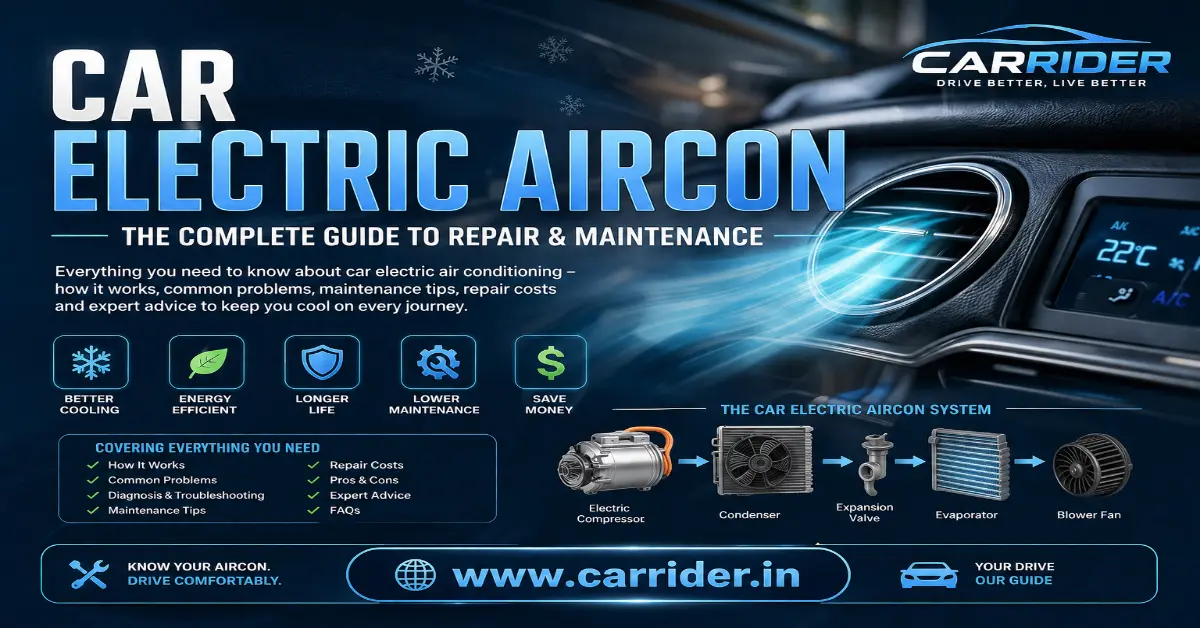
Car Electric Aircon system. Whether you drive a gasoline-powered vehicle, hybrid, or electric vehicle (EV), understanding how your air conditioning works can help you save money, improve performance, and avoid expensive repairs.
A properly functioning car electric aircon system not only keeps passengers comfortable but also improves driving safety by preventing windshield fogging and reducing driver fatigue during hot weather.
In this comprehensive guide, you’ll learn how car electric air conditioning works, common problems, repair solutions, maintenance tips, estimated repair costs, and answers to the most frequently asked questions.
What Is a Car Electric Aircon?
A car electric aircon system is an air conditioning system powered by electrical components rather than relying entirely on a belt-driven compressor.
Unlike traditional systems, electric compressors are driven by high-voltage or low-voltage electric motors, making them ideal for:
- Electric vehicles (EVs)
- Hybrid vehicles
- Modern fuel-efficient cars
- Idle-stop engine systems
These systems can continue cooling even when the engine is turned off.
How Does a Car Electric Aircon Work?
The system works by circulating refrigerant through several components.
Main Components
- Electric Compressor
- Condenser
- Expansion Valve
- Evaporator
- Cabin Air Filter
- Cooling Fans
- Temperature Sensors
- Pressure Sensors
- Electronic Control Module (ECU)
Step-by-Step Process
- Driver turns on the AC.
- ECU activates the electric compressor.
- Refrigerant is compressed.
- Hot refrigerant moves into the condenser.
- Heat is released outside.
- Refrigerant becomes liquid.
- Expansion valve reduces pressure.
- Cold refrigerant reaches the evaporator.
- Cabin fan blows cool air into the vehicle.
Read more:
Common Car Electric Aircon Problems
Several issues can affect cooling performance.
1. Weak Cooling
Possible causes:
- Low refrigerant
- Dirty condenser
- Blocked cabin filter
- Compressor failure
2. AC Not Turning On
Possible reasons include:
- Blown fuse
- Faulty relay
- Damaged wiring
- ECU malfunction
- Dead compressor
3. Strange Noises
Common causes:
- Worn bearings
- Loose compressor mount
- Cooling fan damage
- Internal compressor wear
4. Bad Smell
Usually caused by:
- Mold
- Dirty evaporator
- Wet cabin filter
- Bacteria buildup
5. AC Cycles Frequently
Possible reasons:
- Refrigerant leak
- Faulty pressure sensor
- Temperature sensor failure
- Electrical issues
Signs Your Car Electric Aircon Needs Repair
Watch for these warning signs:
- Warm air instead of cold
- AC turns off randomly
- Cooling only while driving
- Water leaking inside cabin
- Loud compressor noise
- Burning electrical smell
- Dashboard warning lights
- Increased battery usage (EVs)
Early diagnosis prevents costly repairs.
Electric Compressor vs Traditional Compressor
| Feature | Electric Compressor | Belt-Driven Compressor |
|---|---|---|
| Power Source | Electricity | Engine Belt |
| Engine Required | No | Yes |
| EV Compatible | Yes | No |
| Fuel Efficiency | Better | Lower |
| Cooling at Idle | Excellent | Limited |
| Maintenance | Lower | Moderate |
Car Electric Aircon Maintenance Tips
Routine maintenance keeps your system efficient.
Every Month
- Run AC for 10 minutes.
- Listen for unusual sounds.
Every 6 Months
- Replace cabin filter if dirty.
- Inspect electrical connectors.
Every Year
- Check refrigerant level.
- Clean condenser.
- Scan ECU.
Every 2 Years
- Professional AC inspection.
- Leak detection.
- System cleaning.
Pros and Cons of Car Electric Aircon
Advantages
- Better cooling efficiency
- Lower fuel consumption
- Works while engine is off
- Ideal for electric vehicles
- Faster cabin cooling
- Lower emissions
- Reduced engine load
Disadvantages
- Higher repair cost
- Expensive compressor replacement
- Requires specialized technicians
- High-voltage safety precautions in EVs
Common Mistakes to Avoid
Avoid these costly mistakes.
- Ignoring refrigerant leaks
- Using incorrect refrigerant
- Skipping cabin filter replacement
- Running AC with damaged wiring
- Delaying compressor repairs
- DIY refrigerant charging without proper equipment
- Ignoring unusual noises
Estimated Repair Costs
| Repair | Estimated Cost (USD) |
|---|---|
| Cabin Filter | $20–$60 |
| Refrigerant Recharge | $100–$250 |
| Leak Repair | $150–$500 |
| Compressor Replacement | $700–$2,000 |
| Pressure Sensor | $80–$250 |
| Electrical Diagnosis | $75–$200 |
Costs vary depending on vehicle make, model, and location.
Expert Tips for Better AC Performance
Keep the Cabin Filter Clean
A dirty filter reduces airflow and cooling efficiency.
Park in the Shade
Lower cabin temperatures reduce system workload.
Use Recirculation Mode
This cools already chilled cabin air instead of hot outside air.
Don’t Ignore Small Problems
Minor electrical issues can become expensive repairs.
Schedule Preventive Maintenance
Annual inspections help identify issues early.
Real-Life Case Study
A hybrid vehicle owner noticed the AC only cooled while driving. Initial inspection suggested a refrigerant issue, but diagnostics revealed a faulty electric compressor relay.
Replacing the relay restored full cooling performance at a fraction of the cost of replacing the compressor, highlighting the importance of accurate diagnostics before replacing major components.
Why Electric Air Conditioning Is the Future
Vehicle manufacturers increasingly use electric compressors because they offer:
- Better energy efficiency
- Improved passenger comfort
- Compatibility with EVs and hybrids
- Lower emissions
- Quieter operation
- Smart electronic controls
- Enhanced reliability
As electric vehicles become more common, electric air conditioning systems will continue to evolve with improved efficiency and intelligent climate management.
Conclusion
A well-maintained car electric aircon system is essential for comfort, safety, and energy efficiency. By understanding how the system works, recognizing early warning signs, and following a preventive maintenance schedule, you can extend the lifespan of your vehicle’s air conditioning system while avoiding costly repairs.
Whether you drive a conventional vehicle, hybrid, or fully electric car, investing in regular inspections and professional servicing ensures reliable cooling in every season. If you notice weak airflow, unusual noises, or inconsistent cooling, don’t wait—have your system diagnosed promptly to prevent larger issues.
Frequently Asked Questions (FAQs)
1. What is a car electric aircon?
A car electric aircon uses an electrically powered compressor to cool the cabin instead of relying solely on an engine-driven belt system.
2. Why is my car AC blowing warm air?
Common reasons include low refrigerant, electrical faults, compressor failure, dirty condenser, or sensor issues.
3. How long does an electric AC compressor last?
With proper maintenance, an electric compressor typically lasts between 8 and 15 years, depending on usage and vehicle type.
4. Can I repair an electric AC compressor myself?
Due to high-voltage components and specialized equipment, professional diagnosis and repair are recommended.
5. How often should refrigerant be checked?
Most manufacturers recommend inspection every one to two years or whenever cooling performance decreases.

One thought on “Car Electric Aircon | Complete Guide to Repair”