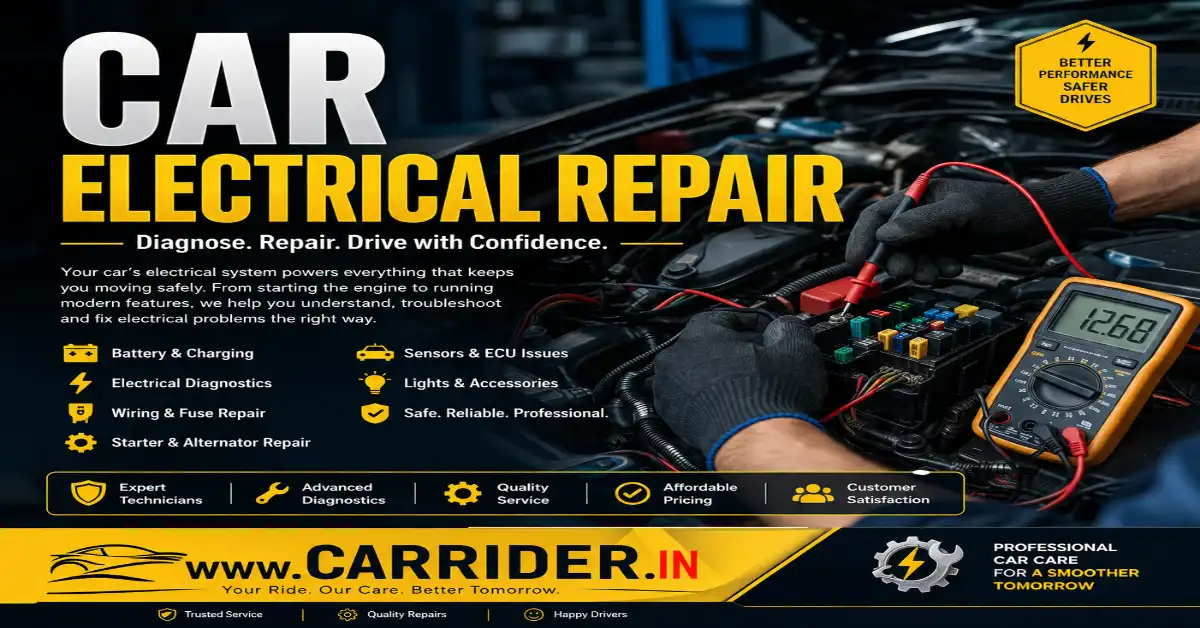
Car Electrical Repair guide explains how vehicle electrical systems work, common warning signs, repair costs, troubleshooting methods, preventive maintenance, and when it’s time to visit a professional auto electrician. Whether you own a gasoline, diesel, hybrid, or electric vehicle, understanding your car’s electrical system can save both time and money.
What Is Car Electrical Repair?
Car electrical repair refers to diagnosing and fixing problems involving a vehicle’s electrical components, including:
- Battery
- Alternator
- Starter motor
- Wiring harness
- Fuses
- Relays
- Sensors
- Electronic Control Units (ECUs)
- Lighting systems
- Power windows
- Air conditioning electronics
- Dashboard electronics
Modern vehicles contain hundreds of electrical connections working together through multiple control modules.
How Does a Car Electrical System Work?
Understanding the basic electrical system helps identify problems quickly.
Battery
The battery stores electrical energy needed to start the engine and power accessories when the engine is off.
Alternator
The alternator recharges the battery while the engine runs.
Starter Motor
The starter uses battery power to crank the engine.
Wiring Harness
Thousands of wires connect every electrical component.
Fuses and Relays
These protect circuits from overload and control high-current devices.
Electronic Control Modules
Modern cars include multiple computers controlling:
- Engine
- Transmission
- Brakes
- Airbags
- Climate control
- Entertainment systems
Common Car Electrical Problems
Several electrical failures occur more frequently than others.
Dead Battery
Symptoms include:
- Engine won’t start
- Clicking sound
- Dim lights
- Slow cranking
Possible causes:
- Old battery
- Lights left on
- Faulty alternator
- Loose battery terminals
Alternator Failure
Signs include:
- Battery warning light
- Flickering headlights
- Electrical accessories failing
- Vehicle stalls unexpectedly
Faulty Starter Motor
Common symptoms:
- Clicking noise
- Engine won’t crank
- Intermittent starting
Blown Fuses
A blown fuse may disable:
- Radio
- Headlights
- Horn
- Power windows
- Interior lighting
Damaged Wiring
Rodents, corrosion, heat, or accidents can damage vehicle wiring.
Symptoms include:
- Random warning lights
- Short circuits
- Burning smell
- Electrical failures
Sensor Problems
Modern vehicles use dozens of sensors.
Examples:
- Oxygen sensor
- Crankshaft sensor
- Camshaft sensor
- Wheel speed sensor
A failed sensor often triggers the Check Engine Light.
Signs Your Car Needs Electrical Repair
Watch for these warning signs:
- Flickering headlights
- Dashboard warning lights
- Burning electrical smell
- Battery draining overnight
- Engine won’t start
- Power windows stop working
- Radio resets repeatedly
- Accessories malfunction
- Air conditioning stops unexpectedly
- Dashboard goes blank
Ignoring these symptoms can result in larger repair bills.
Step-by-Step Car Electrical Diagnosis
Professional technicians usually follow these steps.
Step 1: Visual Inspection
Check:
- Battery terminals
- Loose wires
- Burned connectors
- Corrosion
Step 2: Battery Testing
A multimeter checks battery voltage.
Healthy battery:
- Engine Off: 12.6V
- Engine Running: 13.8–14.7V
Step 3: Alternator Test
Measure charging voltage.
Low voltage usually indicates alternator failure.
Step 4: Fuse Inspection
Inspect every fuse in the fuse box.
Replace only with identical ratings.
Step 5: Scan the Vehicle
An OBD-II scanner identifies diagnostic trouble codes (DTCs).
Step 6: Circuit Testing
Technicians test:
- Voltage drop
- Ground continuity
- Wire resistance
- Relay function
DIY vs Professional Car Electrical Repair
| DIY Repair | Professional Repair |
|---|---|
| Battery replacement | ECU programming |
| Fuse replacement | Wiring harness repair |
| Bulb replacement | CAN Bus diagnostics |
| Battery terminal cleaning | Sensor calibration |
| Basic voltage testing | Advanced electrical troubleshooting |
DIY repairs are suitable for simple maintenance, while complex electrical issues require specialized diagnostic tools and expertise.
Car Electrical Repair Costs
| Repair | Average Cost |
|---|---|
| Battery Replacement | $100–$300 |
| Alternator Replacement | $350–$900 |
| Starter Motor Repair | $250–$700 |
| Fuse Replacement | $10–$50 |
| Wiring Repair | $150–$1,500 |
| Diagnostic Scan | $80–$200 |
| Sensor Replacement | $100–$600 |
Costs vary depending on the vehicle make, model, and labor rates.
Common Mistakes to Avoid
Avoid these mistakes when dealing with vehicle electrical systems:
- Ignoring battery warning lights
- Installing incorrect fuses
- Using poor-quality replacement parts
- Jump-starting incorrectly
- Disconnecting the battery without following procedures
- Attempting ECU repairs without proper tools
- Ignoring corrosion
- Delaying diagnostics
Expert Tips for Maintaining Your Car’s Electrical System
Clean Battery Terminals
Corrosion reduces electrical flow.
Check Charging Voltage
Test the alternator annually.
Inspect Wiring
Look for damaged insulation and loose connectors.
Replace Aging Batteries
Most batteries last between 3 and 5 years.
Protect Against Moisture
Water causes corrosion and short circuits.
Use Genuine Parts
OEM components usually provide better compatibility and reliability.
Pros and Cons of Professional Car Electrical Repair
Pros
- Accurate diagnostics
- Professional tools
- Warranty on repairs
- Safer repairs
- Faster troubleshooting
Cons
- Higher labor costs
- Appointment scheduling
- Complex repairs can be expensive
Real-World Case Study
A customer noticed flickering headlights and a battery warning light during evening driving. Initially believing the battery had failed, they replaced it, but the issue continued.
A professional electrical diagnostic revealed a failing alternator that produced inconsistent charging voltage. After replacing the alternator and inspecting the charging cables, the battery remained fully charged, the warning light disappeared, and all electrical accessories operated normally.
This example highlights why accurate diagnosis is essential before replacing parts.
Preventive Maintenance Checklist
- Inspect battery every six months.
- Tighten battery terminals.
- Test charging system annually.
- Replace damaged wiring promptly.
- Keep fuse box clean and dry.
- Check dashboard warning lights immediately.
- Avoid overloading electrical accessories.
- Use recommended battery specifications.
- Schedule periodic electrical inspections.
- Keep software updated for modern vehicles when applicable.
Conclusion
Your vehicle’s electrical system powers critical components that affect starting, safety, lighting, engine performance, and comfort. Early detection of electrical issues can prevent unexpected breakdowns and expensive repairs.
Routine inspections, timely maintenance, and professional diagnostics for complex problems are the best ways to keep your vehicle reliable. If you notice warning lights, dim headlights, or starting problems, don’t ignore them. Addressing issues early can extend the life of your vehicle and reduce long-term repair costs.
Frequently Asked Questions (FAQs)
1. What causes most car electrical problems?
The most common causes are failing batteries, worn alternators, damaged wiring, corroded battery terminals, blown fuses, and faulty sensors.
2. How do I know if my alternator is bad?
Common signs include a battery warning light, dim headlights, electrical accessories malfunctioning, difficulty starting, and unusual noises from the engine bay.
3. Can I drive with an electrical problem?
Minor issues may allow short trips, but major electrical faults can leave you stranded or affect safety systems. It’s best to have the vehicle inspected promptly.
4. How long does car electrical repair take?
Simple repairs such as replacing a battery or fuse may take under an hour, while complex wiring or module diagnostics can take several hours or more.
5. Why does my car battery keep dying?
Possible reasons include a failing alternator, a parasitic battery drain, an old battery, loose connections, or leaving electrical accessories on.

One thought on “Car Electrical Repair | Common Problems, Costs & Expert Guide”