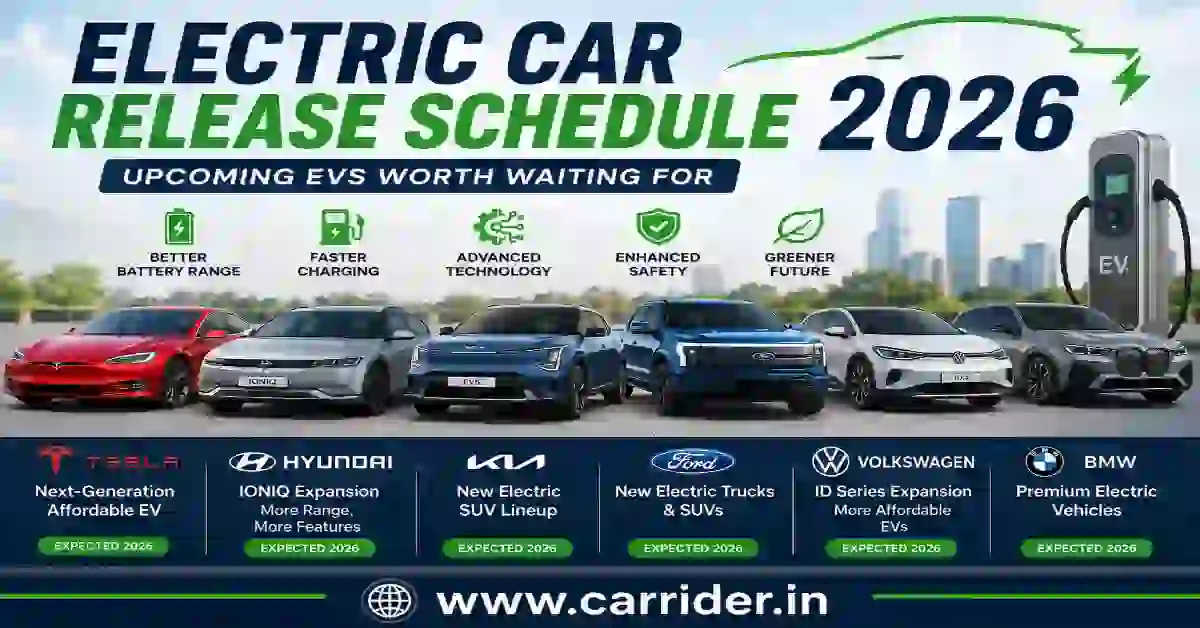
Electric Car Release Schedule 2026: When I bought my first electric vehicle, I made one mistake that many buyers still make today—I rushed into purchasing the model that was available instead of waiting a few months for newer options. A friend of mine did the opposite. He delayed his purchase until a newer EV launch arrived with better battery range, faster charging, and more features at nearly the same price. Looking back, that extra patience saved him a lot of money and future regret.
That’s exactly why many car buyers are paying close attention to the electric car release schedule for 2026. Automakers across the world are preparing some of their most ambitious EV launches yet. From affordable city cars to premium SUVs and performance vehicles, 2026 could become one of the biggest years in electric mobility.
If you’re planning to buy an electric car next year, here’s what you should know before making a decision.
Why 2026 Could Be a Major Year for Electric Vehicles
Over the last few years, EV technology has improved dramatically. Battery ranges are increasing, charging times are getting shorter, and prices are slowly becoming more competitive.
During recent auto expos and manufacturer announcements, one trend became obvious: most brands are investing heavily in electric models.
Some of the reasons include:
- Stricter emission regulations worldwide
- Increasing fuel prices
- Better charging infrastructure
- Government incentives in many regions
- Growing consumer demand for EVs
For buyers, this means more choices than ever before.
Expected Electric Car Releases in 2026
While official launch dates may vary by country, several manufacturers have already confirmed or hinted at major EV launches for 2026.
Tesla Next-Generation Vehicle
Tesla is expected to continue expanding its lineup with a more affordable electric model aimed at mass-market buyers.
Expected highlights:
- Lower purchase price
- Improved battery efficiency
- Advanced software features
- Enhanced autonomous driving capabilities
Many industry analysts believe this could become Tesla’s highest-volume vehicle.
Hyundai IONIQ Expansion
Hyundai has built a strong reputation in the EV market through the IONIQ series.
Potential 2026 developments include:
| Feature | Expected Improvement |
|---|---|
| Battery Range | Longer driving distance |
| Charging Speed | Faster DC charging |
| Software | Enhanced infotainment |
| Safety Systems | More driver-assistance features |
Based on my experience testing Hyundai EVs, the balance between comfort, technology, and pricing remains one of their strongest advantages.
Kia Electric SUV Lineup
Kia has been steadily expanding its electric portfolio.
Expected launches may include:
- New compact electric SUVs
- Family-oriented crossover EVs
- Updated versions of existing EV models
These vehicles will likely target buyers who need practical daily transportation without moving into luxury-car pricing.
Ford’s New Electric Models
Ford continues investing heavily in electrification.
Industry reports suggest potential releases in:
- Electric pickup trucks
- Mid-size electric SUVs
- Commercial EV vehicles
Ford’s approach has generally focused on making EVs familiar to traditional car owners, which helps ease the transition from gasoline-powered vehicles.
Volkswagen EV Expansion
Volkswagen plans to grow its global EV presence through the ID series and future electric platforms.
Possible highlights:
- Affordable EV hatchbacks
- Long-range family vehicles
- Advanced battery technology
For budget-conscious buyers, Volkswagen’s upcoming releases could be among the most interesting options to watch.
BMW and Mercedes-Benz Premium EVs
Luxury manufacturers are also preparing new electric models.
Expected improvements include:
- Greater driving range
- Premium interiors
- Advanced driver assistance
- Faster charging systems
If luxury features matter to you, 2026 may offer some of the most advanced electric vehicles ever produced.
What Buyers Should Watch Before a 2026 EV Launch
One lesson I learned from following vehicle launches is that marketing announcements don’t always tell the full story.
Before placing a reservation, focus on these practical factors.
1. Real-World Driving Range
Manufacturers often advertise ideal-range figures.
In everyday conditions, factors such as:
- Air conditioning
- Highway speeds
- Weather
- Passenger load
can significantly affect actual performance.
Always look for independent road tests after launch.
2. Charging Network Availability
A great EV becomes less convenient if charging stations are difficult to access.
Before purchasing:
- Check charging stations near your home
- Review workplace charging options
- Evaluate highway charging coverage
Apps such as PlugShare and manufacturer charging maps can help identify nearby charging locations.
3. Battery Warranty
Battery replacement remains one of the biggest concerns among EV buyers.
Look for:
- Long warranty coverage
- Battery health guarantees
- Manufacturer support programs
Many leading brands now provide extensive battery warranties for added peace of mind.
4. Software Updates
Modern electric vehicles are becoming more like smartphones on wheels.
Over-the-air updates can improve:
- Range efficiency
- Navigation systems
- Safety features
- User interface performance
Manufacturers with strong software ecosystems often provide better long-term ownership experiences.
Common Mistakes People Make When Waiting for New EV Releases
I’ve seen many buyers repeat the same mistakes while tracking upcoming electric cars.
Waiting Forever
There’s always another vehicle launch around the corner.
Some buyers postpone purchases for years while chasing the “next big thing.”
If a current EV meets your needs and budget, waiting indefinitely may not be worthwhile.
Ignoring Total Ownership Costs
Many people focus only on the sticker price.
Consider:
- Charging costs
- Insurance
- Maintenance
- Government incentives
- Resale value
These factors often have a major impact on overall ownership expenses.
Buying Based Only on Range
A vehicle with the highest range isn’t automatically the best choice.
Comfort, reliability, charging speed, and after-sales support can matter just as much.
Who Should Consider Waiting for 2026 Models?
You may benefit from waiting if:
- Your current vehicle is still reliable
- You want the latest battery technology
- You’re interested in newer safety features
- You expect more affordable EV options
- Charging infrastructure is still developing in your area
However, if fuel costs are becoming a burden and suitable EV options are already available, purchasing sooner may make financial sense.
Electric Vehicle Trends Expected in 2026
Several industry trends are likely to shape upcoming releases.
Improved Battery Technology
Manufacturers continue working on:
- Higher energy density batteries
- Longer lifespan batteries
- Faster charging systems
These improvements could make EV ownership more convenient than ever.
More Affordable EV Choices
Competition among automakers is increasing rapidly.
This may lead to:
- Lower entry-level pricing
- Better standard features
- Increased consumer value
Better Charging Infrastructure
Public charging networks continue expanding worldwide.
Many regions are investing heavily in:
- Fast charging stations
- Highway charging corridors
- Urban charging hubs
This growth will help reduce range anxiety for new EV owners.
Is Waiting for a 2026 Electric Car Worth It?
Electric Car Release Schedule 2026.
The electric car market is moving quickly, and 2026 is expected to bring meaningful improvements in battery performance, charging speed, software capabilities, and affordability.
That said, don’t let excitement over future releases prevent you from making a practical decision today. The best EV isn’t necessarily the newest one—it’s the one that fits your driving habits, budget, and charging situation.
If you’re planning to buy an electric vehicle within the next year, keep an eye on manufacturer announcements, compare real-world reviews, and evaluate your daily needs carefully. A little research now can help you choose an EV you’ll be happy driving for years to come.

One thought on “Electric Car Release Schedule 2026”