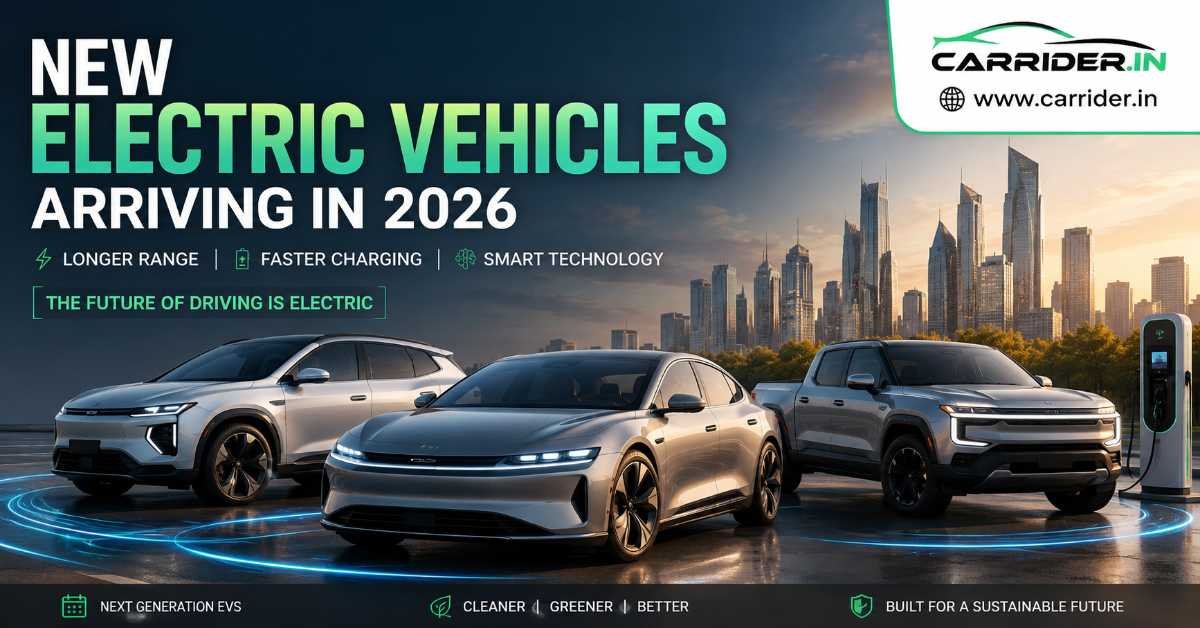
New Electric Vehicles Arriving in 2026: A few years ago, I thought electric vehicles were mostly for tech enthusiasts and early adopters. Then I spent time driving and riding in several EVs owned by friends and colleagues. What surprised me wasn’t the acceleration or the futuristic dashboards—it was how quickly EVs started feeling normal.
Charging overnight instead of stopping at a fuel station, lower running costs, and quieter driving completely changed my perspective. Now, with dozens of new electric vehicles expected to arrive in 2026, the market is becoming more interesting than ever.
If you’re planning to buy a new car in the next year or two, 2026 could be one of the best times to switch to an EV.
Why 2026 Could Be a Big Year for Electric Vehicles
The EV industry has matured significantly over the past few years. Early concerns about battery range, charging infrastructure, and vehicle reliability are gradually being addressed.
Many manufacturers are now focusing on:
- Longer driving range
- Faster charging technology
- More affordable pricing
- Improved battery durability
- Better software and connectivity features
What makes 2026 especially exciting is that EVs are no longer limited to premium buyers. New models are expected across budget, mid-range, and luxury segments.
Expected Electric Vehicles Arriving in 2026
While launch schedules can change, several major automotive brands are preparing new electric models for global markets.
Tesla’s Next-Generation EV Updates
Tesla continues to dominate EV discussions. Industry reports suggest the company is working on more affordable electric vehicle options alongside updates to existing models.
Potential highlights include:
- Improved battery efficiency
- Lower production costs
- Enhanced autonomous driving features
- Faster charging capabilities
One lesson I’ve learned from watching the EV market is that Tesla often pushes competitors to improve their offerings, which benefits consumers regardless of which brand they choose.
Read More:Top 10 EV Bikes in India 2026 – Real-World Guide for Daily Riders
Hyundai and Kia Expansion
Hyundai and Kia have become serious players in the EV market.
Many drivers I know who switched from traditional fuel vehicles to Hyundai EVs were surprised by:
- Comfortable ride quality
- Practical driving range
- User-friendly technology
- Competitive pricing
The brands are expected to expand their EV lineup further in 2026, including SUVs and family-oriented models.
Volkswagen’s New Electric Strategy
Volkswagen has invested heavily in electric mobility.
Upcoming vehicles are expected to focus on:
- Affordable pricing
- Family-friendly design
- Improved battery performance
- Global availability
For buyers looking for familiar vehicle designs with electric powertrains, Volkswagen’s upcoming models could be worth watching.
Ford’s Future EV Lineup
Ford has already shown strong interest in electric trucks and SUVs.
By 2026, the company is expected to introduce:
- Updated electric pickup trucks
- New electric crossover vehicles
- Improved battery technology
- Better towing performance
This is particularly important for buyers who need utility vehicles rather than compact city cars.
Emerging Chinese EV Brands
Several Chinese manufacturers are rapidly expanding into international markets.
Brands such as BYD and others have gained attention because they often offer:
- Advanced battery technology
- Competitive pricing
- Modern interiors
- Strong feature lists
Many industry analysts believe these brands will play a significant role in shaping the global EV market during 2026 and beyond.
Features Buyers Should Expect in 2026 EVs
When comparing upcoming electric vehicles, don’t focus only on range.
Some of the most valuable improvements are happening elsewhere.
Faster Charging
One of the biggest complaints from new EV owners is charging time.
Newer battery systems are expected to reduce charging durations significantly.
In practical terms, this means:
- Less waiting during road trips
- More convenience for daily use
- Reduced range anxiety
Better Battery Lifespan
Battery technology has improved dramatically.
Modern batteries are being designed to:
- Last longer
- Maintain capacity better
- Handle extreme temperatures more effectively
This could improve resale value and ownership confidence.
Read More:Top EV Charging Infrastructure Companies in USA (2026 Guide)
Smarter Software
Today’s cars increasingly behave like smartphones on wheels.
Many 2026 EVs are expected to include:
- Over-the-air software updates
- Advanced navigation systems
- Real-time charging station data
- Enhanced safety assistance features
Improved Driving Range
While some early EVs struggled with limited range, many upcoming models are expected to exceed 500 km per charge under ideal conditions.
For most drivers, that means charging only a few times per week.
How to Prepare for Buying an EV in 2026
If you’re considering an electric vehicle, preparation can save both money and frustration.
Step 1: Understand Your Daily Driving Needs
Track your driving for a few weeks.
Ask yourself:
- How far do I drive daily?
- Do I frequently travel long distances?
- Can I charge at home?
Many people discover they need less range than they initially assumed.
Step 2: Check Charging Availability
Before purchasing an EV, evaluate charging options.
Look for:
- Home charging feasibility
- Workplace charging access
- Public charging stations nearby
A convenient charging setup often matters more than maximum battery range.
Step 3: Compare Total Ownership Cost
A common mistake is focusing only on purchase price.
Consider:
- Fuel savings
- Maintenance costs
- Insurance expenses
- Government incentives
In some cases, an EV can become cheaper to own over several years despite a higher initial cost.
Step 4: Test Drive Multiple Models
Never buy an EV based solely on specifications.
I have seen buyers choose a vehicle with impressive numbers only to dislike the seating position, ride comfort, or software experience.
A test drive reveals far more than a brochure.
Common EV Buying Mistakes to Avoid
Choosing Range Over Everything Else
Range is important, but it shouldn’t be the only factor.
Comfort, charging speed, reliability, and service support matter just as much.
Ignoring Charging Infrastructure
Some buyers purchase an EV first and think about charging later.
This often creates unnecessary inconvenience.
Plan charging before making the purchase.
Not Researching Battery Warranty
Battery warranties vary between manufacturers.
Always review:
- Coverage period
- Mileage limits
- Battery degradation terms
Following Online Hype
Social media can create unrealistic expectations.
Instead of relying on viral videos, read owner reviews and take real test drives.
Read More:Advanced Lithium Battery Systems
Who Should Consider an EV in 2026?
Electric vehicles may be especially suitable for:
- Daily commuters
- Urban drivers
- Families with predictable travel patterns
- Homeowners with charging access
- Buyers seeking lower running costs
They may be less suitable for people who regularly travel through areas with limited charging infrastructure.
Final Thoughts
The electric vehicle market in 2026 is expected to offer more choice than ever before. Whether you’re interested in an affordable city car, a family SUV, or a premium performance vehicle, there will likely be several strong options available.
What excites me most isn’t a single model—it’s the fact that EVs are becoming practical for everyday drivers. Better batteries, faster charging, and increased competition are pushing the industry forward.
If you’re planning to buy a vehicle in the near future, keeping an eye on the new electric vehicles arriving in 2026 could help you find a car that saves money, reduces maintenance headaches, and makes daily driving more enjoyable.

One thought on “New Electric Vehicles Arriving in 2026”