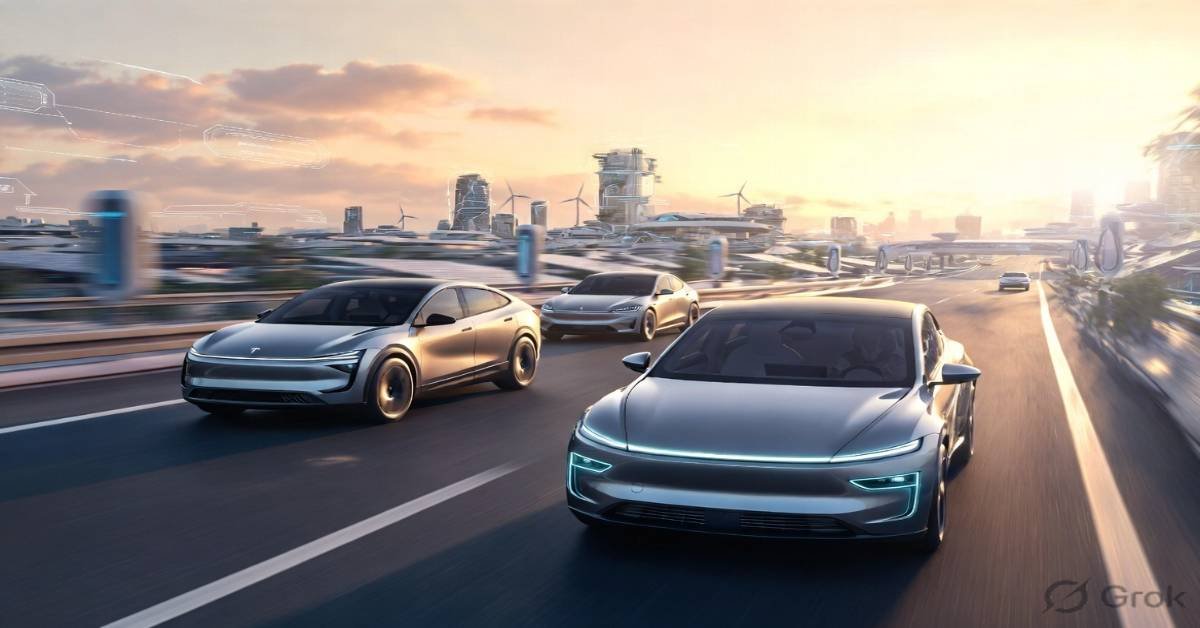
Upcoming EV Cars in 2026: A few years ago, I thought electric vehicles were only for tech enthusiasts and early adopters. Then I started noticing something interesting. Every time I stopped at a charging station during a highway trip, there were more EVs than before. Families, office-goers, and even long-distance travelers were switching to electric cars.
What surprised me most wasn’t the technology. It was how quickly EVs became practical for everyday use.
Now, 2026 is shaping up to be one of the biggest years yet for electric vehicles. Several manufacturers are preparing new launches with longer driving ranges, faster charging, better safety features, and more affordable pricing.
If you’re planning to buy a new car in the next year or two, these upcoming EVs deserve a place on your shortlist.
Why 2026 Could Be a Major Year for EV Buyers
The biggest complaint people had about EVs was range anxiety. Many drivers worried about running out of battery during long trips.
Manufacturers have listened.
Most upcoming EV models are focusing on:
- Longer battery range
- Faster charging times
- Improved software
- Better safety technology
- More affordable ownership costs
- Wider charging network compatibility
For buyers, this means more options than ever before.
Upcoming EV Cars Expected in 2026
1. Tesla Model 2 (Expected)
Tesla has been working toward a more affordable electric car for years.
If launched in 2026, the Model 2 could become one of the most important EVs in the market because it targets budget-conscious buyers.
Expected highlights:
- Compact city-friendly design
- Affordable pricing compared to current Tesla models
- Advanced driver-assistance features
- Tesla charging network compatibility
Why it matters:
Many people want an EV but find premium models expensive. A lower-cost Tesla could make electric mobility accessible to a larger audience.
2. Hyundai Ioniq 7
Hyundai has built a strong reputation in the EV space, and the Ioniq series has received positive feedback globally.
Expected features:
- Three-row seating
- Family-focused design
- Long driving range
- Ultra-fast charging capability
Who should consider it?
Large families looking for an electric SUV with practical space and comfort.
3. Kia EV5
Kia continues to expand its EV lineup aggressively.
Expected features:
- SUV styling
- Modern cabin technology
- Advanced safety systems
- Competitive pricing
What stands out:
Kia has been balancing affordability and features better than many competitors, making the EV5 worth watching.
4. Mahindra BE Range
In India, Mahindra is investing heavily in electric mobility.
Expected features:
- Futuristic design
- Indian road-focused engineering
- Connected vehicle technology
- Competitive ownership costs
Why Indian buyers are interested:
Mahindra understands local driving conditions, road quality, and customer expectations better than many international brands.
5. Tata Harrier EV
Tata Motors has already established itself as a leading EV manufacturer in India.
Expected highlights:
- SUV platform
- Improved battery technology
- Enhanced driving range
- Premium interior upgrades
My observation:
Many EV buyers I speak with consider Tata because of its growing charging ecosystem and service network.
6. Maruti Suzuki eVX
This could be one of the most important launches in India.
Expected features:
- SUV body style
- Family-oriented design
- Focus on efficiency
- Strong service support
Why it’s important:
Maruti Suzuki has a massive customer base. A successful EV launch could accelerate electric vehicle adoption across the country.
7. Volkswagen ID Series Expansion
Volkswagen continues developing its global ID lineup.
Expected improvements:
- Better battery efficiency
- Advanced infotainment systems
- Improved charging speeds
- Enhanced driving dynamics
Ideal for:
Drivers looking for a balance between comfort, technology, and everyday practicality.
What I Look for Before Buying an EV
After spending time researching EVs and speaking with owners, I’ve learned that battery range isn’t the only thing that matters.
Here are the factors I check first:
Step 1: Evaluate Daily Driving Needs
Ask yourself:
- How many kilometers do you drive daily?
- Do you travel frequently?
- Can you charge at home?
Many people buy more range than they actually need.
Step 2: Check Charging Availability
Before purchasing:
- Identify nearby charging stations
- Verify highway charging routes
- Confirm home charging installation options
A great EV becomes frustrating if charging isn’t convenient.
Step 3: Compare Battery Warranty
Most manufacturers offer long battery warranties.
Look for:
- Warranty duration
- Coverage terms
- Service support availability
Step 4: Understand Total Ownership Cost
Don’t focus only on purchase price.
Calculate:
- Charging expenses
- Maintenance costs
- Insurance
- Battery warranty coverage
In many cases, EVs become cheaper to own over several years.
Common Mistakes EV Buyers Make
Ignoring Charging Infrastructure
Some buyers fall in love with a vehicle and only later think about charging.
Research charging options before making a booking.
Buying Based Only on Range
A 700 km range sounds impressive, but if your daily commute is 40 km, you may not need it.
Not Considering Service Network
A nearby service center can save significant time and hassle.
Forgetting Future Needs
Think about:
- Family growth
- Travel habits
- Cargo requirements
The right EV should work for the next five years, not just today.
Features Expected to Become Standard in 2026 EVs
Many upcoming electric vehicles are expected to include:
- Over-the-air software updates
- Advanced driver assistance systems
- Connected smartphone apps
- Vehicle health monitoring
- Faster DC charging
- Improved battery thermal management
- Enhanced safety technology
These features are becoming essential rather than premium extras.
Is 2026 a Good Time to Buy an EV?
Upcoming EV Cars in 2026 Battery technology continues improving, charging networks are expanding, and competition is creating better value for customers.
If you’ve been waiting for more affordable options, longer range, or improved reliability, 2026 could offer some of the strongest EV choices we’ve seen so far.
The best advice I can give is simple: don’t focus on marketing claims. Focus on how you actually drive. The ideal electric car is the one that fits your daily life, charging access, and budget—not necessarily the one with the biggest battery or the most futuristic design.
With several exciting launches expected across global and Indian markets, EV buyers will likely have more choices than ever before in 2026.

One thought on “Upcoming EV Cars in 2026: The Electric Cars I’m Most Excited About”