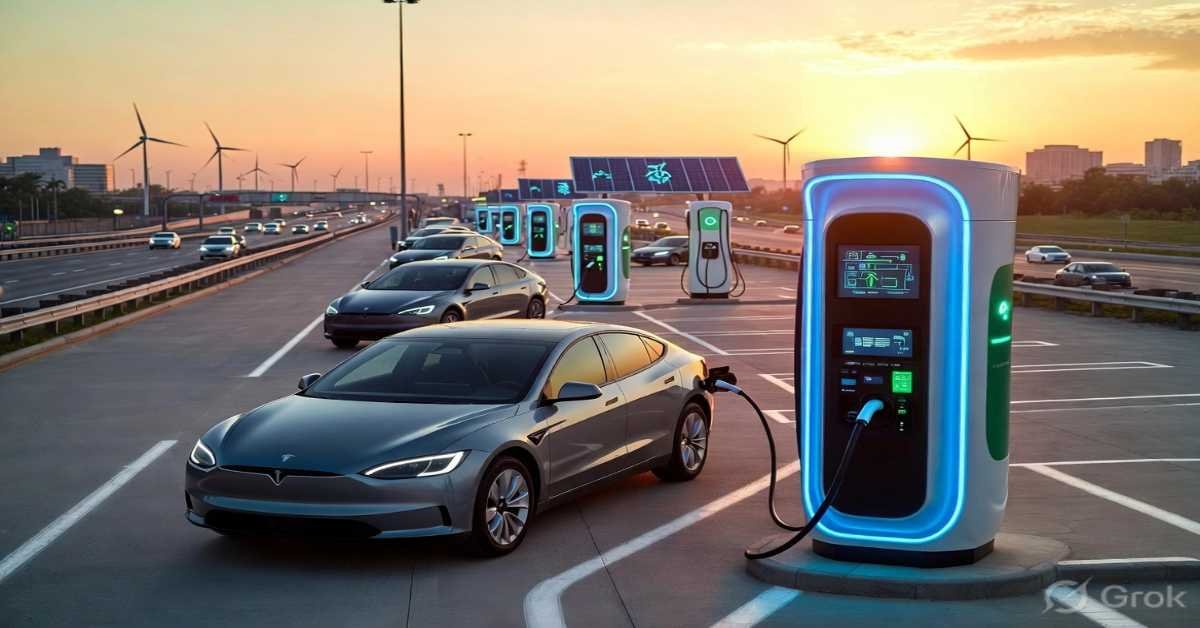
EV Charging Infrastructure Companies in USA. A few chargers were temporarily offline. In one location, I arrived with less battery than expected and discovered that only half of the charging stalls were working. That experience taught me something important: owning an EV is not just about the vehicle. The charging network behind it matters just as much.
If you’re considering an electric vehicle, investing in charging infrastructure, or simply trying to understand the EV ecosystem in the United States, knowing the major EV charging infrastructure companies can save you time, money, and frustration.
Why EV Charging Infrastructure Matters
Electric vehicles continue to grow in popularity across the United States. As more drivers switch from gasoline-powered vehicles, the demand for reliable charging stations keeps increasing.
A strong charging network helps drivers:
- Travel longer distances confidently
- Reduce charging wait times
- Access fast charging when needed
- Charge at workplaces, apartments, and public locations
- Support the transition to cleaner transportation
The companies building and operating these networks are playing a major role in the future of transportation.
Leading EV Charging Infrastructure Companies in the USA
1. Tesla Supercharger Network
Tesla built one of the most recognized charging networks in the country.
Originally designed only for Tesla vehicles, many Supercharger locations are now opening access to other EV brands through adapters and compatible charging standards.
What stands out:
- Extensive nationwide coverage
- Fast charging speeds
- Easy integration with Tesla vehicles
- Reliable station availability
From personal observation, Tesla’s biggest advantage is simplicity. Drivers usually spend less time troubleshooting and more time charging.
Best for:
- Road trips
- Fast charging
- Tesla owners
- Growing number of non-Tesla EV drivers
2. ChargePoint
ChargePoint operates one of the largest charging networks in North America.
Unlike some companies that own every charger, ChargePoint provides hardware and software that businesses, workplaces, hotels, and property owners can use.
Key strengths:
- Large network footprint
- Residential and commercial charging solutions
- Mobile app support
- Real-time charger availability
Many workplaces and shopping centers use ChargePoint stations because the company offers flexible management tools.
3. Electrify America
Electrify America has become a major player in fast charging infrastructure.
The company focuses heavily on DC fast charging, making it useful for drivers who need to recharge quickly during long trips.
Advantages:
- High-speed charging
- Coverage across major highways
- Support for multiple EV brands
- Frequent network expansion
Many non-Tesla EV owners consider Electrify America one of their primary charging options during interstate travel.
4. EVgo
EVgo specializes in public fast-charging solutions.
The company focuses on urban areas where apartment residents and city drivers may not have access to home charging.
Benefits include:
- Fast charging technology
- Convenient city locations
- Partnerships with automakers
- User-friendly mobile application
For drivers living in apartments, EVgo can often be more practical than relying solely on home charging.
5. Blink Charging
Blink Charging provides charging equipment and network services for commercial and public locations.
The company serves:
- Municipalities
- Businesses
- Parking operators
- Educational institutions
Blink offers both Level 2 and DC fast charging solutions, helping property owners support EV adoption.
6. FLO
FLO is steadily expanding its presence across North America.
Known for durable charging equipment, FLO focuses on delivering dependable charging experiences for both residential and commercial customers.
Strengths:
- Reliable hardware
- Network management tools
- Residential charging products
- Commercial deployment options
7. ABB E-Mobility
ABB is a global technology company that supplies charging equipment used by many charging networks.
While consumers may not always see the ABB name directly, the company powers numerous public charging installations.
Highlights:
- Advanced charging technology
- Ultra-fast charging solutions
- Commercial and fleet applications
- Strong industry reputation
How to Choose the Right Charging Network
One mistake many new EV owners make is relying on a single charging provider.
A better approach is to create accounts with multiple networks before you need them.
Step 1: Check Coverage in Your Area
Look at:
- Home location
- Workplace
- Frequent travel routes
The best network for someone in California may not be the best option for someone in Texas or Florida.
Step 2: Compare Charging Speeds
Charging speed matters.
Generally:
- Level 1: Slowest
- Level 2: Good for daily charging
- DC Fast Charging: Best for road trips
If you travel frequently, prioritize networks with DC fast chargers.
Step 3: Download Mobile Apps
Most charging companies offer apps that allow you to:
- Find nearby stations
- Monitor charging progress
- View pricing
- Start charging sessions
Keeping multiple charging apps installed can prevent headaches during travel.
Step 4: Review Pricing
Pricing structures vary.
Some networks charge:
- Per kilowatt-hour
- Per minute
- Monthly memberships
- Session fees
Understanding costs beforehand helps avoid surprises.
EV Charging Infrastructure Beyond Public Stations
Public chargers receive most of the attention, but charging infrastructure includes much more.
Workplace Charging
Employers increasingly install charging stations to attract and retain employees.
Benefits include:
- Employee convenience
- Sustainability initiatives
- Reduced commuting emissions
Apartment and Multi-Family Housing
One challenge for EV adoption is apartment charging.
Many infrastructure companies now provide solutions specifically designed for:
- Apartment complexes
- Condominiums
- Shared parking facilities
Fleet Charging
Businesses operating electric fleets require specialized infrastructure.
Industries investing in fleet charging include:
- Delivery services
- Public transportation
- Utility companies
- Logistics providers
Common Mistakes New EV Owners Make
Assuming Every Charger Works the Same
Charging speeds, connectors, and payment methods can differ significantly.
Always verify compatibility before arriving.
Waiting Until the Battery Is Nearly Empty
During my early EV experiences, I occasionally pushed the battery lower than I should have.
A safer strategy is to start looking for charging options before reaching critical battery levels.
Ignoring Backup Charging Locations
Always identify a secondary charging station nearby.
Unexpected maintenance or congestion can happen.
Using Only One Charging App
Having access to multiple charging networks provides flexibility and peace of mind.
The Future of EV Charging Infrastructure
The EV charging industry is evolving rapidly.
Several trends are shaping the future:
- Faster charging technology
- Increased highway coverage
- Better charger reliability
- Integration with renewable energy
- Smart charging systems
- Expansion of charging access for non-Tesla vehicles
Federal and state investments are also accelerating network growth across the United States.
As infrastructure improves, charging an EV is becoming easier and more convenient for everyday drivers.
Final Thoughts
After spending time using different charging networks and following the EV industry closely, one thing is clear: the success of electric vehicles depends heavily on the quality of charging infrastructure.
Companies such as Tesla, ChargePoint, Electrify America, EVgo, Blink Charging, FLO, and ABB are helping build the foundation for the next generation of transportation.
If you’re planning to buy an EV, don’t focus only on the vehicle. Spend time researching charging networks in your area. A dependable charging ecosystem can make the difference between a smooth ownership experience and a frustrating one.
The good news is that charging infrastructure in the United States continues to improve every year, giving EV drivers more options, better reliability, and greater confidence on the road.
